How do the symptoms of a nervous breakdown appear?
There is no fixed list of nervous breakdown symptoms. It is a state of being unable to cope that can have different causes behind it, not a single illness. The Australian agency healthdirect and Cleveland Clinic both stress that symptoms vary from person to person depending on the underlying cause, and that physical symptoms are common too.
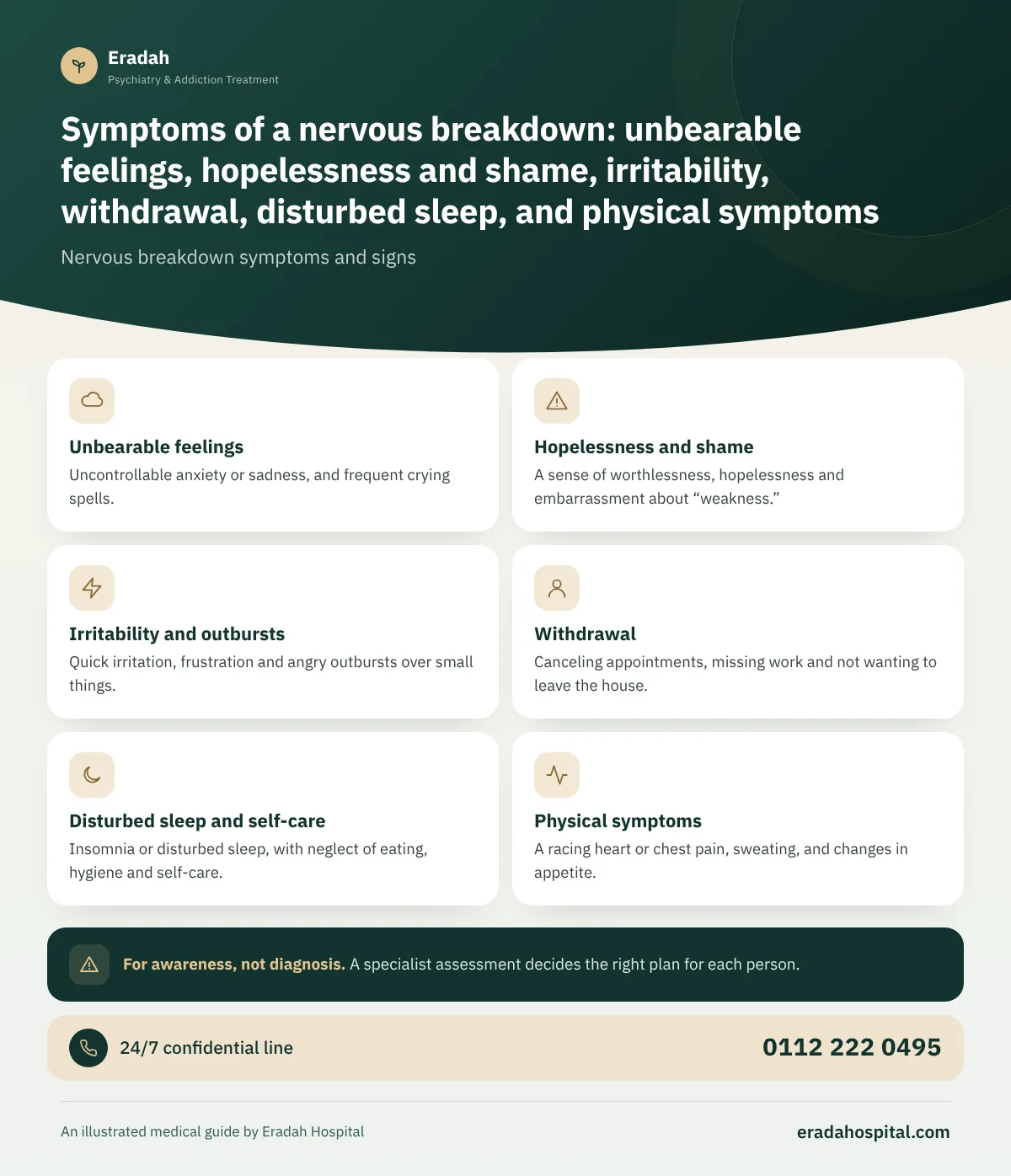
But there is a common thread that doctors and families notice: a clear decline in the ability to carry out daily tasks. A person who used to go to work and look after the home becomes unable to get up, go out or make a simple decision. The signs usually fall into six groups:
Uncontrollable anxiety or sadness, and frequent crying spells.
A sense of worthlessness, hopelessness and embarrassment about “weakness.”
Quick irritation, frustration and angry outbursts over small things.
Canceling appointments, missing work and not wanting to leave the house.
Insomnia or disturbed sleep, with neglect of eating, hygiene and self-care.
A racing heart or chest pain, sweating, and changes in appetite.
What are the mental symptoms of a nervous breakdown?
Healthdirect notes that a person may have symptoms of anxiety or depression that they cannot control, and may feel shame, hopelessness or worthlessness, or anger and irritability, or apprehension and suspicion. Cleveland Clinic adds fear, preoccupation and intense tension, deep sadness and helplessness, and the feeling of being “stuck” or overwhelmed. You may hear the person say things like:
- “I can't go on like this.”
- “I'm a failure and I've ruined everything.”
- “There's no point.”
- “I need to disappear from the world for a while.”
The last phrase in particular calls for a calm, direct question: do you mean you want a rest, or are you thinking of harming yourself? Asking does not plant the idea; it opens the door to help.
What behavioral signs might the family notice?
Cleveland Clinic lists a set of behavioral signs that the people around a person often notice before the person does:
- Missing work for a day or more, or repeatedly calling in sick.
- Missing appointments and social events.
- Sliding into unhealthy habits: irregular eating, too little sleep, and neglecting hygiene and exercise.
- Losing interest in hobbies and things that used to bring joy.
- Not wanting to leave the house or see people.
- Fits of anger or frustration that are out of character.
These changes may come gradually, so the person does not notice them, while family or colleagues notice first. It is best to start the conversation with a specific observation and genuine concern, not with accusation or lectures.
What are the physical symptoms of a nervous breakdown?
| Symptom | Important note |
|---|---|
| Insomnia and disturbed sleep | Difficulty falling or staying asleep; healthdirect lists it among the physical symptoms |
| Racing heart | A feeling of a fast pulse even at rest |
| Chest pain | Must be checked medically to rule out a heart cause before it is attributed to the crisis |
| Sweating | May come with anxiety attacks or without them |
| Change in appetite | Loss of appetite or eating more than usual |
| Exhaustion | Severe fatigue out of proportion to effort, and heaviness of movement |
What are the signs of a severe nervous breakdown?
In some cases the symptoms go beyond distress and helplessness to signs that mean the situation can no longer wait. Healthdirect notes that a person may experience hallucinations, meaning seeing or hearing things that are not there, and that people going through a breakdown are often unable to function and may have thoughts of self-harm. Cleveland Clinic also mentions intrusive re-experiencing of a traumatic event, which may point to undiagnosed PTSD. Warning signs include:
- Talking about death, wanting to disappear, or self-harm.
- Hallucinations or intense suspicion of others.
- Stopping eating and drinking, or basic self-care.
- Severe confusion or strange, uncharacteristic behavior.
- Heavy use of alcohol, sedatives or drugs.
If any of these appear, call an ambulance (123) or the mental health support line (16328), or go to the nearest emergency room, and do not leave the person alone.
Are these symptoms of a nervous breakdown or depression?
The symptoms are very similar. The difference is that depression is a medical diagnosis with specific criteria, chiefly sadness or loss of pleasure lasting at least two weeks along with other symptoms, whereas a “breakdown” describes the moment of helplessness, one that depression may be a cause of. So if symptoms last more than two weeks, read about the symptoms of depression, and if they are tied to a traumatic event, read about the symptoms of post-traumatic stress disorder.
When do you need a doctor for these symptoms?
Healthdirect advises seeking specialist help if symptoms are persistent or noticeable most of the time, last more than two weeks, or negatively affect your daily life. Cleveland Clinic adds that being unable to manage daily tasks, such as getting out of bed, brushing your teeth or going to work, means it is time to seek help. You can find what happens after a doctor's visit in nervous breakdown treatment.
Acute mental health crisis? These signs call for emergency care now
- Talking about death, suicide or self-harm, or suddenly saying goodbye to family
- Hallucinations (seeing or hearing things that are not there) or intense suspicion of others
- Stopping eating and drinking, or being completely unable to care for oneself
- Severe confusion or strange behavior that is out of character for the person
- Heavy use of alcohol, sedatives or drugs, or severe withdrawal symptoms
Do not leave the person alone. Ask them calmly and directly how they feel and what they are thinking, and listen without blame or lectures; asking directly does not plant the idea, it opens the door to help. Call an ambulance on 123 or take them to the nearest emergency room, or call the mental health support line 16328 (24 hours), and keep medications and anything they could use to harm themselves out of reach.
Ambulance 123 Mental health support line 16328