What are the main symptoms of PTSD?
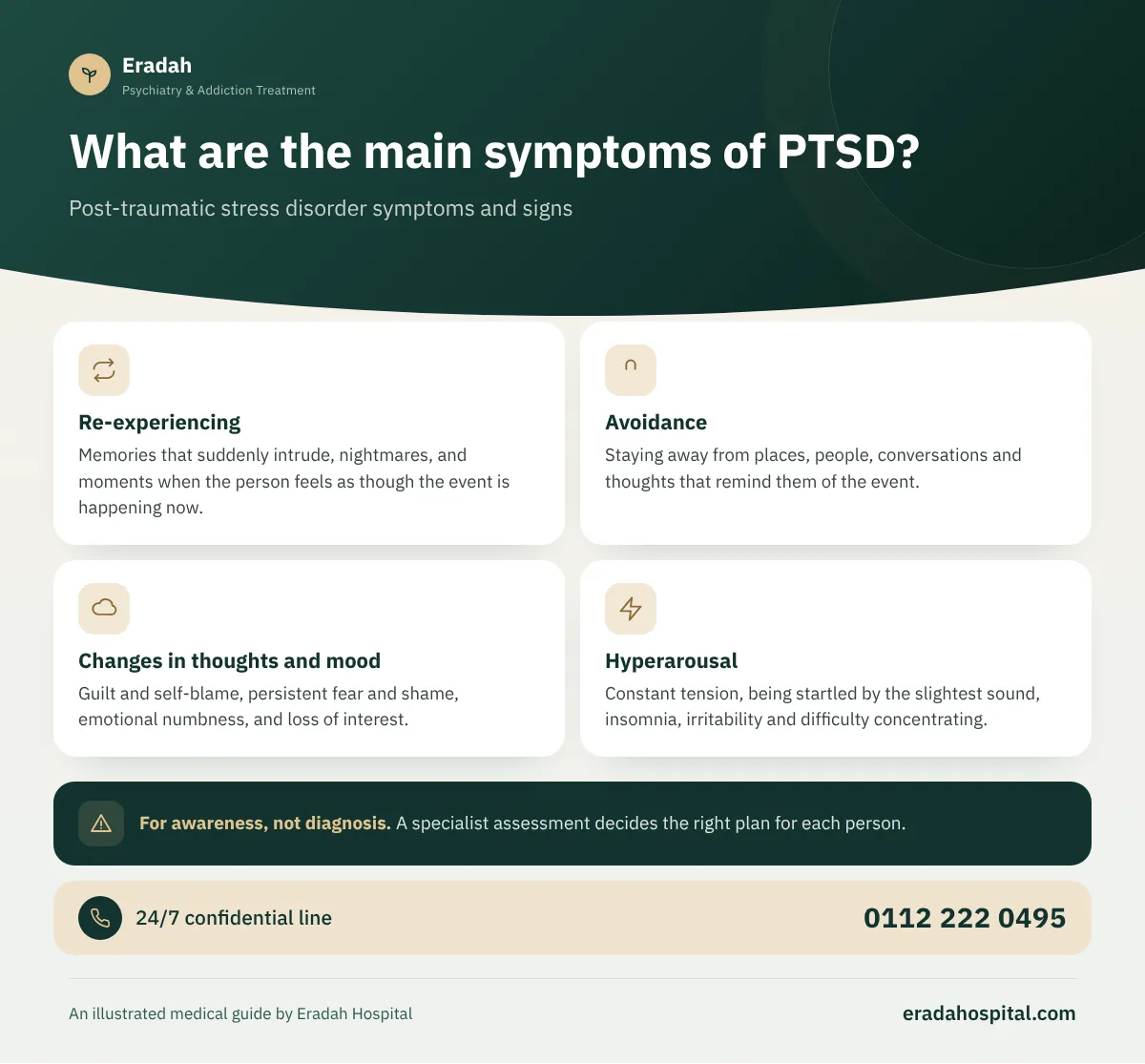
Symptoms vary from person to person in severity and timing, but they revolve around one idea: the event is over in reality, but it has not ended inside the mind and body. Doctors classify them into four main groups.
Memories that suddenly intrude, nightmares, and moments when the person feels as though the event is happening now.
Staying away from places, people, conversations and thoughts that remind them of the event.
Guilt and self-blame, persistent fear and shame, emotional numbness, and loss of interest.
Constant tension, being startled by the slightest sound, insomnia, irritability and difficulty concentrating.
The American DSM-5 requires at least one re-experiencing symptom, one avoidance symptom, two symptoms of changes in mood and thoughts, and two hyperarousal symptoms, lasting more than a month. ICD-11 focuses on three core domains: re-experiencing in the present, avoidance, and a persistent sense of threat.
What do intrusive memories and nightmares look like?
- Images, sounds or sensations from the event that intrude on the mind unwanted, at work, in conversation or before sleep.
- Flashbacks: moments when the person loses their sense of the present and acts and feels as though they have gone back to the moment of the event.
- Recurrent nightmares about the event or similar dangers, after which the person wakes terrified and sweating.
- Intense emotional distress or physical reactions such as palpitations, trembling and shortness of breath when faced with a reminder of the event.
- Triggers that may seem trivial to others: the smell of smoke, the sound of brakes, a news bulletin, or a date on the calendar.
What does avoidance look like in daily life?
Avoidance is an understandable attempt to protect yourself from pain, but over time it widens until it narrows life. A person may refuse to get in a car after an accident, change their route to work, stop watching the news, or avoid any talk about the person who died.
There is also a less obvious inner avoidance: staying constantly busy so there is no time to think, staying up until exhausted to avoid nightmares, or turning to alcohol or sedatives to silence memories. This last type needs special attention, and we cover it on the page about PTSD and addiction.
What changes occur in thoughts and feelings?
- Exaggerated blame of oneself or others: "I should have prevented what happened."
- Deep-rooted negative beliefs: "No one can be trusted," "The whole world is dangerous," or "I'm broken forever."
- Persistent fear, anger, guilt or shame most of the time.
- Loss of interest in activities that used to be enjoyable, and feeling cut off from family and friends.
- Difficulty feeling joy or love, as if positive emotions had been "switched off."
- Gaps in remembering important parts of the event itself.
What are the signs of hyperarousal and physical tension?
- Intense startle at sudden sounds or unexpected touch.
- Constantly scanning the place and the people, for example sitting facing the door.
- Trouble falling asleep or waking repeatedly, even without nightmares.
- Irritability and angry outbursts out of proportion to the situation.
- Difficulty concentrating and forgetfulness at work and school.
- Reckless or self-destructive behavior, such as reckless driving.
What additional symptoms occur in complex trauma?
When the trauma is prolonged or repeated and hard to escape, such as childhood abuse, long-term domestic violence or captivity, three additional signs described by ICD-11 may appear alongside the symptoms above:
| Domain | How it appears |
|---|---|
| Difficulty regulating emotions | Intense emotions that are hard to calm, or on the contrary numbness and detachment from feelings |
| Negative self-image | A deep sense of worthlessness, failure or guilt tied to the trauma |
| Ongoing problems in relationships | Difficulty trusting and getting close to others, and a tendency to isolate or have unstable relationships |
How do symptoms appear in children and teenagers?
Children do not always have the words to describe what is inside them, so trauma shows up in their behavior more than in what they say:
| Age group | Signs Families May Notice |
|---|---|
| Under 6 years | Bedwetting after they had stopped, forgetting words or speaking less, reenacting the event in play or drawing, and intense clinginess to parents and fear of separation |
| 6 to 12 years | Nightmares and new fears, physical complaints such as stomachache and headache, declining school performance, and emotional outbursts and stubbornness |
| Teenagers | Symptoms similar to adults, with rebellious or reckless behavior, thoughts of revenge, guilt, withdrawal from friends, and sometimes experimenting with drugs |
Do symptoms differ between men, women and older adults?
Women are generally more likely to develop the disorder, and their distress often shows up as anxiety, avoidance and sadness. In men, symptoms may show up as anger, irritability, impulsivity, or overworking or drinking, so no one realizes it is trauma.
In older adults, memories of old traumas may return with retirement, illness or the loss of a spouse, and may be wrongly put down to "forgetfulness" or "old-age irritability." At every age, physical complaints such as headaches, muscle pain and stomach problems are common.
When do symptoms begin, and can they be delayed?
- The first daysAcute reaction
Shock, confusion, fear, sadness and insomnia, which are natural responses in most people.
- The first weeksGradual easing or persistence
In most people symptoms ease gradually; if they persist and are severe, it may be called acute stress disorder.
- After one monthAssessment point
If symptoms continue and disrupt life, an assessment for possible PTSD is needed.
- After months or yearsLate onset
Symptoms may appear for the first time, or intensify, with new stress or an anniversary of the event.
How can a family tell that something has changed?
- He has become easily upset or is startled by ordinary sounds.
- He avoids certain places, routes or conversations without explanation.
- His sleep is disturbed and he wakes up terrified.
- He has withdrawn from family and friends and lost interest in what he used to love.
- He seems "absent" or lost in thought, sometimes as if he were somewhere else.
- His drinking, use of sedatives or smoking has increased.
Questions for self-reflection: is what I'm going through worth an assessment?
These questions are a way to help you decide whether you need to consult a specialist; they are not a test or a diagnosis. During the past month:
- Have you had nightmares about the event or thought about it against your will?
- Have you made a great effort to avoid thinking about it or situations that remind you of it?
- Have you been constantly on guard, on edge or easily startled?
- Have you felt numb or detached from people, activities and your surroundings?
- Have you felt guilty, or blamed yourself or others for the event and been unable to stop?
When do the signs become an emergency?
Seek help immediately if thoughts of death or self-harm appear, if the person becomes detached from reality for long periods, poses a danger to themselves or others, or is using increasing amounts of sedative substances. Do not wait for the crisis to "pass on its own."
Suicidal thoughts or danger to self? Get help now
- Talking about wanting to die, or that life is no longer worth living, or that others would be better off without them
- Severe despair and a feeling that the pain will never end, or overwhelming guilt and shame tied to the event
- Saying goodbye to family and friends, or suddenly giving away treasured belongings
- Severe detachment from reality, or reliving the memory as if it is happening now, with agitation that does not settle
- A sudden increase in drinking alcohol or using sedatives or drugs, or dangerous impulsiveness and recklessness
Stay with the person and do not leave them alone, listen calmly without judgment or argument, and ask them directly about their thoughts; asking does not plant the idea. Call ambulance (123) or go to the nearest emergency department, or call the mental health support line 16328, and keep medication and objects that could harm them out of reach until help arrives.
Ambulance 123 Mental health support line 16328