Can GABA be raised without medication?
Since no routine test measures GABA in the brain, no one can promise that a habit will “raise your GABA” by a particular amount. But researchers have measured brain GABA with special MRI techniques before and after certain activities and found encouraging results, especially with exercise and yoga.
The realistic goal of these habits is a calmer nervous system: less anxiety, better sleep, and a greater ability to cope with stress. These are results you can feel and measure in your own life, whatever the exact chemical mechanism.
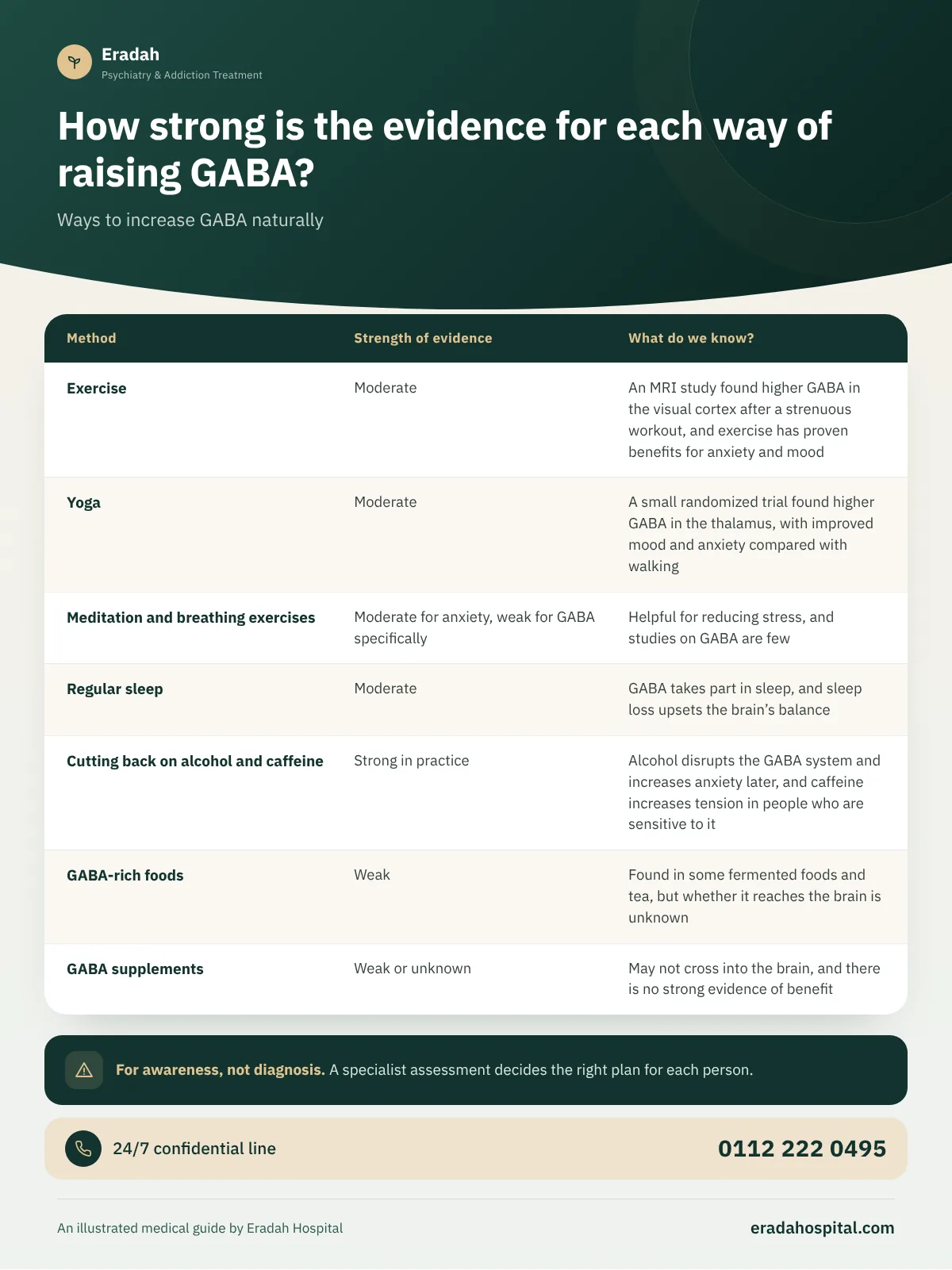
How strong is the evidence for each way of raising GABA?
| Method | Strength of evidence | What do we know? |
|---|---|---|
| Exercise | Moderate | An MRI study found higher GABA in the visual cortex after a strenuous workout, and exercise has proven benefits for anxiety and mood |
| Yoga | Moderate | A small randomized trial found higher GABA in the thalamus, with improved mood and anxiety compared with walking |
| Meditation and breathing exercises | Moderate for anxiety, weak for GABA specifically | Helpful for reducing stress, and studies on GABA are few |
| Regular sleep | Moderate | GABA takes part in sleep, and sleep loss upsets the brain’s balance |
| Cutting back on alcohol and caffeine | Strong in practice | Alcohol disrupts the GABA system and increases anxiety later, and caffeine increases tension in people who are sensitive to it |
| GABA-rich foods | Weak | Found in some fermented foods and tea, but whether it reaches the brain is unknown |
| GABA supplements | Weak or unknown | May not cross into the brain, and there is no strong evidence of benefit |
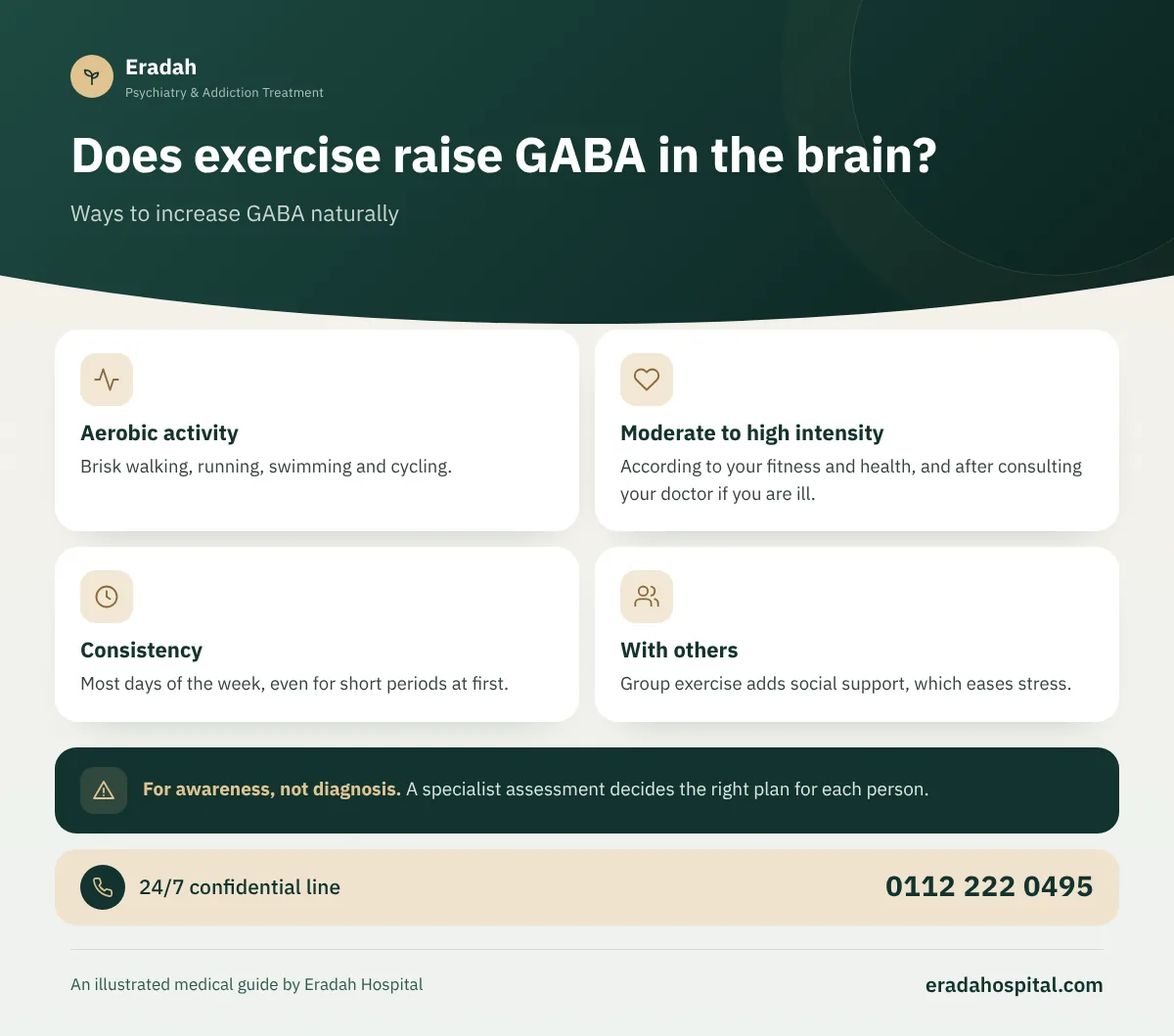
Does exercise raise GABA in the brain?
In a study published in 2016 in a neuroscience journal, Maddock and colleagues measured GABA and glutamate in the brain with magnetic resonance spectroscopy before and after strenuous aerobic exercise. They found a marked rise in both in the visual cortex, lasting a short time after the exercise. The researchers explain this by the brain using extra energy sources during exercise to make more neurotransmitters.
These are preliminary results in a limited number of volunteers, but they are consistent with what is firmly established: regular exercise eases anxiety and depression and improves sleep. The clearest effect comes with consistency, not a single session.
Brisk walking, running, swimming and cycling.
According to your fitness and health, and after consulting your doctor if you are ill.
Most days of the week, even for short periods at first.
Group exercise adds social support, which eases stress.
What is the relationship between yoga and GABA?
One of the best-known studies is a randomized trial by Streeter and colleagues, published in 2010, which compared yoga with walking at a similar level of physical effort for 12 weeks. Mood improved and anxiety fell more in the yoga group than in the walking group, and this improvement was linked to higher GABA in the thalamus region of the brain.
The study is small, so its results should not be overstated, but it offers reasonable evidence that combining movement, regular breathing and mental focus may affect the GABA system. You can practice simple stretching and breathing exercises at home, or join a group led by an instructor.
Do breathing and meditation exercises calm the nervous system?
Slow, deep breathing activates the “calming” nervous system and lowers heart rate and tension within minutes, and mindfulness helps you notice anxious thoughts without being carried away by them. The evidence for their benefit in anxiety is good, but their direct effect on GABA is still being studied.
- Sit in a quiet place and put your hand on your belly.
- Breathe in slowly through the nose and notice your belly rising.
- Breathe out slowly, a little longer than the inhale.
- Repeat for a few minutes, and gently return to your breathing whenever your mind wanders.
- Practice daily, not only in moments of stress.
How does regular sleep support GABA balance?
GABA takes part in falling asleep and staying asleep, which is why many sleep medications act on it. Disturbed sleep in turn raises arousal and anxiety the next day. Improving sleep through habits is the first step before considering any medication.
- Keep a fixed wake-up time every day.
- Dim the lights and avoid screens for an hour before bed.
- Avoid caffeine after the afternoon if you are sensitive to it.
- Do not use alcohol, sedatives or pregabalin “for sleep” without a prescription.
- If insomnia continues for weeks, see our guide to chronic insomnia; cognitive behavioral therapy for insomnia is effective.
Are there foods that raise GABA?
GABA occurs naturally in some foods, such as fermented foods, green and black tea, and some grains, legumes and vegetables. But medical references caution that the GABA we eat may not reach the brain because of the blood-brain barrier, and its actual effect on the brain is unknown.
What really helps is a balanced eating pattern that provides what the brain needs to make GABA itself, including vitamin B6, found in fish, poultry, legumes, bananas and potatoes. Severe deficiency of this vitamin is rare in people who eat a varied diet. Researchers are also studying the role of gut bacteria in producing GABA and the gut-brain connection, an emerging field that does not yet support treatment recommendations.
Are GABA supplements useful and safe?
GABA supplements and herbs promoted for “calming,” such as valerian and others, are sold. The evidence for their benefit is weak or insufficient, and it is not known how much oral GABA crosses into the brain. More importantly, some of them may double the effect of sedatives and alcohol, increasing drowsiness and slowing reaction time.
- Do not combine them with benzodiazepines, sleeping pills, pregabalin, alcohol or opioid painkillers.
- Do not use them during pregnancy or breastfeeding, for children, or with chronic illnesses except under medical supervision.
- Do not drive or operate machinery if you feel drowsy after any calming product.
- Tell your doctor and pharmacist about any supplement you take.
That is why we do not give amounts or recommend any particular product; the decision is made with your doctor or pharmacist once they know your condition and medications.
Why are alcohol and sedatives not a way to raise GABA?
Some people in Egypt turn to alcohol, a sedative pill or pregabalin to “calm the nerves.” These substances do strengthen GABA’s effect at first, but the brain adapts quickly: the GABA system becomes less sensitive, so the person needs more, anxiety returns worse between doses, and then stopping itself becomes dangerous because of withdrawal.
When are natural ways of supporting GABA not enough?
Healthy habits help everyone, but they are not enough on their own if you have an anxiety disorder that disrupts your life, panic attacks, chronic insomnia, depression, or dependence on alcohol or sedatives. In these cases you need an assessment by a psychiatrist, and appropriate psychological and medication treatment is effective. If thoughts of death or self-harm appear, seek help immediately by calling 123 or the mental health support line 16328.