Short-term harms of barbiturates
MedlinePlus notes that barbiturates can make a person seem intoxicated even at relatively low amounts. Common side effects include the following:
- Drowsiness, dizziness and headache.
- Nausea and vomiting.
- Slowed thinking and impaired movement and memory, according to NIDA.
- Hyperactivity or excitement instead of calming in some children.
MedlinePlus also warns of serious side effects that call for contacting a doctor right away when using phenobarbital: slow or difficult breathing, swelling of the eyes or lips, skin rash, blistering or peeling skin, fever, and confusion.
Why is a barbiturate overdose dangerous?
MedlinePlus explains a hidden reason: tolerance to the mood effect of barbiturates develops quickly with repeated use, while tolerance to their lethal effect develops slowly. So a person raises the amount in search of the same effect and, without realizing it, gets close to the toxic dose. It adds that most overdoses happen with a mixture of substances, often alcohol or opioids such as heroin and fentanyl.
The difference between the first two figures sends a clear message: getting to the hospital early saves lives. In hospital, the patient may need breathing support with a ventilator, intravenous fluids, activated charcoal, and in very severe cases dialysis to remove the drug from the blood, according to MedlinePlus.
Harms of barbiturates to the organs of the body
| Organ | Potential harm |
|---|---|
| Brain | Confusion, reduced consciousness, unsteadiness and slurred speech, which can progress to coma and loss of brainstem reflexes. |
| Lungs | Suppression of the breathing centers to the point of stopping breathing, and pneumonia if vomit enters the lungs. |
| Heart | Widening of blood vessels, low blood pressure and weakened heart function. |
| Digestive system | Slowed bowel movement, nausea and vomiting. |
| Muscles | Severe muscle damage from lying for a long time on a hard surface while unconscious. |
| Kidneys | Injury that may become permanent as a result of muscle damage. |
| Skin | Skin blisters that may appear with an overdose. |
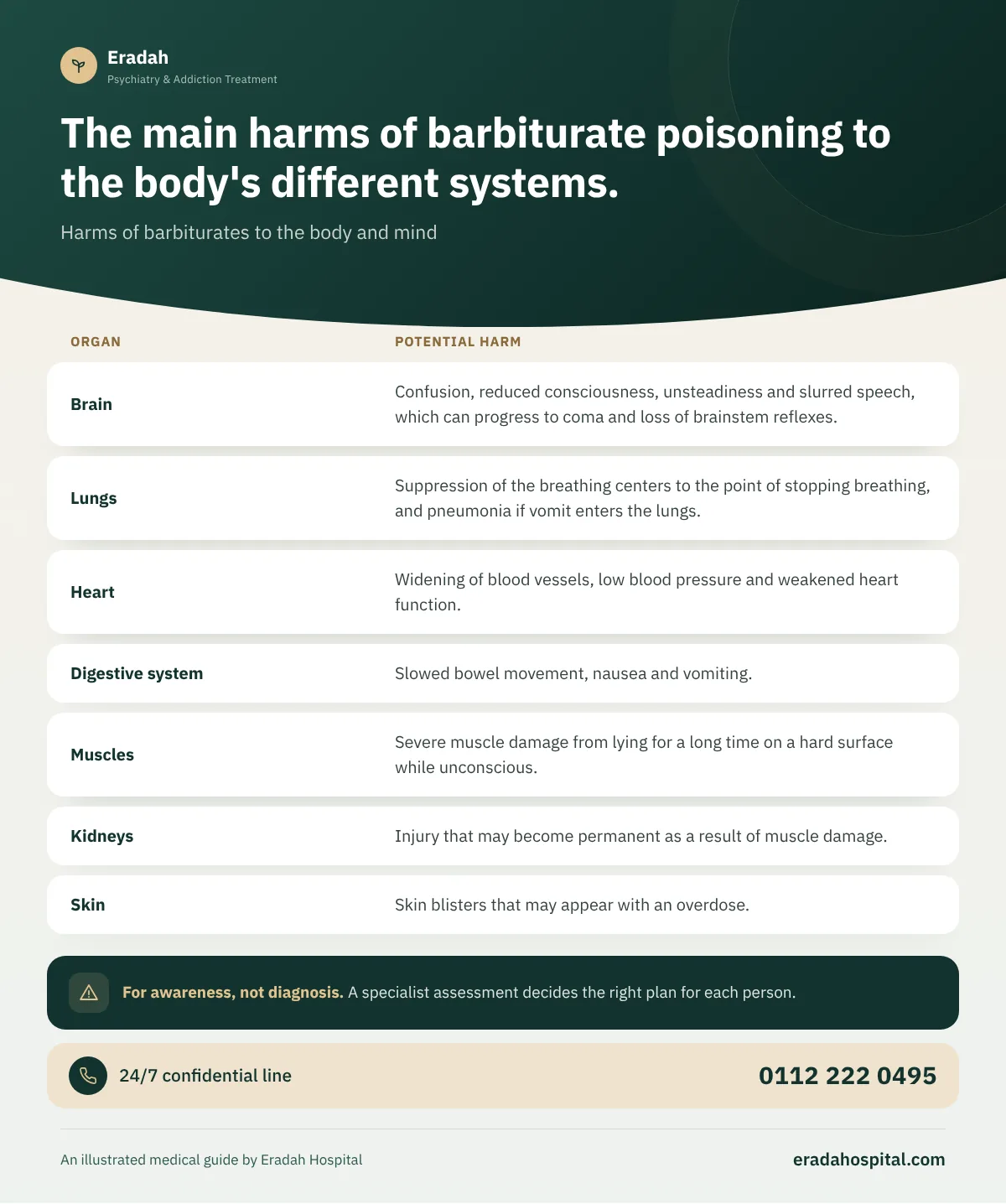
Sources: the StatPearls review of barbiturate toxicity, and MedlinePlus. StatPearls also notes a drop in body temperature caused by suppression of the brain's temperature-regulating centers.
Complications of loss of consciousness and falls
The danger of an overdose is not limited to breathing. According to MedlinePlus, while under the effect a person may suffer head injuries and concussion from falling, or neck and spinal injuries that can cause paralysis, and may also develop pneumonia because of a weakened swallowing reflex and vomit or food entering the lungs.
Long-term harms of barbiturates
MedlinePlus notes that excessive, long-term use of barbiturates such as phenobarbital may cause changes in alertness, a decline in the ability to perform tasks, irritability, and memory loss. The MSD Manual adds that people who take high amounts of sedatives often have difficulty thinking, slow speech, poor comprehension and concentration, poor judgment, and unstable emotions.
Barbiturates also cause physical and psychological dependence that develops over weeks to months of chronic use, according to MSD, so stopping itself becomes a risk that needs a medical plan, as we explain in barbiturate withdrawal symptoms.
Drug interactions
MedlinePlus notes that a doctor may need to adjust the doses of other medications or monitor the patient more closely when phenobarbital is taken, that it may reduce the effectiveness of all types of hormonal birth control, and that alcohol increases its side effects. For this reason, tell your doctor and pharmacist about all medications, supplements and herbs before starting.
Harms of barbiturates in pregnancy, breastfeeding and older adults
- Pregnancy: MedlinePlus notes that phenobarbital may harm the fetus, and the MSD Manual indicates that it increases the risk of birth defects and that long-term use of barbiturates during pregnancy may cause withdrawal in the newborn.
- Breastfeeding: The drug may reach the infant through breast milk, so the baby's drowsiness and weight gain should be monitored.
- Older adults: They are not usually advised to take phenobarbital because it is less safe and less effective than other alternatives, according to MedlinePlus.
In all of these situations the decision belongs to the doctor alone, and an epilepsy medication must not be stopped suddenly because of pregnancy without consulting them.
Do the harms of barbiturates go away after stopping?
Most chronic effects on concentration, memory and mood improve gradually after safe discontinuation and treatment. But complications of an overdose, such as injuries from falls or kidney damage, may leave a permanent mark, which is why prevention and early, medically supervised discontinuation matter most.
Danger signs after using barbiturates: call ambulance (123) immediately
- A change in level of consciousness, great difficulty waking, or coma
- Shallow, slow or irregular breathing
- Slow, slurred speech, severe unsteadiness and confused thinking
- Low body temperature or blisters on the skin after taking a large amount
- Seizures, delirium or hallucinations after suddenly stopping barbiturates
Call ambulance (123) immediately. If the person is unconscious but breathing, place them on their side so they do not choke on vomit. Stay with them and do not leave them alone to “sleep it off.” Do not give them food, drink or any medicine, and tell the paramedics everything you know about what they took and when.
Call the ambulance 123