Short-term harms of alcohol
These harms appear within hours of drinking, and can happen even to someone drinking for the first time or on a single occasion:
- Impaired judgment and decision-making, raising the risk of road accidents, falls, drowning and injuries.
- Disturbed balance and coordination and slow reaction time.
- Memory loss for periods during drinking, known as an alcoholic blackout.
- Vomiting, dehydration and stomach upset, with the risk of choking on vomit if consciousness is lost.
- Aggressive or impulsive behavior, and unsafe relationships.
- Alcohol poisoning from heavy drinking in a short time, which can depress breathing and lead to death.
How does alcohol damage the liver?
The liver is the organ responsible for breaking down alcohol, so it bears the greatest burden. The damage usually passes through successive stages that may cause no obvious pain at the start, so many people discover it late:
- Stage 1Alcoholic fatty liver
Fat builds up inside liver cells. This stage is common in heavy drinkers and often improves once drinking stops.
- Stage 2Alcoholic hepatitis
Inflammation and damage to liver cells that may cause yellowing of the skin and eyes, pain and fever, and severe cases can be life-threatening.
- Stage 3Fibrosis
Scars form in liver tissue as a result of repeated inflammation, and the liver begins to lose part of its function.
- Stage 4Advanced liver fibrosis (cirrhosis)
Scars replace a large part of the liver, with the risk of fluid buildup in the abdomen, bleeding from esophageal varices, altered consciousness and liver cancer.
Harms of alcohol to the pancreas, heart and other organs
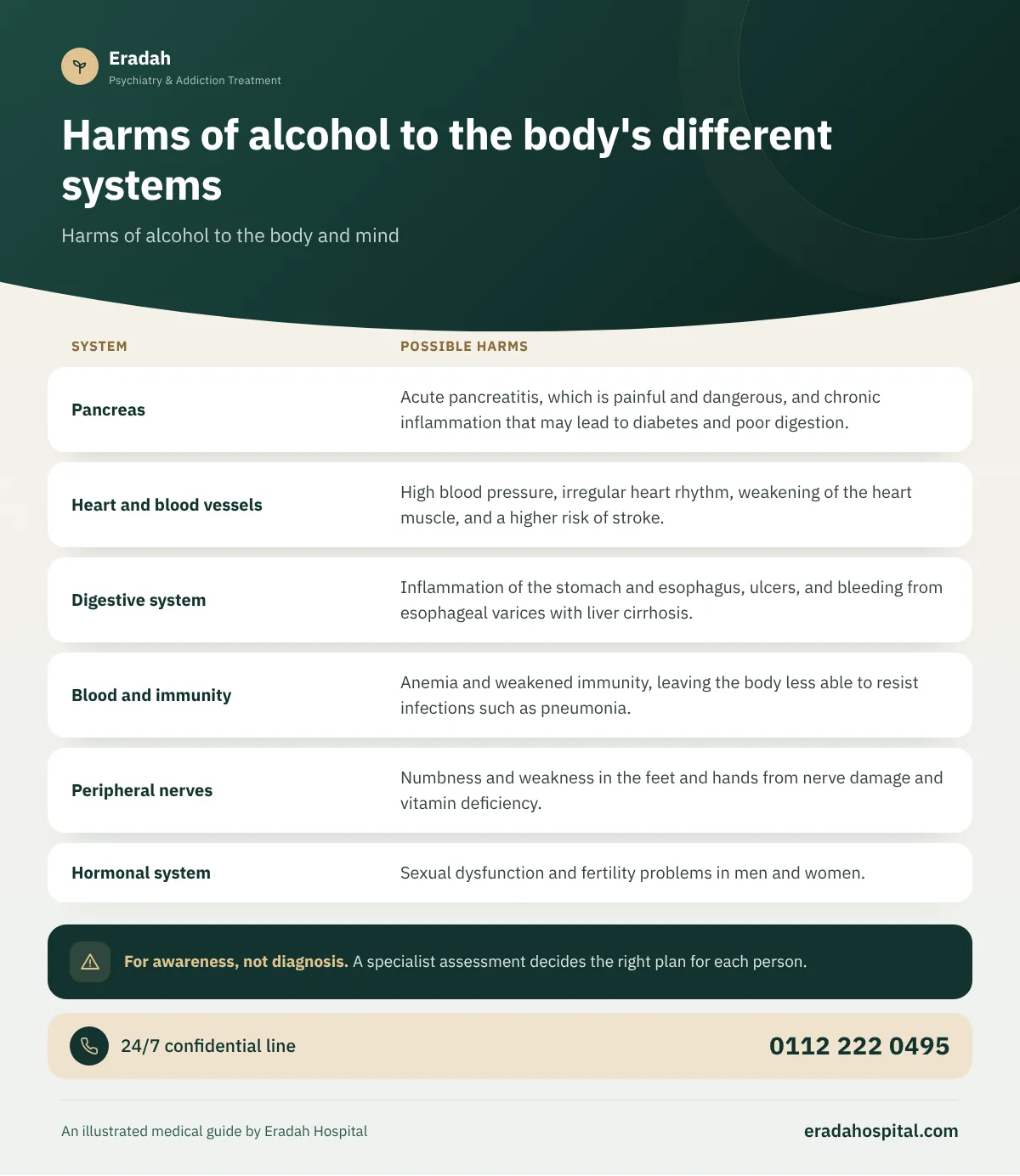
| System | Possible harms |
|---|---|
| Pancreas | Acute pancreatitis, which is painful and dangerous, and chronic inflammation that may lead to diabetes and poor digestion. |
| Heart and blood vessels | High blood pressure, irregular heart rhythm, weakening of the heart muscle, and a higher risk of stroke. |
| Digestive system | Inflammation of the stomach and esophagus, ulcers, and bleeding from esophageal varices with liver cirrhosis. |
| Blood and immunity | Anemia and weakened immunity, leaving the body less able to resist infections such as pneumonia. |
| Peripheral nerves | Numbness and weakness in the feet and hands from nerve damage and vitamin deficiency. |
| Hormonal system | Sexual dysfunction and fertility problems in men and women. |
Alcohol and sex: it increases boldness and weakens ability
The relationship between alcohol and sex is contradictory: alcohol lowers inhibitions and gives a feeling of boldness, but at the same time it is a nervous system depressant, slowing the signals needed for erection and sensation. That is why the UK's National Health Service lists excessive drinking among the common causes of temporary difficulty getting an erection.
| Area | What the evidence says |
|---|---|
| Sexual performance | In an Indian study of 70 men being treated for alcohol dependence, sexual dysfunction appeared in 75.7% of them. Erectile dysfunction was the most common, followed by low desire, then premature ejaculation. |
| Hormones | In an analysis that pooled 40 studies covering more than 23,000 men, drinking was linked to lower testosterone and lower testicle-stimulating hormones, and the harm was clear in heavy drinkers. |
| Semen | In the same analysis, drinking was linked to lower semen volume and lower antioxidants in it. |
| Behavior | Drinking weakens judgment of consequences, raising the likelihood of unsafe relationships, infections and marital conflict. |
The liver has a role many people do not know about: a liver damaged by alcohol upsets the body's hormone balance. And the depression that accompanies regular drinking extinguishes desire in turn, so the causes pile up.
Many of these effects improve after stopping, especially if advanced damage to the liver or nerves has not occurred.
Does alcohol cause cancer?
Yes. The International Agency for Research on Cancer, part of the World Health Organization, classifies alcohol in Group 1 carcinogens, the same category that includes tobacco and asbestos. Alcohol is linked to at least seven types of cancer, including cancers of the mouth, throat, esophagus, liver, colon and breast.
This happens because the body converts alcohol into acetaldehyde, a substance that damages the DNA in cells. The World Health Organization stresses that there is no safe minimum level of alcohol with regard to cancer risk, and that drinking less lowers the risk and stopping lowers it further.
Harms of alcohol to the brain and nerves
Alcohol affects the brain directly, and indirectly through poor nutrition and vitamin deficiency, especially vitamin B1 (thiamine), which the brain needs to produce energy:
Heavy, prolonged drinking is linked to declining memory, concentration and planning, and shrinkage in some areas of the brain.
An emergency caused by thiamine deficiency, appearing as confusion, abnormal eye movements and unsteady walking, and needing urgent hospital treatment.
If thiamine deficiency is not treated, it can progress to severe, chronic memory loss in which forming new memories is difficult.
Heavy drinking raises blood pressure and increases the risk of stroke.
Psychological harms of alcohol
Many people believe alcohol eases anxiety and sadness, but in the long run it increases them. After the temporary calming effect, the brain rebounds with stronger anxiety and tension, and regular drinking is linked to depression, anxiety disorders and insomnia, and doubles the risk of suicidal thoughts and impulsive behavior. If a psychological disorder was already present, alcohol complicates it, which is known as dual diagnosis, and both conditions need treatment together in a dual diagnosis program.
Harms of alcohol in pregnancy and to the fetus
Alcohol crosses the placenta directly to the fetus, and there is no safe time or safe amount during pregnancy. Drinking during pregnancy may cause miscarriage or premature birth, or what are known as fetal alcohol spectrum disorders, a group of lasting problems that may include delayed growth, distinctive facial features, and learning and behavior difficulties.
Why is alcohol more dangerous for teenagers?
The brain keeps developing until the mid-twenties, and alcohol at this stage affects the areas of memory and self-control. Research from the US National Institute on Alcohol Abuse and Alcoholism also indicates that people who start drinking at an early age are more likely to develop alcohol use disorder later than those who delay the start.
The danger of mixing alcohol with medicines and other substances
Alcohol with benzodiazepine sedatives, opioid painkillers or sleeping pills multiplies respiratory depression and may lead to death. With stimulants such as cocaine, the burden on the heart increases. Alcohol also interacts with many common medicines, so the doctor should always be told about drinking.
Does the harm from alcohol go away after stopping?
Much of it improves: fatty liver may return to normal within weeks to months of stopping, and blood pressure, sleep, mood and concentration gradually improve. Advanced fibrosis, Korsakoff syndrome and some nerve damage may be partly permanent and need continued medical follow-up. The earlier the stopping and treatment, the better the chances of recovery.
Signs of alcohol poisoning and withdrawal danger: call the ambulance on 123 immediately
- Severe confusion, difficulty staying awake, or being unable to be roused
- Vomiting while semi-conscious, with a risk of choking
- Seizures, whether during drinking or in the first days after stopping
- Very slow or irregular breathing, or pauses between breaths
- Cold, bluish or pale skin, and a drop in body temperature
- Delirium, severe tremor and hallucinations days after stopping drinking
Call the ambulance on 123 and do not leave the person alone. If they lose consciousness, place them on their side so they do not choke on vomit, and do not give them coffee, put them under cold water or force them to walk; these are myths that do not stop the poisoning and may make it worse, because the alcohol in the stomach keeps reaching the blood.
Call the ambulance 123
21Social harms and accidents