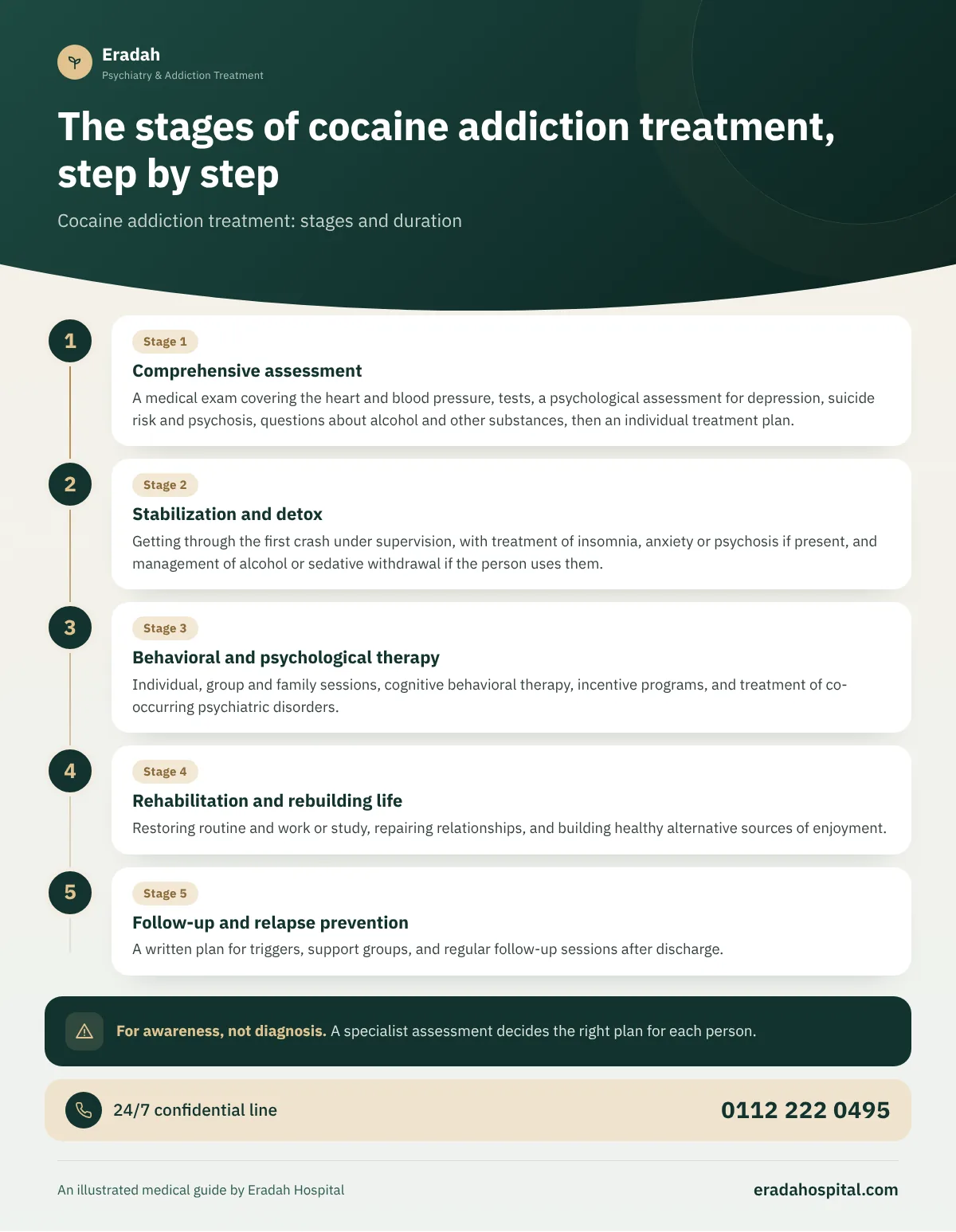
Stages of cocaine addiction treatment
- Stage 1Comprehensive assessment
A medical exam covering the heart and blood pressure, tests, a psychological assessment for depression, suicide risk and psychosis, questions about alcohol and other substances, then an individual treatment plan.
- Stage 2Stabilization and detox
Getting through the first crash under supervision, with treatment of insomnia, anxiety or psychosis if present, and management of alcohol or sedative withdrawal if the person uses them.
- Stage 3Behavioral and psychological therapy
Individual, group and family sessions, cognitive behavioral therapy, incentive programs, and treatment of co-occurring psychiatric disorders.
- Stage 4Rehabilitation and rebuilding life
Restoring routine and work or study, repairing relationships, and building healthy alternative sources of enjoyment.
- Stage 5Follow-up and relapse prevention
A written plan for triggers, support groups, and regular follow-up sessions after discharge.
Does cocaine addiction need detox?
Cocaine withdrawal on its own does not usually cause dangerous physical symptoms that need substitute medication, as with opioids, but the initial stabilization phase matters for two reasons: depression and the risk of suicidal thoughts in the first days and weeks, and the possibility that alcohol or sedatives are being used along with cocaine, substances whose withdrawal can be dangerous and requires mandatory medical supervision. So “detox” in the case of cocaine means a safe, monitored period in which real treatment begins, not merely waiting for the substance to leave the body. You can find the details of this stage on the cocaine withdrawal symptoms page.
Is there a medication to treat cocaine addiction?
So far there is no medication approved by international bodies that treats cocaine addiction specifically or removes the craving for it, and there is no “substitute” as there is in opioid treatment. Research is under way on various drugs, but the results have not yet led to approval. Even so, the doctor uses medication in specific roles:
| Purpose | Role |
|---|---|
| Treating co-occurring depression or anxiety | Medications chosen by the psychiatrist according to the diagnosis, because treating the co-occurring disorder reduces relapse. |
| Treating insomnia or temporary psychosis | Medications for a short period under supervision to get through the first stage safely. |
| Co-occurring alcohol addiction | A medication such as disulfiram or another may be used to treat alcohol addiction when present, at the doctor’s decision. |
| ADHD (attention-deficit/hyperactivity disorder) | Appropriate, closely monitored treatment if the diagnosis is confirmed, as part of the doctor’s plan. |
Behavioral therapies: the first choice for treating cocaine addiction
Behavioral therapies have the strongest research support for treating cocaine addiction, and they work by changing the thoughts, habits and triggers that keep the addiction going:
Helps the patient recognize high-risk situations and automatic thoughts, and build skills for coping with cravings and stress.
A system of tangible rewards for negative tests and for attending sessions, and one of the most effective methods with stimulants.
A supportive, substance-free environment in which the patient learns from others’ experiences and rebuilds their responsibilities.
Rebuilds trust and teaches the family how to support without enabling use.
Treatment of co-occurring depression, anxiety, trauma or ADHD within the same plan.
A conversation that strengthens the patient’s own motivation to change instead of pressuring them, and especially useful at the start.
Is inpatient or outpatient treatment better?
| Point of comparison | Inpatient treatment (residential) | Outpatient treatment |
|---|---|---|
| Suits | Severe addiction, or severe depression with suicide risk, or psychosis, or use of multiple substances, or earlier failed attempts | Milder, stable cases with a supportive family and a safe environment |
| Main advantage | Complete separation from triggers and round-the-clock monitoring | Continuing work and daily life with regular sessions |
| Challenge | The transition back to the original environment after discharge | Staying close to triggers during a fragile period |
A plan often begins with a short stay, then moves to intensive outpatient treatment and then follow-up; the treatment team decides this for each case.
How long does cocaine addiction treatment take?
| Stage | Approximate duration |
|---|---|
| Initial stabilization | From days to about two weeks |
| Intensive treatment (inpatient or outpatient) | From 4 to 12 weeks or more |
| Outpatient treatment and rehabilitation | Several months |
| Follow-up and relapse prevention | At least a year, and it may extend longer |
Research indicates that staying in treatment long enough is one of the most important factors in success, and that very short programs are linked to higher relapse rates. The actual length is set by each patient’s progress, not a fixed number.
Relapse prevention after cocaine treatment
- Know your personal triggers: places, people, feelings and particular days, and above all alcohol.
- A written plan for moments of weakness: whom to call, where to go, and what to do in the first minutes of a craving.
- Change the late-night circle, and manage money with the family’s help in the first months.
- Keep to follow-up sessions and treat any co-occurring depression or anxiety.
- Build a healthy routine: regular sleep, exercise, work or study, and supportive relationships.
How to choose the right cocaine addiction treatment center
- A team that includes a psychiatrist and therapists specialized in addiction, not just general supervision.
- A comprehensive psychological assessment that covers depression, ADHD and other disorders.
- Scientifically proven behavioral programs such as cognitive behavioral therapy and incentive programs.
- Involving the family in treatment, and a clear follow-up plan after discharge.
- Respect for privacy and confidentiality, and staying away from any place that promises a “guaranteed quick cure.”
What to look for in a hospital for cocaine addiction treatment
Cocaine withdrawal is unlike opioid withdrawal; the body usually does not shake or vomit, but what follows stopping can bring a heavy psychological “crash”: deep sadness, disturbed sleep, intense cravings, and sometimes suicidal thoughts or persecutory suspicion. So the right place is judged by its ability to monitor mood and safety in the first days, more than by offering “detox.” Before agreeing to any center, check the following:
- A psychiatrist who assesses depression and the risk of self-harm from day one, not after a week.
- A direct question about alcohol, cannabis or sedatives, which many people use to “calm” the effects of cocaine.
- Heart and blood pressure checks when there is chest pain or palpitations.
- A behavioral program that teaches how to cope with cravings cues: money, late nights, and certain friends.
- A clear plan for after discharge, because relapse often happens at the first familiar occasion.
At Eradah there is a doctor and nursing staff in the building day and night, and the dual diagnosis program treats co-occurring depression alongside addiction; review the stages of cocaine withdrawal to know what to expect. For a free, confidential assessment, call or message on WhatsApp 01122220495 at any time, or request a consultation now; residential treatment is available for men, while women are referred after the consultation.
Cocaine addiction treatment at Eradah
At Eradah we begin with a comprehensive medical and psychological assessment that sets the right plan, then a safe stabilization period under round-the-clock supervision when needed, followed by a treatment program that combines cognitive behavioral therapy with group and family therapy, with any co-occurring psychiatric disorder treated within the same plan, then regular follow-up after discharge to prevent relapse. All of this with complete confidentiality from the first call.