What is crack cocaine?
“From the first puff I felt like I was king of the world, and fifteen minutes later I was looking for the next one.” This description, repeated again and again by people who smoke crack, explains why doctors regard it as one of the substances that turns experimentation into addiction fastest.
Crack is the freebase form of cocaine, chemically processed into hard chunks that can be smoked, whereas the original powder is not suitable for smoking. NIDA explains that the name “crack” comes from the crackling sound the chunk makes when it is heated. In other words, it is the same substance, but it reaches the brain in a different way and much faster. To learn about the powder and the history of the substance, see the comprehensive cocaine guide.
The difference between crack and cocaine
It is the same substance; the real difference is speed. When it is smoked, the lungs absorb the drug and carry it to the brain within seconds, so the dopamine high spikes sharply and then drops sharply. The faster the rise and fall, the stronger the urge to repeat. That is why crack is linked to a pattern of “continuous sessions” lasting hours or days without sleep or food, after which the person collapses into the withdrawal phase with exhaustion, depression and intense cravings.
Harms of crack to the body
| Organ | Harm |
|---|---|
| Lungs | Cough, black phlegm, coughing up blood and shortness of breath, worsening asthma, and “crack lung” |
| Heart | Fast heart rate and high blood pressure, and the risk of heart attack and rhythm disturbances |
| Brain | Strokes and seizures, paranoia and psychosis |
| Kidneys | Kidney damage, especially with muscle breakdown and high body temperature |
| Skin | Burns on the lips and fingers, and mouth sores from smoking equipment |
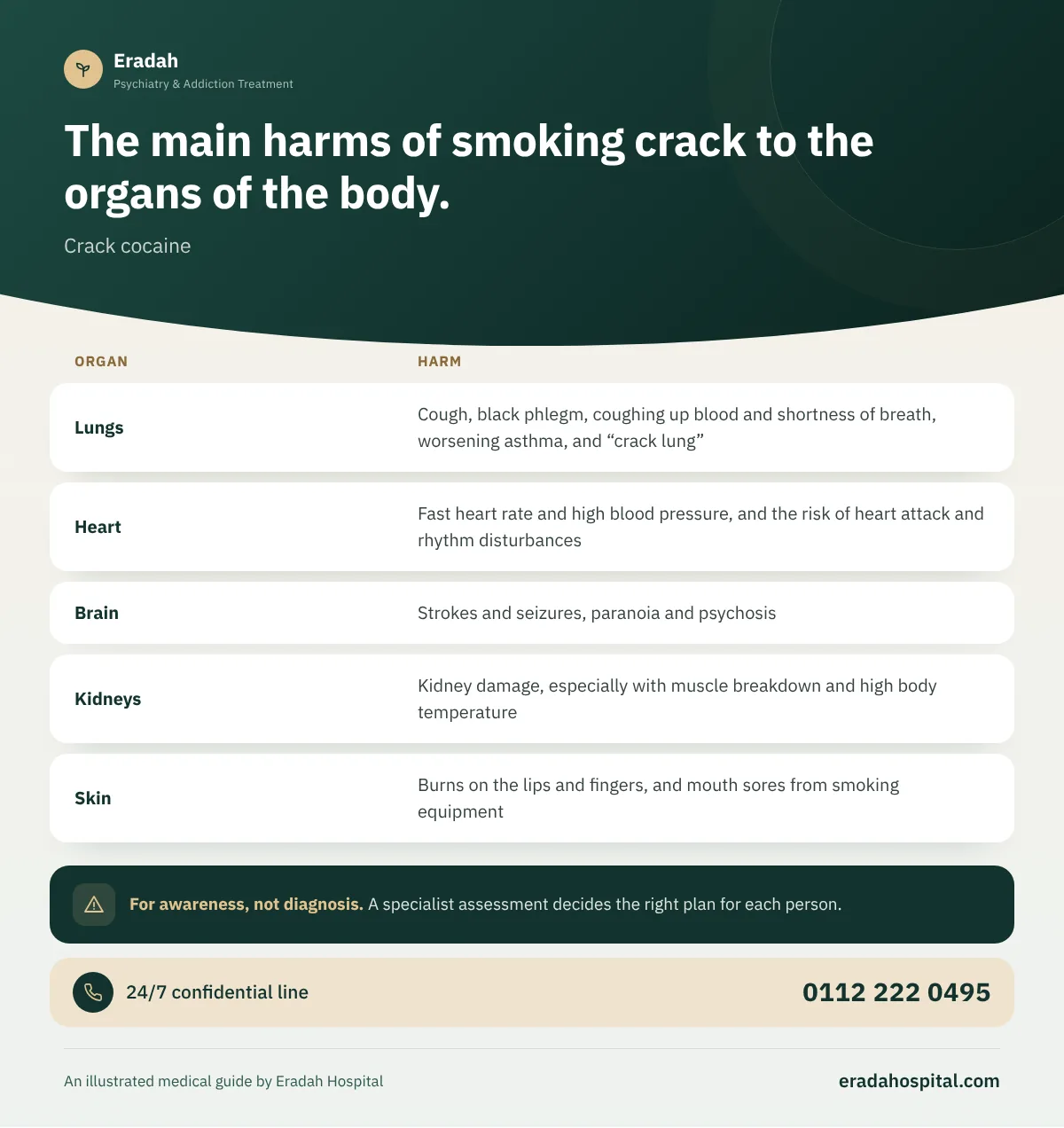
A French systematic review published in 2020 on the lung complications of cocaine describes a wide range of harms, including cough, black phlegm, coughing up blood and chest pain, pneumothorax (air leaking around the lung), bleeding in the lungs, and an acute condition known as “crack lung”, which appears within hours to two days of smoking, with shortness of breath, fever and coughing up blood. NIDA confirms that smoking crack damages the lungs and makes asthma worse.
Crack, the heart and the brain
Cocaine narrows the blood vessels and raises blood pressure and heart rate, so it is linked to heart attacks, rhythm disturbances and strokes, even in young people. A StatPearls review of cocaine toxicity explains that severe cases may include high body temperature, agitation, seizures and muscle breakdown, which is an emergency. With repeated use paranoia appears: suspicion of neighbors and family and a feeling of being watched, which can progress to full psychosis.
Signs of crack use
- Disappearing for hours or days, then returning extremely tired and sleeping for a long time.
- Small burns on the lips or fingertips.
- A chronic cough or dark phlegm with no clear cause.
- Irritability, suspicion of others and unexplained anxiety.
- Noticeable weight loss and neglect of hygiene.
- Frequent need for money and things disappearing from the home.
These signs alone do not prove drug use, but they deserve a calm conversation. The guide to signs of drug use can help you organize your observations before you talk.
Why does crack addiction develop so fast?
NIDA explains that regular cocaine use changes the brain’s reward and stress circuits: natural pleasure fades and the stress circuits become more sensitive, so mood is low without the drug. With crack this cycle repeats dozens of times in a single session, so addiction forms faster and tolerance develops, meaning the person needs larger amounts for the same effect.
Treatment of crack addiction
According to NIDA, there is currently no approved medication from the US Food and Drug Administration for cocaine addiction, but behavioral therapy has proven effective, chiefly contingency management, which gives tangible rewards for negative drug tests, and cognitive behavioral therapy to deal with triggers and cravings. At the same time, the doctor treats insomnia, depression and psychosis if present.
Many cases need to begin in a residential treatment program, especially with paranoia, severe depression or repeated relapse, followed by an aftercare program. You can find the stages in detail in the guide to cocaine addiction treatment.