What is cocaine?
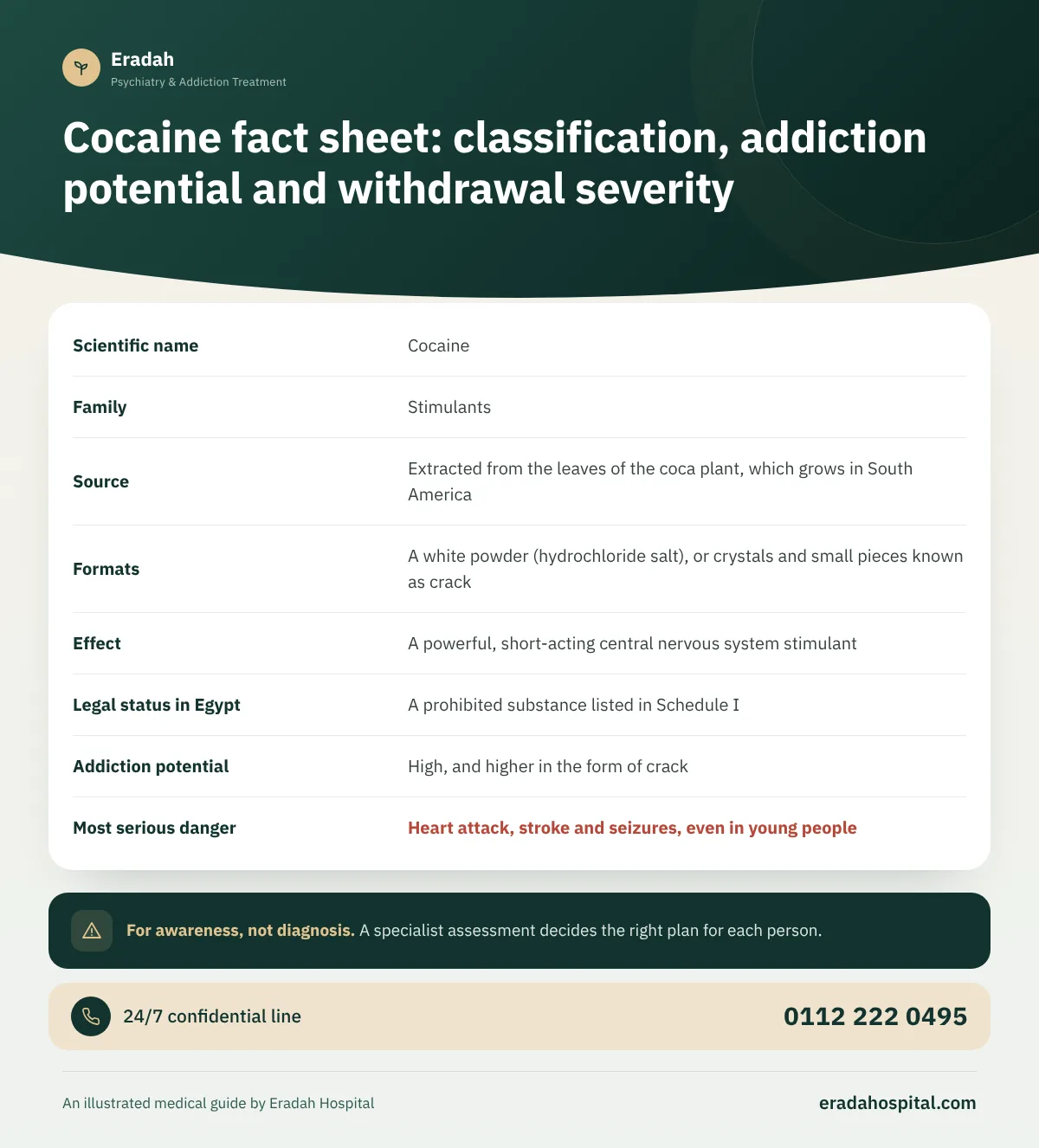
Cocaine is a stimulant extracted from the leaves of the coca plant, a shrub that grows mainly in the Andes mountains of South America. It belongs to the family of stimulants that multiply the activity of the nervous system, such as shabu and amphetamine.
People of the Andes have chewed coca leaves for centuries, but pure cocaine was not chemically isolated from the leaves until the nineteenth century. It then spread into many medicines and drinks and was used as a local anesthetic in eye and nose surgery, until its high capacity to cause addiction and its harm to the heart became clear, and it was placed under strict international control.
Cocaine is one of the drugs most associated with an image of “parties, success and confidence,” a misleading image; the confidence it gives is temporary and artificial, and the body pays for it in the heart, the brain and mental state.
Forms of cocaine: what is the difference between powder and crack?
Cocaine appears in two main chemical forms that differ in appearance, speed of effect and danger, though the active substance is the same:
The hydrochloride salt, a fine white powder that dissolves in water. It is the most common form and has very limited medical use as a local anesthetic.
The base form of cocaine, appearing as crystals or small hard pieces. It reaches the brain much faster than powder, which gives it the highest addiction potential.
The plant source from which cocaine is extracted; they contain only a tiny proportion of it compared with the extracted substance.
| Point of comparison | Powder | Crack |
|---|---|---|
| Format | Fine white powder | Crystals or small hard pieces |
| Speed of reaching the brain | Relatively slower | Within seconds |
| Duration of effect | Minutes to less than an hour | Shorter, often just a few minutes |
| Addiction potential | High | Very high |
How does cocaine affect the brain and body?
Normally the brain releases dopamine in response to pleasurable things and then quickly reabsorbs it so the feeling ends. Cocaine shuts this reuptake “gate,” so dopamine, norepinephrine and serotonin pile up between nerve cells, which has three main effects:
- In the reward circuits: euphoria, excess confidence, talkativeness, energy and alertness, and the brain learns to link this feeling with the substance and so asks for it again.
- In the heart and blood vessels: heart rate and blood pressure rise and blood vessels narrow, while the heart muscle’s need for oxygen increases and the blood becomes more likely to clot.
- In the nerves and heart, as a local anesthetic: it blocks sodium channels in cells, the property that made it a local anesthetic, but which can also disrupt the heart’s electrical activity.
With repetition the brain adapts: the reward circuits become less responsive to natural pleasures, the stress circuits become more sensitive, and the decision-making areas in the frontal lobe weaken. This explains why a person may continue despite recognizing the losses.
Cocaine does not create new energy; it spends the brain’s and heart’s reserves all at once, then leaves its user bankrupt of both.
Why is cocaine described as short-acting?
Cocaine breaks down quickly in the body, with a half-life of about an hour, while its stimulant effect lasts from minutes to less than an hour, and is shorter with crack. This speed is part of its danger; the rapid fading of the effect is followed by a drop in mood and an intense urge for more, so many people fall into repeated binges within a few hours that strain the heart and deepen addiction.
Does cocaine have a medical use?
Yes, but a very limited one. In some countries a cocaine solution is used under medical supervision as a local anesthetic for the mucous membranes of the nose and throat during some ear, nose and throat procedures, because it numbs the area and reduces bleeding at the same time. This use takes place in operating rooms in measured amounts, has nothing to do with substance use, and has been replaced by other alternatives in many places.
Cocaine compared with shabu and amphetamine
Stimulants share raising dopamine, energy and strain on the heart, but they differ in source, duration of effect and pattern of danger:
| Substance | Source | Duration of effect | Main risk |
|---|---|---|---|
| Cocaine | Plant-based, from coca leaves | Short: minutes to less than an hour | Sudden heart attack and stroke |
| Crystal meth (methamphetamine) | Fully synthetic | Long: many hours | Psychosis, hallucinations, violence and tooth damage |
| Amphetamine and Captagon | Fully synthetic | Hours | Insomnia, anxiety, psychosis and strain on the heart |
Mixing cocaine with alcohol in particular is common and deserves a warning, because the liver forms from them a third substance called cocaethylene, more toxic to the heart than either one alone.
The legal status of cocaine in Egypt
Cocaine, coca leaves and their preparations are prohibited substances in Egypt and are listed in Schedule I attached to Law No. 182 of 1960 on combating narcotics and regulating their use and trade. The law treats a person who comes forward seeking treatment differently, and the Fund for Drug Control and Treatment of Addiction offers free, confidential treatment through the hotline 16023, along with specialized centers.
This is general educational information and not legal advice.
Cocaine guide: everything you need to know
We have gathered everything about cocaine into 7 pages, each answering one question in detail. Choose what you are looking for:
Cocaine harms
From heart attacks and strokes even in young people, to damage to the nose and lungs, psychosis and depression, and the danger of mixing it with alcohol.
Causes of cocaine addiction
Why is it hard to stop despite how short its effect is? The role of the substance itself, genetics, mental health conditions, environment, work pressure and staying up late.
Cocaine addiction symptoms
The physical, behavioral and psychological signs a family may notice, the criteria for diagnosing addiction, and how to open the conversation.
Cocaine withdrawal symptoms
Mainly psychological withdrawal: a crash, exhaustion, depression and intense cravings that can last weeks, with a risk of suicidal thoughts.
Cocaine addiction treatment
There is no approved medication specific to it, and treatment relies on cognitive behavioral therapy, motivational and rehabilitation programs, and relapse prevention.
How long cocaine stays in the body
Cocaine breaks down quickly, but its metabolite benzoylecgonine is detected in urine for days, and in hair for months.
Crack cocaine
What is crack? The smoked form of cocaine, which reaches the brain within seconds. How it differs from powder cocaine, its harms to the lungs, heart and mind, the danger signs and treatment options.
Cocaine in numbers
Source: the World Drug Report 2025 from the United Nations Office on Drugs and Crime (UNODC).
Suspect a family member is using cocaine? Start here
The signs of cocaine may not be as obvious as with other drugs because its effect is short, but changes in mood, money and late nights accumulate. These practical steps help you act calmly:
- Stay calm first, and don’t confront them while under the influence; cocaine can make a person tense or aggressive.
- Learn about the substance and its symptoms before talking, so you speak with information rather than accusation.
- Speak with concern and affection, and focus on specific behaviors you have noticed, not on who they are.
- Don’t give them cash without follow-up, and don’t cover for debts or absences.
- Seek specialist consultation for the family even if they refuse treatment at first.
- Memorize the signs of poisoning and the ambulance number, 123, especially chest pain and seizures.
The full details of the physical and behavioral signs are on the page cocaine addiction symptoms.
Signs of cocaine poisoning: call the ambulance (123) immediately
- Pain or pressure in the chest, or severe palpitations and an irregular heartbeat
- A severe rise in body temperature with heavy sweating or hot, dry skin
- Seizures, an epileptic fit or loss of consciousness
- Severe agitation or confusion, or pathological suspicion and unusual aggression
- Signs of a stroke: a drooping face, sudden weakness in an arm or leg, slurred speech, or a sudden severe headache
Call the ambulance on 123 immediately, move the person to a quiet, cool place, do not restrain them by force, and if they lose consciousness place them on their side and stay with them. Tell the paramedics everything they took, including alcohol. There is no home remedy for cocaine poisoning.
Call the ambulance 123