Short-term harms of cocaine
These harms occur within minutes to hours of use and can appear even the first few times, because cocaine suddenly pushes the nervous system and the heart to their limits:
- A sudden rise in blood pressure and a faster heartbeat, with narrowing of blood vessels throughout the body.
- A rise in body temperature, which in cases of poisoning can reach dangerous levels that damage the muscles and kidneys.
- Anxiety, tension and insomnia, and sometimes panic attacks, morbid suspicion or sudden aggression.
- Seizures in some people, even with no previous history of epilepsy.
- Poor judgment and impulsiveness, which raise the risk of accidents and dangerous behavior.
Does cocaine cause heart attacks even in young people?
Yes, and this is one of the most important things young people should know. Cocaine raises the heart muscle’s need for oxygen while at the same time narrowing the coronary arteries that supply it, and it makes the blood more likely to clot. The result can be a heart attack in someone in their twenties with no prior illness, and the risk is highest in the first hours after use.
A blockage or spasm in the coronary arteries deprives part of the heart muscle of blood.
Cocaine can disrupt the heart’s electrical activity, causing a dangerous racing heartbeat or sudden cardiac arrest.
With continued use the heart muscle may weaken, its wall may thicken, and blood pressure may stay permanently high.
Harms of cocaine to the brain and nerves
The effect of narrowed blood vessels and high blood pressure extends to the brain, so cocaine raises the risk of both types of stroke, blockage and bleeding, which can occur in young people. It can also cause seizures and severe headaches. With long-term use, the areas of the frontal lobe responsible for decision-making and impulse control are affected, weakening attention, memory and the ability to plan.
Long-term harms of cocaine to the body’s systems
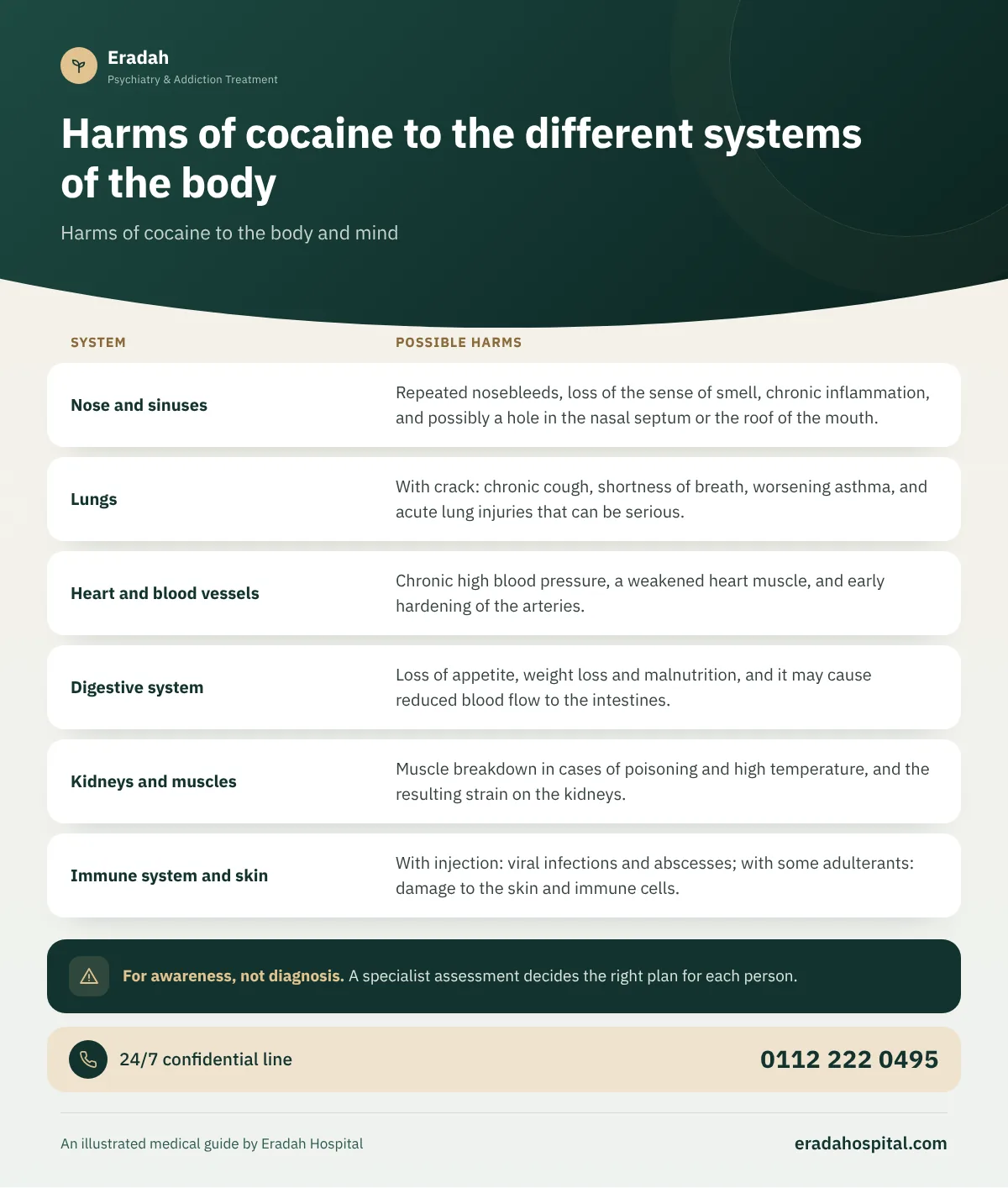
With repeated use over weeks and months, harms accumulate in different systems, and their type depends partly on the form of the substance and how it enters the body:
| System | Possible harms |
|---|---|
| Nose and sinuses | Repeated nosebleeds, loss of the sense of smell, chronic inflammation, and possibly a hole in the nasal septum or the roof of the mouth. |
| Lungs | With crack: chronic cough, shortness of breath, worsening asthma, and acute lung injuries that can be serious. |
| Heart and blood vessels | Chronic high blood pressure, a weakened heart muscle, and early hardening of the arteries. |
| Digestive system | Loss of appetite, weight loss and malnutrition, and it may cause reduced blood flow to the intestines. |
| Kidneys and muscles | Muscle breakdown in cases of poisoning and high temperature, and the resulting strain on the kidneys. |
| Immune system and skin | With injection: viral infections and abscesses; with some adulterants: damage to the skin and immune cells. |
Psychological harms: anxiety, psychosis and depression
The psychological impact of cocaine is no less serious than its physical impact. A brain that gets used to an artificial surge of dopamine goes through cycles of euphoria and crash, and clear psychological problems appear over time:
Constant tension and irritability, and sometimes panic attacks that the person mistakes for a heart attack.
A feeling of being watched or followed, which can progress to auditory hallucinations or a sensation of insects crawling under the skin.
A collapse in mood once the effect wears off, disturbed sleep, and sometimes suicidal thoughts that call for urgent intervention.
These harms are greater in people who already have a psychiatric disorder such as depression or bipolar disorder, which is known as dual diagnosis and requires treating both conditions together.
Harms of mixing cocaine with alcohol and other substances
Many people who use cocaine take it with other substances, and this mixing is among the most dangerous things that can happen:
| The mix | The main risk |
|---|---|
| Cocaine + alcohol | Cocaethylene forms, which stays in the body longer and is more toxic to the heart, and raises the risk of sudden complications. |
| Cocaine + opioids | The cocaine wears off first and the opioid’s suppression of breathing then appears suddenly, a combination known to cause death. |
| Cocaine + other stimulants | Doubled strain on the heart and a dangerous rise in temperature and blood pressure. |
| Adulterated cocaine | Toxic cutting agents or strong opioids, without the user’s knowledge. |
Harms of cocaine in pregnancy and to the fetus
Cocaine crosses the placenta to the fetus and narrows the blood vessels that nourish it. Use during pregnancy is linked to a higher risk of miscarriage, premature birth, low birth weight and early separation of the placenta, and the child may later have behavioral and learning difficulties. The best step for the mother is to go straight to a specialist doctor who will make a safe plan for her and the baby, without fear of stigma.
Harms of cocaine to teenagers and young adults
The brain continues to develop until roughly the mid-twenties, especially the areas that control impulses and planning. For this reason the risk of addiction rises the earlier use begins, and school performance and psychological development suffer. Young people are also more likely to mix cocaine with alcohol at parties, along with long nights and dehydration, which are conditions that raise the risk of heart complications.
Do the harms of cocaine go away after stopping?
Many improve: sleep, appetite and weight return, blood pressure stabilizes, and mood and concentration gradually improve over months. Some harms, such as a perforated nasal septum, the effects of a stroke, or a weakened heart muscle, may need separate treatment and follow-up. The earlier a person stops, the better the chances of recovery, and you can find the steps for this on the cocaine addiction treatment page.
Signs of cocaine poisoning: call the ambulance (123) immediately
- Pain or pressure in the chest, or severe palpitations and an irregular heartbeat
- A severe rise in body temperature with heavy sweating or hot, dry skin
- Seizures, an epileptic fit or loss of consciousness
- Severe agitation or confusion, or pathological suspicion and unusual aggression
- Signs of a stroke: a drooping face, sudden weakness in an arm or leg, slurred speech, or a sudden severe headache
Call the ambulance on 123 immediately, move the person to a quiet, cool place, do not restrain them by force, and if they lose consciousness place them on their side and stay with them. Tell the paramedics everything they took, including alcohol. There is no home remedy for cocaine poisoning.
Call the ambulance 123
19Social and financial harms