What happens to the brain when you stop cocaine?
The brain became used to an artificial surge of dopamine and lowered its sensitivity to it. On stopping, dopamine temporarily drops below normal, so ordinary pleasures lose their taste and the stress circuits become active. That is why withdrawal symptoms show up as low mood, exhaustion and cravings, more than as physical pain, vomiting or sweating as in opioid withdrawal.
Timeline of cocaine withdrawal symptoms
The durations vary a great deal between people depending on how long and how heavily they used, the form of the substance and their mental health, but the common course passes through three approximate stages:
- The first hours to daysThe crash
Severe exhaustion and long sleep, hunger, low mood and anxiety; craving may temporarily recede because of the exhaustion.
- The first week to several weeksAcute withdrawal
Depression, fatigue and poor concentration, disturbed sleep with vivid unpleasant dreams, mood swings, and cravings that intensify with triggers.
- Weeks to monthsThe prolonged phase
Symptoms improve gradually, but waves of craving may return suddenly with stress or with places and people linked to use.
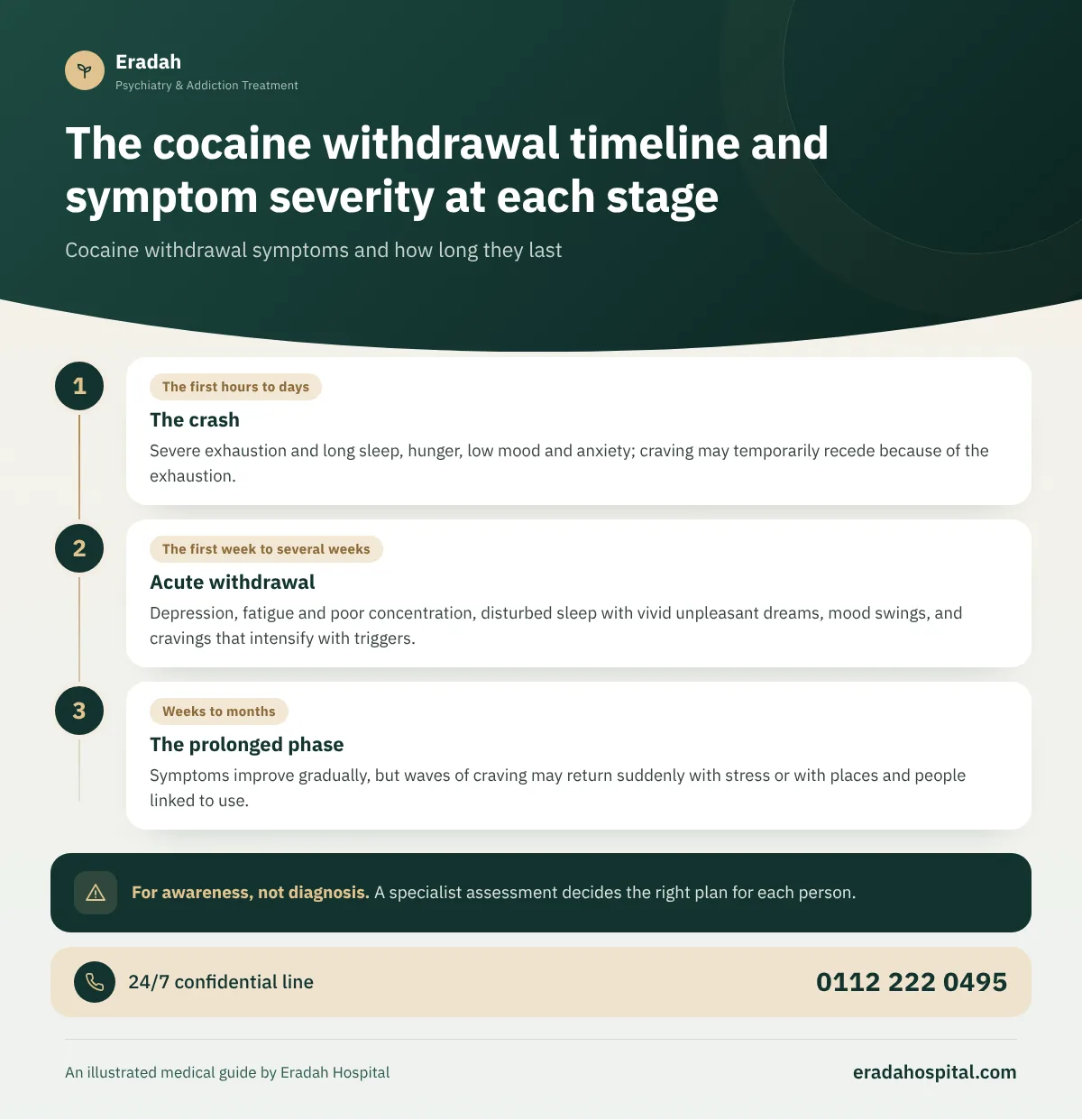
The durations are approximate, and cravings and depression may continue for months after long, heavy use.
The main cocaine withdrawal symptoms
| Type | Common symptoms |
|---|---|
| Mood | Depression, loss of pleasure, anxiety, irritability and quick temper. |
| Energy and sleep | Severe exhaustion, long sleep or insomnia, and vivid unpleasant dreams. |
| The body | Increased appetite, slowed movement, and mild general aches in some cases. |
| Thinking | Poor concentration and memory, and slowed thinking and decision-making. |
| The craving | A strong longing for the substance that intensifies with triggers and stress and lasts longer than the other symptoms. |
Is cocaine withdrawal dangerous?
Physically, cocaine withdrawal on its own is less dangerous than withdrawal from alcohol or sedatives, which can cause seizures. But its real danger is psychological, and it comes down to three things:
The low can be deep, accompanied by hopelessness and suicidal thoughts in some people.
Strong cravings push the person to go back, and a return after a break can be more dangerous for the heart.
Many people who use cocaine also use alcohol or sedatives, and withdrawal from these can cause seizures and requires mandatory medical supervision.
How does cocaine withdrawal differ from heroin and alcohol withdrawal?
| Substance | Nature of withdrawal | Physical risk |
|---|---|---|
| Cocaine | Mainly psychological: depression, exhaustion and cravings | Usually low; the danger is psychological |
| Heroin | Physical and psychological: aches, diarrhea, sweating and insomnia | Painful and rarely fatal in itself |
| Alcohol | Tremor, sweating and anxiety, possibly progressing to delirium | High; can cause seizures and death |
Why do cravings return after weeks of being off?
The brain keeps a strong memory of the reward and what was linked to it. So a person may go through calm weeks and then be hit by an intense craving when passing a certain place, meeting an old friend, feeling stressed or drinking alcohol. Research indicates that these cravings may even rise in the first weeks after stopping before they settle. Understanding this in advance helps the patient not to read it as failure, but as a signal to activate the relapse prevention plan.
Why is medical supervision advised during withdrawal?
- Assessing depression and suicide risk and monitoring it daily in the first weeks.
- Treating any psychosis, severe anxiety or persistent insomnia with medication chosen by the doctor for a short period.
- Managing alcohol or sedative withdrawal safely if the person also uses them.
- Keeping the patient away from triggers during the most fragile phase.
- Starting behavioral therapy right away instead of just waiting for the symptoms to pass.
There is currently no approved medication that treats cocaine withdrawal or directly removes cravings; the full treatment plan is detailed on the cocaine addiction treatment page.
What makes withdrawal more severe in one person than another?
- Length and frequency of use: daily use or long continuous binges mean a more severe and longer withdrawal.
- Form of the substance: crack is often linked to stronger cravings and a deeper crash.
- Prior mental health: depression, anxiety or bipolar disorder makes the low deeper and calls for closer follow-up.
- Use of other substances with it: alcohol, sedatives and cannabis add withdrawal symptoms of their own.
- Environment and support: staying near triggers and friends who use prolongs cravings and raises the risk of going back.
Common myths about cocaine withdrawal
- “There is no cocaine withdrawal because it doesn’t cause pain”: the absence of physical pain does not mean the absence of withdrawal; depression and cravings are real withdrawal.
- “After a week it’s all over”: cravings can return after weeks and months, and preparing for them is part of treatment.
- “Alcohol helps you calm down during withdrawal”: alcohol is one of the strongest triggers of relapse and can create a new addiction.
- “Feeling better means they no longer need treatment”: the first improvement is the best time to build relapse prevention skills.
How can the family support someone going through withdrawal?
- Understand that long sleep, exhaustion and irritability are part of this stage and not laziness or stubbornness.
- Watch their mood calmly, and take any talk of death or hopelessness seriously.
- Help them with a simple routine: regular meals, sleep, light walking, and fewer tiring visits.
- Keep alcohol out of the house, and help them stay away from friends they used with.
- Encourage them to continue treatment even after they start feeling better.
Signs of cocaine poisoning: call the ambulance (123) immediately
- Pain or pressure in the chest, or severe palpitations and an irregular heartbeat
- A severe rise in body temperature with heavy sweating or hot, dry skin
- Seizures, an epileptic fit or loss of consciousness
- Severe agitation or confusion, or pathological suspicion and unusual aggression
- Signs of a stroke: a drooping face, sudden weakness in an arm or leg, slurred speech, or a sudden severe headache
Call the ambulance on 123 immediately, move the person to a quiet, cool place, do not restrain them by force, and if they lose consciousness place them on their side and stay with them. Tell the paramedics everything they took, including alcohol. There is no home remedy for cocaine poisoning.
Call the ambulance 123