What are the physical signs of fentanyl use?
The signs of fentanyl appear quickly after use. They resemble the signs of other opioids but can be more severe and faster:
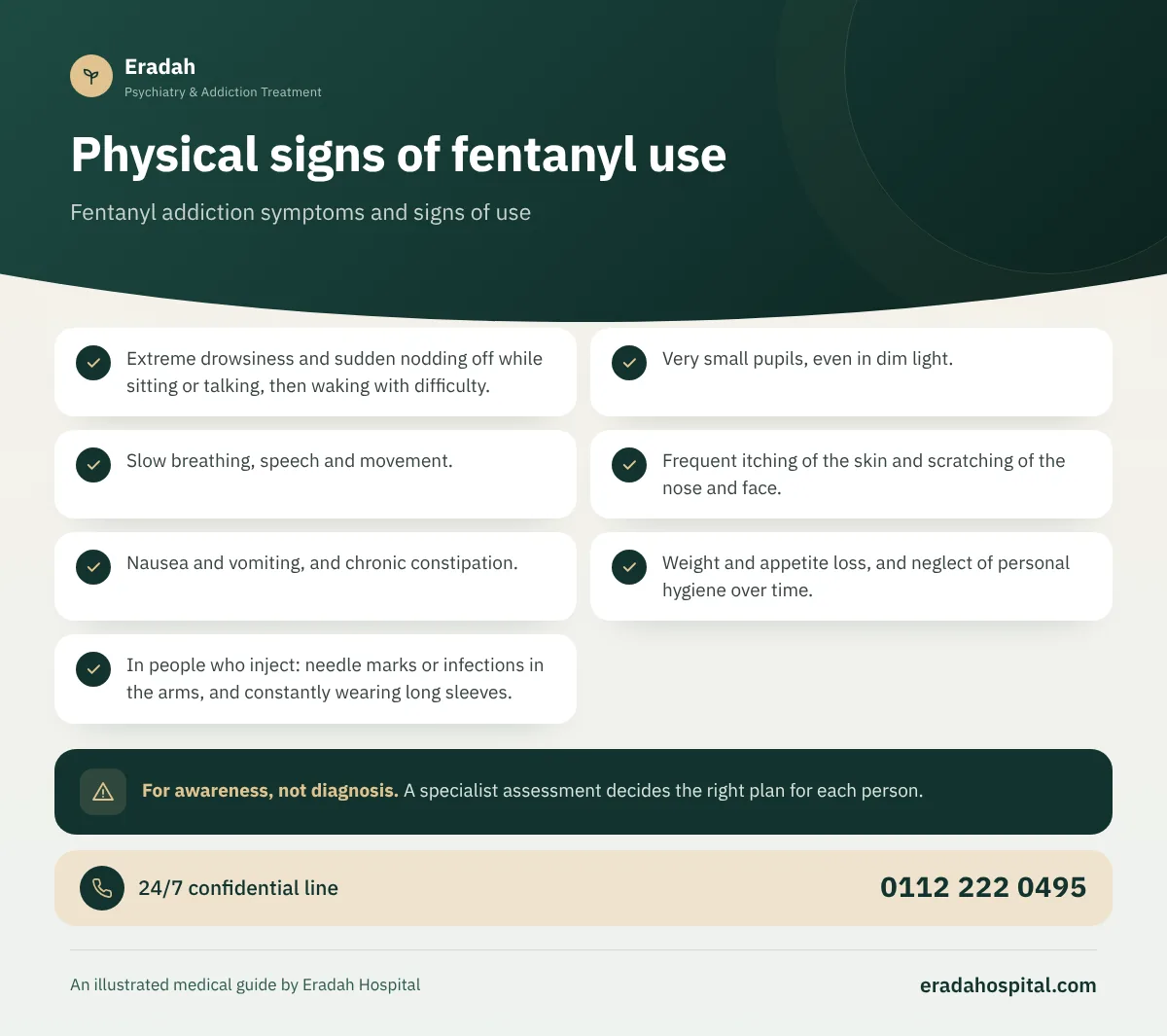
- Extreme drowsiness and sudden nodding off while sitting or talking, then waking with difficulty.
- Very small pupils, even in dim light.
- Slow breathing, speech and movement.
- Frequent itching of the skin and scratching of the nose and face.
- Nausea and vomiting, and chronic constipation.
- Weight and appetite loss, and neglect of personal hygiene over time.
- In people who inject: needle marks or infections in the arms, and constantly wearing long sleeves.
What are the behavioral signs of fentanyl addiction?
Keeping the room closed for long periods, withdrawing from the family, and becoming defensive when asked.
Pills without packaging or with strange shapes, powders, burnt pieces of foil, or injection equipment.
Sleeping at unusual times, and repeated absences from work or school.
Constantly asking for money, valuables disappearing from the home, and unexplained debts.
- Dropping hobbies and old friends, and the appearance of new, secretive friends.
- Repeated lying about whereabouts and spending.
- A clear decline in school or work performance.
- Legal problems or repeated conflicts.
What are the psychological signs?
The family may notice sharp mood swings: calm and sluggishness after use, then tension, irritability and severe anxiety as withdrawal approaches. Over time there is general apathy and loss of interest, depression, and poor concentration and memory. Thoughts of hopelessness may appear, and they deserve to be taken seriously, with help sought right away.
What are the signs of imminent danger that cannot wait?
Because of fentanyl's potency, “ordinary” nodding off can turn into an overdose within minutes. These signs mean calling the ambulance (123) immediately:
- Does not wake when called loudly or shaken.
- Very slow or irregular breathing, or gurgling and unusual snoring sounds.
- Blue or gray lips or fingernails, and cold, clammy skin.
- Very small pupils with loss of consciousness.
- Unusual stiffness in the body or jaw.
How is fentanyl addiction diagnosed?
Fentanyl addiction is diagnosed medically as “opioid use disorder” according to the DSM-5 criteria, which look at the pattern of use over twelve months:
| Area | Examples |
|---|---|
| Impaired control | Using more or for longer than intended, unsuccessful attempts to stop, cravings, and spending a lot of time obtaining the substance |
| Social harm | Neglecting obligations, relationship problems, and giving up activities |
| Risky use | Continuing despite physical or psychological harm, or in dangerous situations |
| Pharmacological signs | Tolerance and withdrawal symptoms (not counted in a patient taking it as prescribed under supervision) |
Severity is rated by the number of criteria met: mild, moderate or severe. Diagnosis is the job of a specialist doctor, who often relies on a specific fentanyl test because standard tests may not detect it.
What if the person does not know they are using fentanyl?
A person who uses may sincerely say they use heroin, a “painkiller” or a sedative, while tests show fentanyl. Signs that may point to this include repeated overdoses or near-overdoses, nodding off more severely and faster than usual, or withdrawal stronger than expected. This is important information to tell the doctor openly, because it changes the treatment plan. What happens after stopping is covered on the page After stopping fentanyl.
How do you tell fentanyl from other substances?
| Substance | Distinctive signs |
|---|---|
| Fentanyl | Rapid, severe opioid signs, sudden nodding off, and repeated overdoses |
| Heroin | Similar opioid signs but usually slightly slower; may be laced with fentanyl |
| Tramadol and codeine | Milder opioid signs, with medication packages or cough syrup bottles |
| Sedatives and pregabalin | Unsteadiness, slurred speech and drowsiness, usually without clearly small pupils |
| Stimulants | Overactivity, dilated pupils and insomnia; may also be laced with fentanyl |
Signs parents of teenagers should watch for
A teenager may not be using fentanyl on purpose but may take a pill they believe is a sedative, a painkiller or a study stimulant. So these signs deserve attention even if they seem minor:
- Pills without packaging, or of unfamiliar colors and shapes, in the room or bag.
- Sudden, unexplained drowsiness after coming home from outside or from a party.
- Talk of “pills” obtained from friends or online.
- A sudden change in friends, grades or interests.
- Withdrawal from family activities and increased secrecy around the phone.
A calm conversation matters more here than searching their things. A teenager who knows that any pill from outside a pharmacy could be deadly, and who knows their family will help rather than punish them, is more willing to ask for help when in danger.
Questions to help you take stock
If you use opioids and are wondering about your situation, these questions are not a diagnosis but an honest starting point: Do you need more than before? Have you had severe nodding off or an overdose that nearly killed you? Have you tried to stop and could not? Do you feel pain and severe anxiety if the substance is late? If the answer to any of these is “yes,” talk to a specialist doctor now; treatment is available and confidential.
How do you talk to someone you suspect is using fentanyl?
- Choose a calm time when they are alert, and avoid arguments.
- Start with specific things you have noticed, and express your fear for their life rather than your anger.
- Listen without interrupting; shame and fear make denial stronger.
- Offer one practical step: an assessment appointment, a call to a treatment center, or the 16023 hotline.
- If they refuse, do not end the conversation; stay in touch and repeat the offer, and learn the signs of overdose.
Signs of fentanyl overdose: call an ambulance (123) immediately
- Loss of consciousness, with no response to calling or touch
- Very slow, irregular or stopped breathing
- Pupils that are extremely small, like pinpoints
- Blue or pale lips and fingernails and cold skin
- Gurgling or snoring sounds, or unusual stiffness of the body
Call an ambulance at 123 immediately, place the person on their side (recovery position) so they do not choke, and stay with them until help arrives. A fentanyl overdose can happen within minutes, and in emergency care the patient may need more than one dose of naloxone and monitoring for hours after improving.
Call the ambulance 123