Why does fentanyl withdrawal happen?
The brain adapts to the constant presence of fentanyl, reducing its own natural production of endorphins and changing the sensitivity of opioid receptors. When fentanyl is cut off, the nervous system becomes overactive, producing symptoms that seem the opposite of its effects: anxiety instead of calm, pain instead of relief, and diarrhea instead of constipation. Because fentanyl is so potent, dependence on it is deep and withdrawal is distressing.
Fentanyl withdrawal timeline
- Within hoursThe start
Anxiety and tension, yawning, runny nose and tearing eyes, sweating, and cravings.
- Days 1-3The peak
Severe muscle and bone pain, chills, nausea, vomiting and diarrhea, insomnia, dilated pupils, and a rapid pulse.
- Days 4–10Easing
Physical symptoms ease gradually, while fatigue and disturbed sleep and mood remain.
- Weeks to monthsThe prolonged phase
Insomnia, anxiety, apathy, and bouts of cravings that stress may trigger.
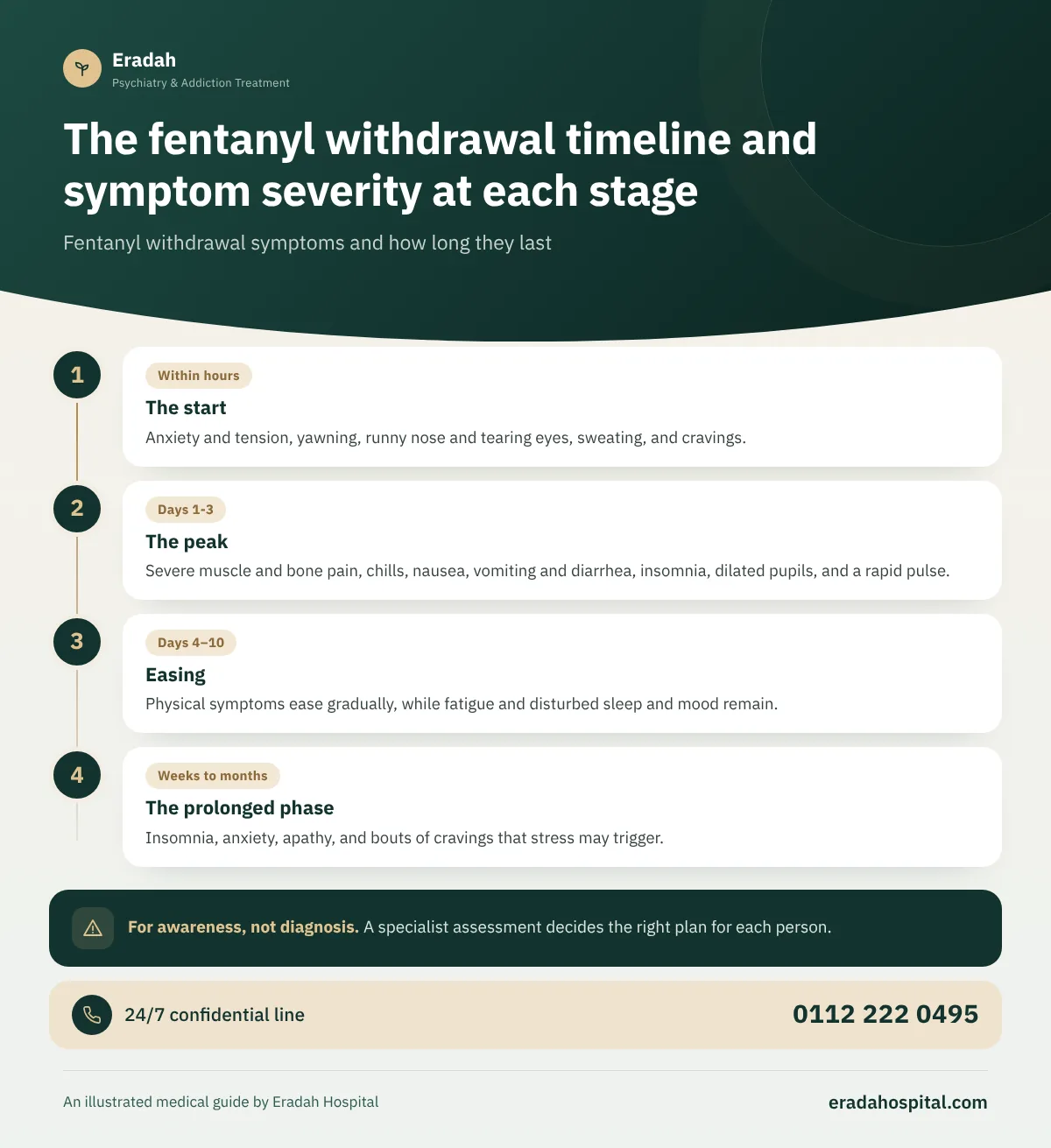
These times are approximate and vary widely with the length, amount and method of use, the use of other substances, and general health.
What are the symptoms of fentanyl withdrawal?
| Type | Symptoms |
|---|---|
| Physical | Sweating, chills and goosebumps, runny nose, tearing, muscle and bone pain, yawning, tremor, involuntary leg movements |
| Digestive | Nausea, vomiting, diarrhea, abdominal cramps, loss of appetite |
| Heart and circulation | Rapid pulse and high blood pressure |
| Psychological | Severe anxiety, irritability, low mood, very strong cravings |
| Sleep | Severe insomnia and broken sleep |
Is fentanyl withdrawal dangerous?
Opioid withdrawal is rarely directly life-threatening in an otherwise healthy person, but it is not without risk. Severe vomiting and diarrhea can cause dehydration and salt imbalance, especially in older adults and people with heart or kidney disease. More dangerous still, the intensity of cravings pushes many people to go back within days.
Why is fentanyl withdrawal different from others?
Fentanyl dissolves very easily in fat, and recent research suggests it may stay in body tissues and be released slowly in people who have used it regularly. For this reason, doctors have noticed two important things:
- Timing of starting medications: starting some opioid treatment medications too early after fentanyl can cause severe “sudden withdrawal,” so starting requires special experience and protocols set by the doctor.
- Variable duration: in some patients, some symptoms may come later or last longer than is known with heroin.
- Adulteration with other substances: accompanying substances in illicit fentanyl may change the picture of withdrawal and complicate it.
What about patients using medical fentanyl patches?
Patients who use fentanyl patches for chronic pain may develop normal physical dependence without addiction. They must not remove the patches or stop them suddenly, because that can cause distressing withdrawal and a severe return of pain. The doctor sets a gradual reduction plan, with alternatives for pain management. Do not change or stop your medication without consulting your doctor.
What determines the severity and length of withdrawal?
- Length and frequency of use: the longer it is, the more severe and longer the symptoms.
- Amount: larger amounts mean deeper dependence.
- Other substances: sedatives, alcohol and stimulants complicate withdrawal.
- Physical and mental health: chronic illnesses, anxiety and depression make it harder to cope.
- Withdrawal setting: withdrawal under medical supervision is milder and safer than trying alone.
Why is medical supervision needed?
- Easing symptoms with appropriate medications and starting treatment medications at the right time.
- Monitoring dehydration, salts, pulse and blood pressure.
- Safe handling of any other accompanying substances.
- Psychological support on the hardest days to reduce the chance of leaving and going back to use.
- Setting a clear plan for after withdrawal to prevent overdose in case of relapse.
What are prolonged withdrawal symptoms?
After the acute phase ends, a person may experience for weeks or months insomnia, anxiety, mood swings and difficulty feeling pleasure, with sudden bouts of cravings. This phase is temporary, but it is one of the most dangerous periods for relapse, which is why approved opioid treatment medications and psychological therapy are an essential part of care after withdrawal.
Fentanyl withdrawal during pregnancy
A pregnant woman who regularly uses fentanyl or other opioids is advised not to stop suddenly on her own, because acute withdrawal may harm the pregnancy. The safe route is to contact an obstetrician and an addiction specialist right away to make a joint plan, which often includes approved opioid treatment medications during pregnancy. After birth, the newborn may need monitoring for neonatal withdrawal symptoms.
Common myths about fentanyl withdrawal
- “I can stop on my own in a week”: the physical symptoms may ease, but cravings and the risk of fatal relapse continue afterward.
- “Withdrawal is the treatment”: withdrawal is a first step; without treatment afterward, the chances of returning to use and overdose rise.
- “Replacement medications are just another addiction”: approved medications are used under medical supervision and are proven to reduce deaths and relapse.
How can the family support someone going through fentanyl withdrawal?
- Encourage them to go through withdrawal at a specialized center, not alone at home.
- Understand that irritability and insomnia are part of withdrawal, not part of their personality.
- Learn the signs of overdose, since the risk of relapse in this period is high.
- Do not stop supporting them when the physical symptoms end; the next phase is just as important.
- Take care of yourself too; a family that gives support needs support itself.
Withdrawal is only the beginning of the road. Learn about the stages of fentanyl addiction treatment.
Signs of fentanyl overdose: call an ambulance (123) immediately
- Loss of consciousness, with no response to calling or touch
- Very slow, irregular or stopped breathing
- Pupils that are extremely small, like pinpoints
- Blue or pale lips and fingernails and cold skin
- Gurgling or snoring sounds, or unusual stiffness of the body
Call an ambulance at 123 immediately, place the person on their side (recovery position) so they do not choke, and stay with them until help arrives. A fentanyl overdose can happen within minutes, and in emergency care the patient may need more than one dose of naloxone and monitoring for hours after improving.
Call the ambulance 123