What are the short-term harms of fentanyl?
These harms appear within minutes of fentanyl entering the body, and are much more severe in people whose bodies are not used to opioids:
- Severe drowsiness, confusion, and slowed movement and thinking.
- Slowed breathing, which can stop within minutes.
- Slow heartbeat and low blood pressure.
- Nausea and vomiting, with a risk of choking on vomit while unconscious.
- Stiffness of the chest muscles in some cases, making breathing harder.
- Impaired judgment and decision-making, which raises the risk of accidents.
Why is a fentanyl overdose different?
With most opioids an overdose develops over a time that may allow intervention, but with fentanyl breathing can stop within a few minutes. The risk is increased because the person may not even know they took fentanyl.
It reaches the brain within minutes, so there is not enough time to notice or ask for help.
The amount of fentanyl in illicit material is unknown and varies from one time to the next.
Rescue may need more than one dose of naloxone, and the patient must stay under observation.
It may be present in other drugs or counterfeit pills without the knowledge of the person who takes them.
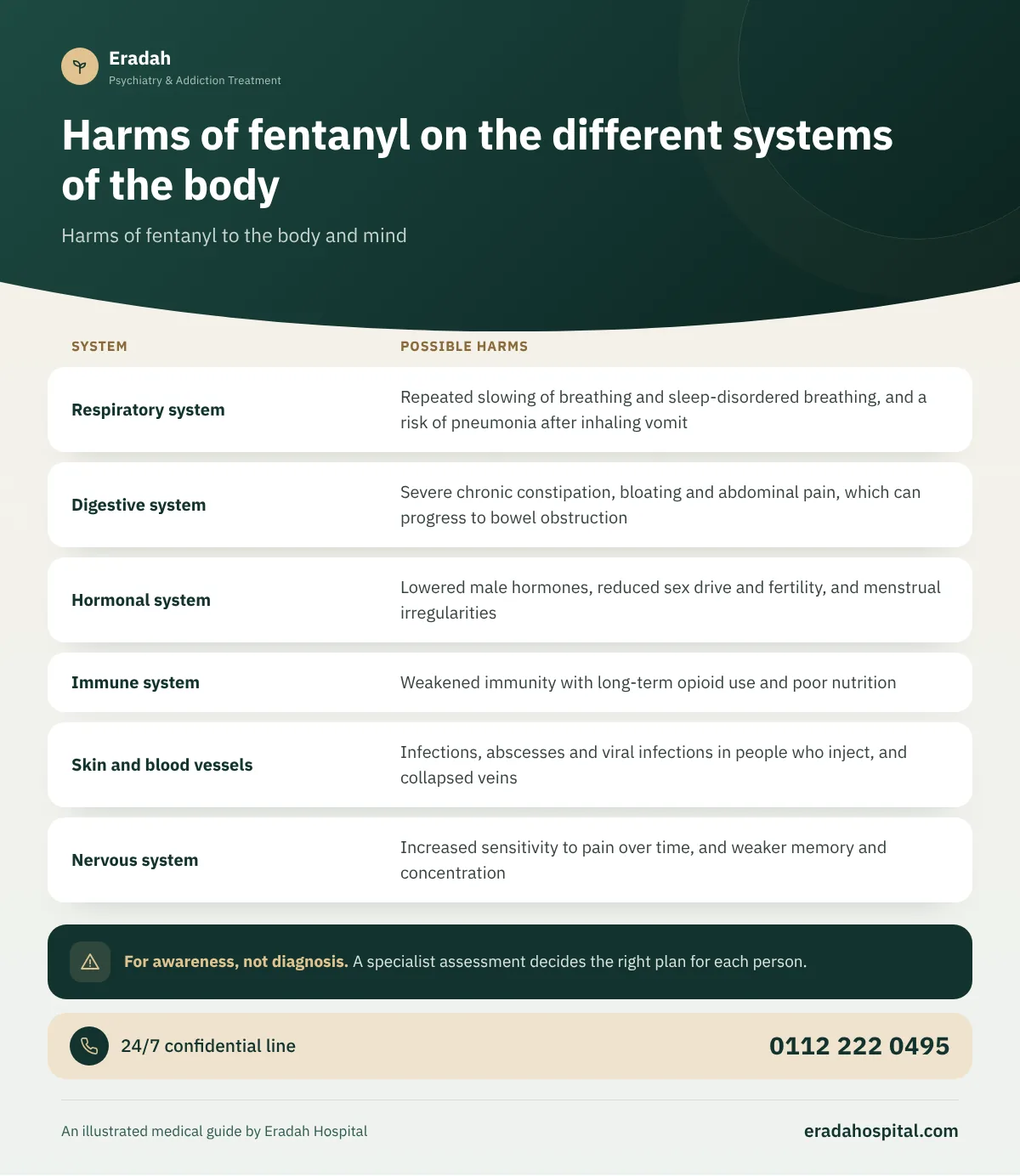
Long-term harms of fentanyl to the body
| System | Possible harms |
|---|---|
| Respiratory system | Repeated slowing of breathing and sleep-disordered breathing, and a risk of pneumonia after inhaling vomit |
| Digestive system | Severe chronic constipation, bloating and abdominal pain, which can progress to bowel obstruction |
| Hormonal system | Lowered male hormones, reduced sex drive and fertility, and menstrual irregularities |
| Immune system | Weakened immunity with long-term opioid use and poor nutrition |
| Skin and blood vessels | Infections, abscesses and viral infections in people who inject, and collapsed veins |
| Nervous system | Increased sensitivity to pain over time, and weaker memory and concentration |
Harms of fentanyl on the brain and mental health
Repeated use of fentanyl changes the brain's reward and control circuits, so the ability to enjoy ordinary things weakens and getting the drug becomes the center of thought. This shows up as:
Depression, anxiety and sharp mood swings, and loss of interest in family and work.
Poor concentration and memory, slowed thinking, and difficulty controlling impulses.
Severe sleep disturbance, and insomnia between periods of use.
If the person has an earlier psychiatric disorder, the two conditions may become intertwined, which is known as dual diagnosis and needs treatment for both together.
What is the danger of mixing fentanyl with other substances?
Many fentanyl deaths occur with other substances in the body, whether knowingly or not:
- Alcohol, benzodiazepines and pregabalin: they multiply the slowing of breathing dangerously.
- Heroin and other opioids: the opioid effect accumulates and the risk of overdose rises sharply.
- Stimulants such as cocaine and methamphetamine: they may mask drowsiness temporarily, and then slowed breathing appears suddenly, with extra strain on the heart.
- Some medications that slow the breakdown of fentanyl in the liver, such as certain antibiotics and antifungals: they may raise its level in the blood.
- Some medications that affect serotonin: with fentanyl they may cause serotonin syndrome, an emergency.
Does medical fentanyl cause harm?
Fentanyl used as prescribed and under a doctor's supervision has known side effects such as drowsiness, constipation and nausea, and the doctor monitors breathing closely. But the risk rises with errors in use, such as applying more than one patch, exposing a patch to heat, or using it for someone other than the patient. Do not change or stop your medication without going back to your doctor.
Who is most vulnerable to the harms of fentanyl?
- People not used to opioids: such as someone taking a counterfeit pill for the first time, or using another adulterated drug.
- Teenagers and young adults: because they may try pills they think are medications or sedatives.
- People recently out of treatment or prison: because their tolerance is lower, so the amount they used to take becomes fatal.
- Children: through contact with patches or pills in the home.
- Pregnant women: regular use may cause a withdrawal syndrome in the newborn, and stopping suddenly may harm the pregnancy; the decision always belongs to a specialist doctor.
Common myths about the harms of fentanyl
| The myth | The truth |
|---|---|
| I know my source, so it can't be adulterated | No one in the illicit market knows exactly what the substance contains, not even the person selling it |
| Trying it once does no harm | Once can be enough for a fatal overdose, especially for someone not used to opioids |
| Someone used to opioids isn't affected by fentanyl | Tolerance does not protect against a stronger-than-usual amount, and most deaths happen to experienced users |
| If he wakes up after naloxone, the danger is over | The effect of fentanyl can return after the naloxone wears off, which is why hospital observation is needed |
Do the harms of fentanyl go away after stopping?
Many harms improve gradually after stopping and treatment: sleep, digestion and appetite return, and hormones, mood and concentration improve over months. Brain damage from lack of oxygen during an earlier overdose, or chronic viral infection, may need long treatment and rehabilitation. The earlier fentanyl addiction treatment begins, the better the chances of recovery.
Signs of fentanyl overdose: call an ambulance (123) immediately
- Loss of consciousness, with no response to calling or touch
- Very slow, irregular or stopped breathing
- Pupils that are extremely small, like pinpoints
- Blue or pale lips and fingernails and cold skin
- Gurgling or snoring sounds, or unusual stiffness of the body
Call an ambulance at 123 immediately, place the person on their side (recovery position) so they do not choke, and stay with them until help arrives. A fentanyl overdose can happen within minutes, and in emergency care the patient may need more than one dose of naloxone and monitoring for hours after improving.
Call the ambulance 123
18Social and financial harms
Dependence on fentanyl is quick and strong, and getting it becomes the center of life. Loss of work or study, broken relationships, debts and legal problems follow. The family also lives in constant fear of losing their son to an overdose, an enormous psychological pressure that deserves its own support.