Physical signs of GHB use
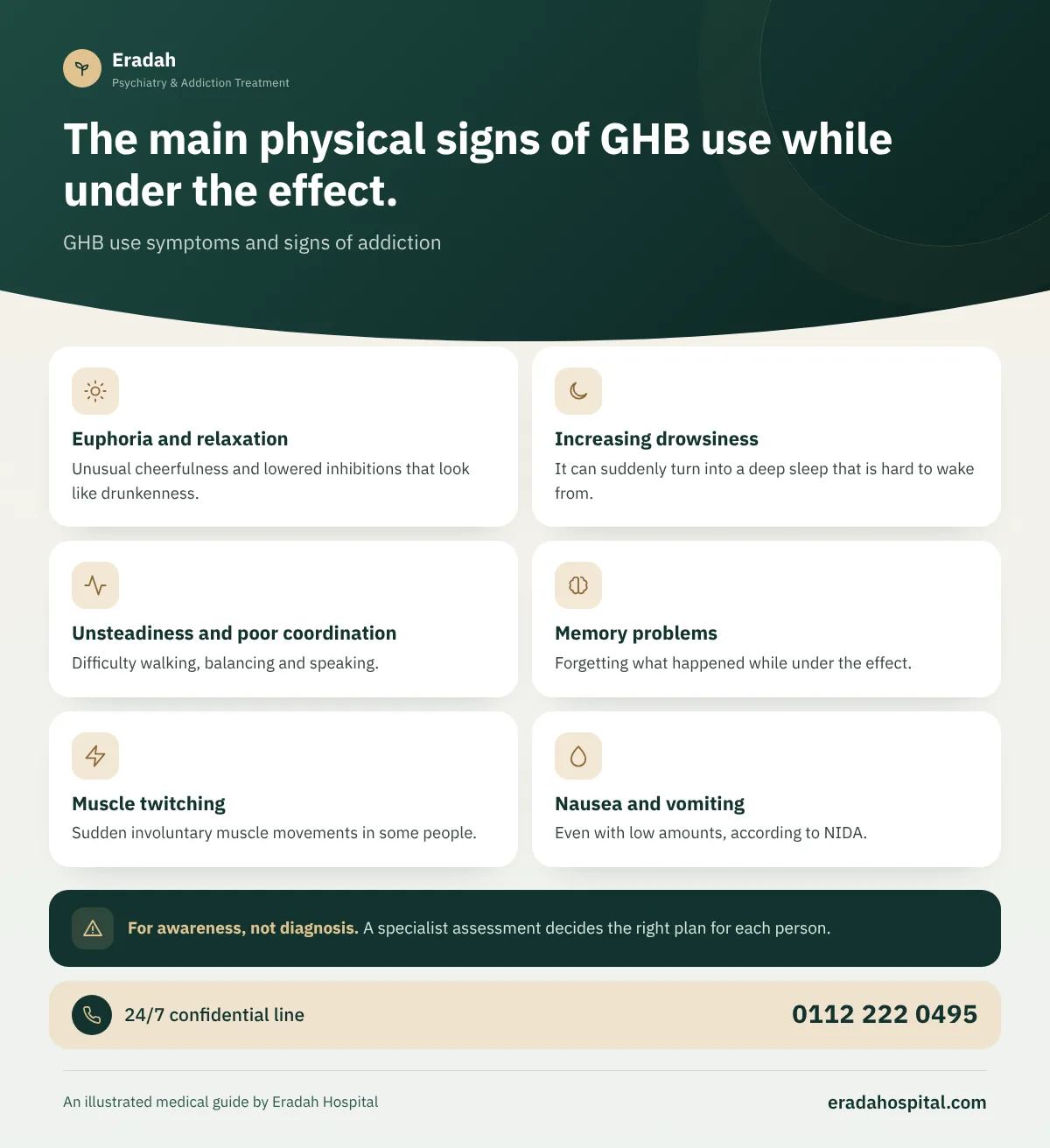
The effects of GHB begin within minutes, peak in about an hour, and last two to four hours according to the StatPearls review. During this time you may notice:
Unusual cheerfulness and lowered inhibitions that look like drunkenness.
It can suddenly turn into a deep sleep that is hard to wake from.
Difficulty walking, balancing and speaking.
Forgetting what happened while under the effect.
Sudden involuntary muscle movements in some people.
Even with low amounts, according to NIDA.
Sudden sleep, then sudden waking
One of the most distinctive things about GHB, as StatPearls describes it, is that coma can begin suddenly, and the person then also wakes suddenly within hours, and may be agitated or aggressive before or after the deep sleep. That is why many people make the mistake of thinking their friend has "just fallen asleep" and leave them alone, when their breathing may be weak or they may choke on vomit.
Signs a family may notice at home
- Small bottles or vials holding a clear liquid that no one can identify, or containers of industrial cleaning products with no reason to be there.
- Small tools for measuring liquids, such as syringes without needles, or droppers.
- Coming home late from parties with severe drowsiness or unusually long sleep.
- Marked swings between energy and cheerfulness, then sudden drowsiness.
- New friends and frequent late nights, and unexplained spending.
Symptoms of GHB addiction
Because the effect of GHB is short, a person who depends on it needs it at close intervals, and may use it around the clock, day and night. Signs of addiction include:
- Daily use, and waking at night to take it.
- Needing a larger amount for the same effect.
- Withdrawal symptoms when a dose is delayed: anxiety, insomnia, tremor, sweating and a fast pulse.
- Unsuccessful attempts to cut down, and continuing despite episodes of passing out or other problems.
- Mixing it with alcohol, stimulants or other substances.
A use disorder is diagnosed using the DSM-5 criteria over a year, and its severity, from mild to severe, is set by the number of criteria met. A specialist doctor makes the diagnosis after a full assessment.
Signs of withdrawal when someone stops
In a Dutch study of 285 patients with GHB use disorder, the withdrawal symptoms patients felt most were craving, fatigue, insomnia, sweating and low mood, while the medical staff most often observed craving, fatigue, tremor, sweating and sudden feelings of cold or heat. StatPearls warns that withdrawal can progress within 24 hours to severe agitation and disturbances of pulse and blood pressure.
Signs of being given GHB without knowing
Because GHB is an almost colorless liquid, it is easy to put in a drink. Ireland's Health Service Executive (HSE) advises trusting your instincts: if you start to feel strange or more drunk than you would expect, tell someone you trust right away and ask them to stay with you. Signs it lists include:
| Area | Signs |
|---|---|
| Consciousness | Dizziness or feeling faint, drowsiness or confusion, or loss of consciousness. |
| Movement and speech | Difficulty walking, speaking, concentrating or controlling your body. |
| Memory | Memory loss, or stretches of time you cannot remember. |
| The body | Nausea or vomiting, and blurred vision. |
Why must you act within hours?
GHB leaves the body very quickly. According to a 2023 scientific review, its half-life is between 20 and 60 minutes, and its detection window is about 6 hours in blood and 10 hours in urine. The body also makes small amounts of GHB naturally, so laboratories need special cutoffs to tell use from the normal level. So:
- Go to the hospital immediately; do not wait until morning.
- Keep the first urine sample if you can, and tell the doctor plainly about your suspicion.
- If severe drowsiness or difficulty breathing appears, call the ambulance on 123.
- You can report through the police emergency line 122, and women can use the National Council for Women complaints line 15115. For psychological support, the line is 16328.
StatPearls notes that a GHB test is not routinely available in many hospitals, and its result may take days, so emergency doctors rely on clinical signs first. You will find general information about types of tests in drug testing.
How do you tell GHB from alcohol intoxication?
They look very similar at first, but with GHB there may be a sudden shift from cheerfulness to deep sleep without warning, there may be no smell of alcohol that fits the person's condition, there are sometimes muscle twitches, and the person wakes abruptly hours later. Telling them apart precisely is the doctor's job; what matters in the moment is watching breathing and calling the ambulance when there is danger.
What should the family do if they notice these symptoms?
- First make sure the person is safe and breathing, and do not leave them to sleep alone while they are under the effect.
- Choose a calm time to talk after the effect has worn off, and speak about your worry, not punishment.
- Do not ask them to stop suddenly if they use it daily; withdrawal needs medical supervision.
- Ask for a confidential specialist consultation, and learn about the harms of GHB so you can explain them calmly and without exaggeration.
Danger signs after GHB use: call an ambulance (123) immediately
- Loss of consciousness or deep sleep from which the person cannot be woken by calling or touch
- Slow or weak breathing, or breathing that stops for periods
- Seizures or sudden muscle tremors
- Vomiting while drowsy or with reduced awareness, or a cold body and slow pulse
- Severe agitation, confusion or hallucinations after stopping regular use
Call ambulance (123) immediately. If the person is unconscious but breathing, place them on their side so they do not choke on vomit. Stay with them and do not leave them alone to “sleep it off.” Do not give them food, drink or any medicine, and tell the paramedics everything you know about what they took and when.
Call the ambulance 123