Does hydro cause psychosis?
This is what worries doctors most about hydro and all high-potency cannabis products: the clear link between high potency and daily use on one side and episodes of psychosis on the other.
A large European study published in 2019 found that daily use of high-potency cannabis was associated with roughly five times the likelihood of a psychotic disorder. Psychosis shows up as intense suspicion of others, hearing voices or seeing things that are not there, or strange, disconnected thoughts.
- Daily or near-daily use.
- Starting use in adolescence.
- A family history of a psychotic illness such as schizophrenia.
- Varieties high in THC and low in CBD.
- Mixing with stimulants or synthetic substances.
Panic attacks and severe anxiety
With high potency, the expected effect can flip from relaxation into severe anxiety and a panic attack: palpitations, shortness of breath, and an intense fear of dying or losing control. The European Union Drugs Agency notes that high-potency products are linked to acute intoxication cases that reach emergency departments. With continued use, anxiety can turn from a passing attack into a persistent anxiety disorder.
The effect of hydro on memory, concentration and studies
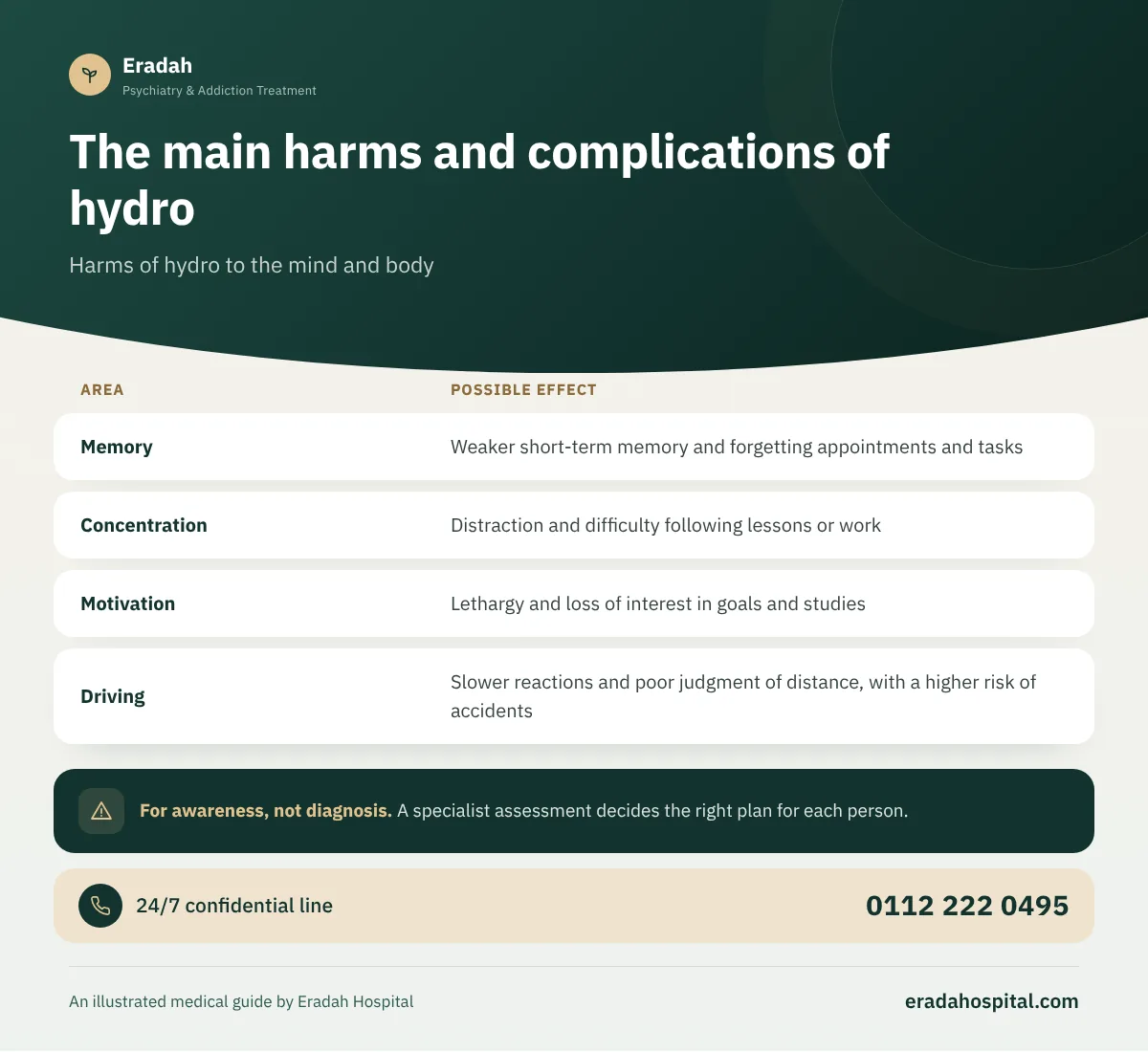
THC affects the brain regions responsible for memory, attention and learning, which is why regular users notice repeated forgetfulness, difficulty concentrating and studying, and slower reactions. The effect is stronger in teenagers, whose brains are not yet fully developed.
| Area | Possible effect |
|---|---|
| Memory | Weaker short-term memory and forgetting appointments and tasks |
| Concentration | Distraction and difficulty following lessons or work |
| Motivation | Lethargy and loss of interest in goals and studies |
| Driving | Slower reactions and poor judgment of distance, with a higher risk of accidents |
Cannabis hyperemesis syndrome
Some people who use cannabis regularly over a long period develop repeated episodes of severe nausea, vomiting and abdominal pain, sometimes followed by temporary improvement. This is known as cannabis hyperemesis syndrome, and it can cause dehydration and electrolyte imbalance that require hospital admission. Patients often notice that hot showers ease their symptoms, and the real treatment is to stop using.
The effect of hydro on the lungs and heart
Hydro is mostly consumed by burning, and the smoke carries irritants to the lungs and is often mixed with tobacco. Chronic smoking is linked to cough, phlegm, bronchitis and worsening asthma. THC also raises the heart rate and can change blood pressure, which is a burden for people with heart disease.
Chronic cough and phlegm, inflamed airways, and worsening asthma.
A faster pulse after use, and a greater risk for people with heart disease and older adults.
When it is mixed with tobacco, nicotine addiction and its harms are added.
Does hydro cause addiction?
Yes. The US Centers for Disease Control and Prevention estimates that about three in ten people who use cannabis may develop cannabis use disorder, and the risk rises with daily use and with starting before the age of 18. Logically, a high-potency variety pushes the brain to adapt faster, so tolerance and cravings increase and stopping becomes harder.
The danger of hydro laced with synthetic substances
Because hydro is sold in an illegal market with no oversight, the herbs may be sprayed with synthetic cannabinoids like those found in Strox. These substances bind to cannabinoid receptors far more strongly than THC, and cause seizures, loss of consciousness, severe psychosis and sometimes serious heart problems.
Why are the harms of hydro worse for teenagers?
The brain keeps developing until roughly the mid-twenties, and repeated exposure to THC at this stage is linked to a greater risk of addiction and psychosis and to a decline in school performance. This is why promoting hydro among young people as "stronger" is exactly what makes it more dangerous for them.
Harms of hydro in pregnancy and for children
THC reaches the baby through the placenta and an infant through breast milk, and use during pregnancy is linked to lower birth weight. Children exposed to its smoke, or who swallow any product containing it, can develop heavy drowsiness and breathing difficulty that require emergency care.
The effect of hydro on mood and motivation
Some young people turn to hydro to calm anxiety or escape pressure, but regular use is linked over time to more symptoms of depression and anxiety, and to loss of interest in goals, studies and work. If the person already has a mental health condition, it needs treatment that addresses both conditions together, known as dual diagnosis.
Harms of mixing hydro with other substances
| The mix | The main risk |
|---|---|
| Hydro + alcohol | Dizziness, vomiting, severely impaired judgment and a higher risk of accidents. |
| Hydro + stimulants | Strain on the heart and a higher risk of anxiety and psychosis. |
| Hydro + tramadol or sedatives | Disturbed consciousness and judgment, and more drowsiness and dizziness. |
| Hydro + tobacco | Nicotine addiction is added, along with the harm of smoke to the lungs and heart. |
Do the harms of hydro go away after stopping?
Many of the harms improve after stopping: concentration and memory return gradually, sleep and appetite improve, the vomiting syndrome disappears, and the cough eases. Some psychotic episodes need treatment and follow-up for a period, and stopping early and seeking help quickly improve the chances of full recovery.
When does a person who uses hydro need emergency care? Call ambulance (123) immediately
- A severe panic attack that does not settle, or hallucinations, intense suspicion, incoherent speech or aggression
- Chest pain, a strong pounding heartbeat or fainting
- Repeated vomiting that does not stop, with intense thirst, passing little urine and dizziness on standing
- Seizures, rigidity or sudden loss of consciousness, which are signs that the herbs may have been sprayed with a synthetic substance
- A child exposed to a cannabis product who seems very drowsy, unsteady or is having difficulty breathing
Call ambulance (123) and stay with the person in a quiet place. If they are vomiting or unconscious, place them on their side (recovery position) so they do not choke, and tell the paramedics honestly what was taken. Do not use any home remedies.
Call the ambulance 123
25Social and legal harms