Why do methadone withdrawal symptoms happen?
With regular use the brain adapts to the presence of methadone on opioid receptors, reducing its own natural endorphin production, while arousal systems become active to compensate for the constant suppression. When the methadone level drops, this balance is disrupted, and symptoms appear that are the opposite of its effects: anxiety instead of calm, insomnia instead of drowsiness, and pain and diarrhea instead of pain relief and constipation.
This physical dependence is expected in anyone who uses an opioid for a period: the chronic pain patient, the patient in a replacement therapy program, and the person who misuses it. The difference is that the first two taper under medical supervision with a written plan, while the last often faces withdrawal alone.
Why does methadone withdrawal start late and last long?
The half-life of methadone ranges roughly between 8 and 60 hours depending on the person, while the body clears heroin within hours. So the methadone level in the blood falls slowly, symptoms are slow to appear, then come over a longer period and usually with less intensity. MedlinePlus notes that symptoms usually start within 12 hours of last heroin use, and within about 30 hours of last methadone exposure.
| Aspect | Methadone | Heroin |
|---|---|---|
| Onset of symptoms | Late, usually within about 30 hours and may be later still | Early, within hours |
| Severity of acute symptoms | Usually milder | More severe |
| Duration of the acute phase | Longer, may extend for weeks | Shorter, usually days |
| Prolonged psychological symptoms | Common and may last months | Common and may last months |
Durations are approximate and vary with length of use, amount, liver function, other medicines and general health.
Methadone withdrawal timeline
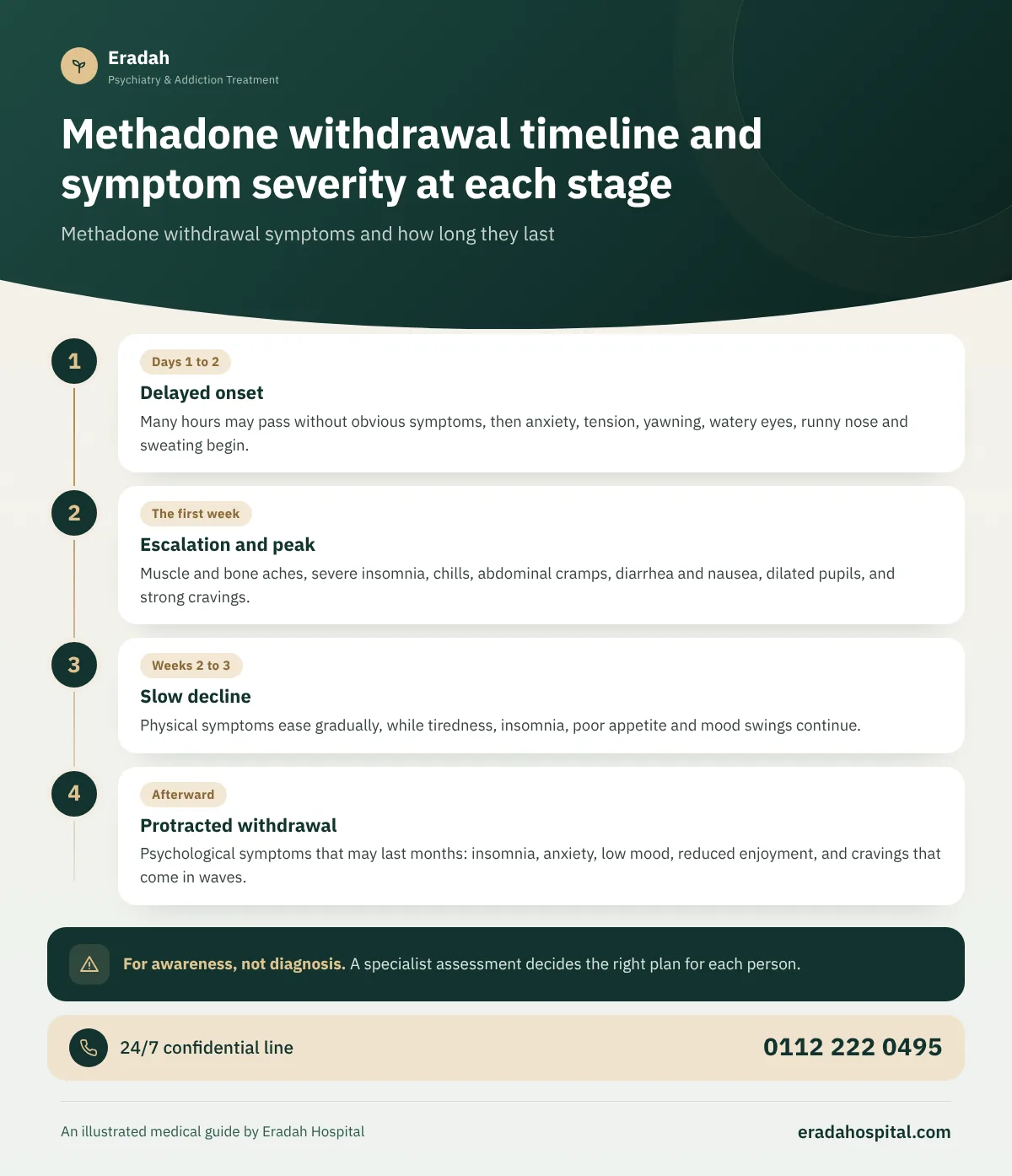
With sudden stopping, withdrawal usually follows these stages, with wide variation between people:
- Days 1 to 2Delayed onset
Many hours may pass without obvious symptoms, then anxiety, tension, yawning, watery eyes, runny nose and sweating begin.
- The first weekEscalation and peak
Muscle and bone aches, severe insomnia, chills, abdominal cramps, diarrhea and nausea, dilated pupils, and strong cravings.
- Weeks 2 to 3Slow decline
Physical symptoms ease gradually, while tiredness, insomnia, poor appetite and mood swings continue.
- AfterwardProtracted withdrawal
Psychological symptoms that may last months: insomnia, anxiety, low mood, reduced enjoyment, and cravings that come in waves.
What are the physical and psychological symptoms of methadone withdrawal?
| Type | Symptoms |
|---|---|
| Early | Anxiety and restlessness, watery eyes, runny nose, frequent yawning, sweating, chills, muscle aches. |
| Late | Abdominal cramps, diarrhea, nausea and vomiting, dilated pupils, goosebumps, severe insomnia. |
| Psychological | Irritability, depression, difficulty concentrating, cravings, a restless feeling of unease. |
Is methadone withdrawal dangerous?
Opioid withdrawal rarely threatens the life of a healthy person by itself, but it is not entirely safe, and the long duration of methadone withdrawal makes it very exhausting:
- Dehydration and salt imbalance from diarrhea and vomiting, especially in older people and those with heart and kidney disease.
- Relapse to escape the long symptoms, which is the most common reason stopping fails without support.
- Worsening pain in those who were taking it for chronic pain, if they stop without an alternative plan.
- Deterioration of mental state, anxiety and depression, in those with a co-occurring psychiatric disorder.
Why is gradual tapering preferred over abrupt discontinuation?
Drug labels warn against stopping methadone suddenly without consulting the doctor. Gradual tapering means the doctor lowers the amount slowly over weeks or months depending on the patient's response, so symptoms come mild and manageable.
- Tapering is decided by agreement between patient and doctor when the patient is psychologically and socially stable.
- The plan is slowed or paused if symptoms intensify or a strong urge to use appears.
- Other medicines that may change the methadone level in the blood are reviewed.
- Psychological therapy and family support continue throughout the tapering period and after it.
Can methadone be withdrawn at home?
Sudden stopping at home means facing weeks of symptoms without medicines to ease them, without monitoring for dehydration or mental state, and without protection from relapse. In a medical setting, whether residential or organized outpatient follow-up depending on the case, it is possible to:
- Set up a tapering plan suited to the patient's history and length of use.
- Use medicines that ease particular symptoms such as anxiety, sweating, cramps, insomnia and diarrhea.
- Monitor vital signs, fluids and mental state.
- Start a relapse prevention plan before withdrawal ends, not after.
What is protracted withdrawal after methadone?
After the acute physical symptoms end, many people go through a longer stage called protracted withdrawal: insomnia, fatigue, anxiety, low mood, sensitivity to stress, and cravings that appear suddenly when facing a place, person or feeling linked to use. This stage is expected while the brain recovers, does not mean failure, and improves gradually with time, psychological therapy, regular sleep and physical activity.
How can the family support someone going through methadone withdrawal?
Withdrawal is long, and mood swings and irritability are part of it, not a personal stance toward you.
Encourage him to keep the doctor's appointments and not change the plan on his own.
Keep away non-prescribed sedatives, and maintain a regular sleep and eating routine.
If he returns to use after a break, overdose is possible; know its signs and the ambulance number (123).
After withdrawal the most important stage begins: psychological therapy, a relapse prevention plan and long-term follow-up. Learn about its stages on the opioid addiction treatment page.
Signs of methadone overdose: call an ambulance (123) immediately
- Pupils that are extremely small, like pinpoints
- Very slow, shallow or irregular breathing
- Severe drowsiness and difficulty waking, or loss of consciousness
- Blue lips and fingernails and cold skin
- Slow heart rate, fainting, or irregular palpitations
Call an ambulance on 123, place the person on their side so they do not choke, and stay with them until help arrives. Naloxone, available in emergency departments, reverses the effect of an overdose, but the effect of methadone lasts much longer than naloxone's, so the patient must stay under observation in hospital even after improving.
Call the ambulance 123