Physical signs of heroin use
These signs appear while the drug is taking effect, that is, during the hours after use:
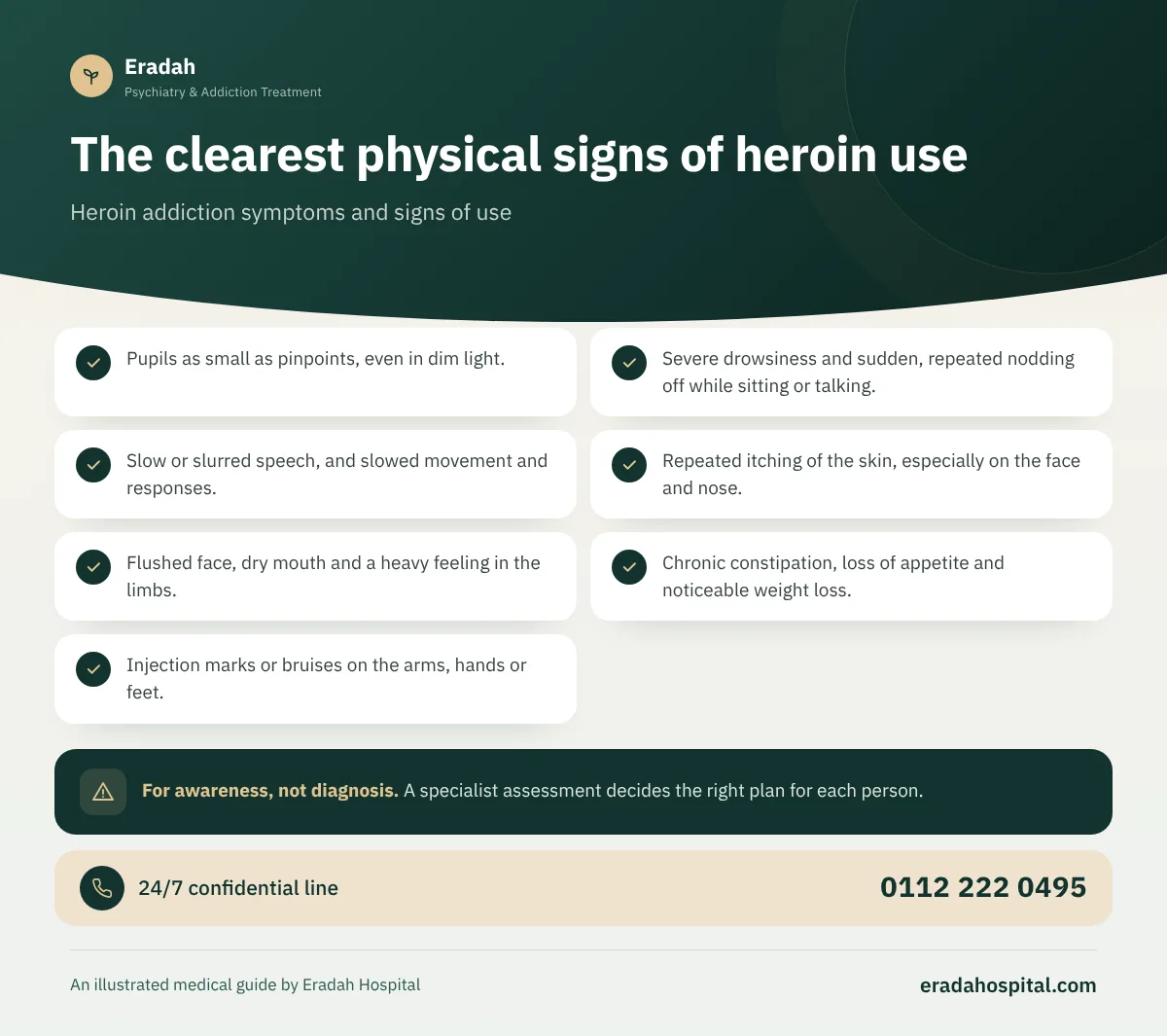
- Pupils as small as pinpoints, even in dim light.
- Severe drowsiness and sudden, repeated nodding off while sitting or talking.
- Slow or slurred speech, and slowed movement and responses.
- Repeated itching of the skin, especially on the face and nose.
- Flushed face, dry mouth and a heavy feeling in the limbs.
- Chronic constipation, loss of appetite and noticeable weight loss.
- Injection marks or bruises on the arms, hands or feet.
Behavioral signs
Families often notice the behavioral changes before the physical ones:
- Lying and excessive secrecy, constantly locking the room or phone.
- Asking for money often and with changing excuses, or money and things disappearing from the home.
- Wearing long sleeves even in the heat to hide injection marks.
- Withdrawing from the family and changing their usual friends.
- Neglecting school or work and being absent repeatedly.
- Neglecting personal hygiene and appearance.
- Unexplained changes in sleeping and waking times.
Items that may point to drug use
The presence of certain items in a person's room or belongings can be a sign worth noticing: syringes or needles, burnt spoons, pieces of aluminum foil with burn marks, rubber bands, or small bags with powder residue.
Psychological signs
- Sharp mood swings between exaggerated calm and extreme irritability.
- Loss of interest in hobbies and activities they used to enjoy.
- Obvious anxiety or depression, especially between doses.
- Poor concentration, forgetfulness and slowed thinking.
How do the signs change from the beginning to advanced addiction?
Not all the signs appear at once; they build up gradually, and knowing this progression helps you step in early:
| Stage | What the family may notice |
|---|---|
| The start | Minor changes in sleep and mood, extra secrecy, new friends, and requests for money with excuses that seem reasonable. |
| Regular use | Drowsiness and repeated nodding off, small pupils, declining school or work performance, repeated lying, and things disappearing from the home. |
| Advanced addiction | Noticeable weight loss, severe neglect of appearance, injection marks, debts, near-total isolation and legal problems. |
Can a person use heroin and seem normal?
Yes, especially in the early stages. Some people keep working or studying for a while and hide their drug use skillfully, and those around them think everything is fine. But continued outward functioning does not mean there is no addiction; it often just means the problem has not yet reached a stage where it cannot be hidden.
In these cases the subtle signs matter most: changes in sleeping times, an unexplained need for money, clear mood swings through the day, and gradual withdrawal from close relationships.
How do you tell heroin apart from other substances?
Some signs of drug use are similar, but there are differences that help families understand, while stressing that the diagnosis is made by a doctor:
| The sign | Heroin and opioids | Crystal meth (shabu) and stimulants | Hashish |
|---|---|---|---|
| Pupils | Very small | Dilated | Usually normal with red eyes |
| Sleep and energy | Drowsiness and dozing | Staying awake and extra energy for days | Sluggishness and relaxation |
| Appetite | Weak | Very weak | Increased |
| Speech | Slow and slurred | Fast and flowing | Sometimes slow, with unexplained laughter |
Symptoms of heroin use in teenagers
In teenagers, the signs of drug use sometimes overlap with normal adolescent ups and downs, but there are signals worth noticing:
- A sudden, large drop in grades or skipping school.
- Suddenly leaving old friends and favorite activities.
- Having money from an unknown source, or things disappearing from the home.
- Extreme secrecy about the phone, going out and new friends.
- Physical changes such as heavy drowsiness, weight loss and neglected appearance.
When is use an addiction? Diagnostic criteria
Doctors use specific criteria to diagnose opioid use disorder, which include eleven criteria within a year, among them:
- Using larger amounts or for longer than intended.
- A persistent desire, or failed attempts, to cut down.
- Spending a great deal of time getting the substance or recovering from its effects.
- A strong, urgent craving to use.
- Neglecting responsibilities at work, school or home.
- Continuing despite clear health or social problems.
- Tolerance: needing a larger amount for the same effect.
- Withdrawal: symptoms appearing when stopping.
| Number of criteria | Level |
|---|---|
| 2 to 3 | Mild |
| 4 to 5 | Moderate |
| 6 or more | Severe |
What should you do if you notice these symptoms?
- Gather your observations calmly, without aggressive searching or accusation.
- Talk to a specialist first so you know how to start the conversation.
- Choose a calm time when the person is not under the influence.
- Express your concern and love, and focus on the behavior, not the person.
- Offer help with clear steps, such as a confidential consultation or an assessment appointment.
How do you start the conversation with someone you suspect uses?
The first conversation can open the door to treatment or close it for a while. Here are phrases that help, and others best avoided:
| Instead of saying | Try saying |
|---|---|
| "You're an addict and a failure" | "I'm worried about you, and I've noticed you've seemed tired and different lately" |
| "Either you stop or you leave the house" | "I want to help you, and we'll find the way together" |
| "How could you do this to us?" | "What are you going through? I'm here to listen" |
Signs of a heroin overdose: call ambulance (123) immediately
- Pupils that are extremely small, like pinpoints
- Very slow, irregular or stopped breathing
- Blue lips and fingernails
- Loss of consciousness, with no response to calling or touch
- Gurgling or unusual snoring sounds
Call ambulance (123), place the person on their side so they do not choke, and stay with them until help arrives. The drug naloxone reverses the effect of an overdose if given in time, and it is available in emergency departments.
Call the ambulance 123