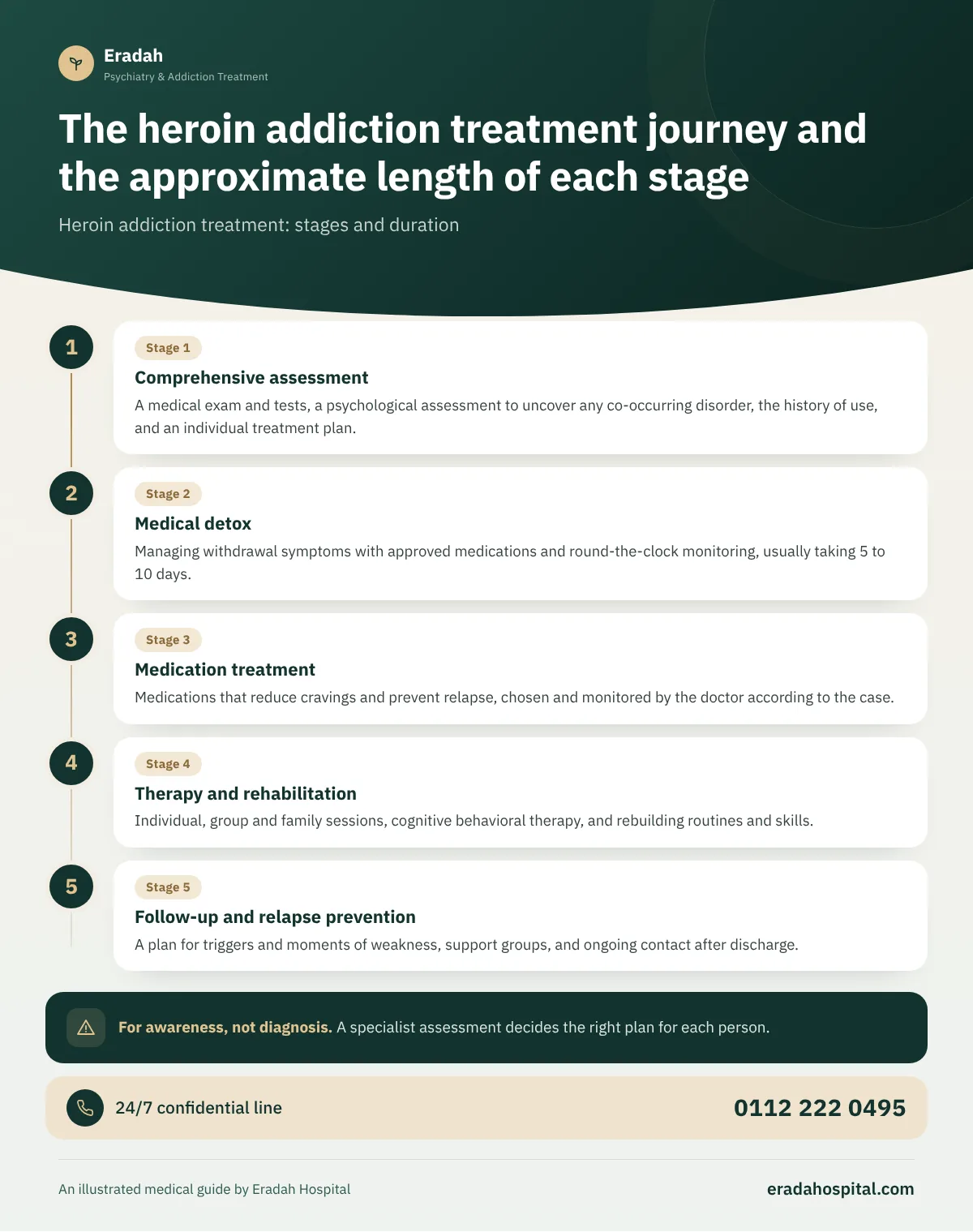
Stages of heroin addiction treatment
- Stage 1Comprehensive assessment
A medical exam and tests, a psychological assessment to uncover any co-occurring disorder, the history of use, and an individual treatment plan.
- Stage 2Medical detox
Managing withdrawal symptoms with approved medications and round-the-clock monitoring, usually taking 5 to 10 days.
- Stage 3Medication treatment
Medications that reduce cravings and prevent relapse, chosen and monitored by the doctor according to the case.
- Stage 4Therapy and rehabilitation
Individual, group and family sessions, cognitive behavioral therapy, and rebuilding routines and skills.
- Stage 5Follow-up and relapse prevention
A plan for triggers and moments of weakness, support groups, and ongoing contact after discharge.
Detox: the first step, not the last
Detox clears the substance from the body and eases withdrawal symptoms, but on its own it does not treat the addiction: the brain remains primed for cravings, and the psychological reasons that led to use are still there. This is why stopping at detox without treatment raises the risk of relapse and of overdose once tolerance has dropped.
Medications used in heroin addiction treatment
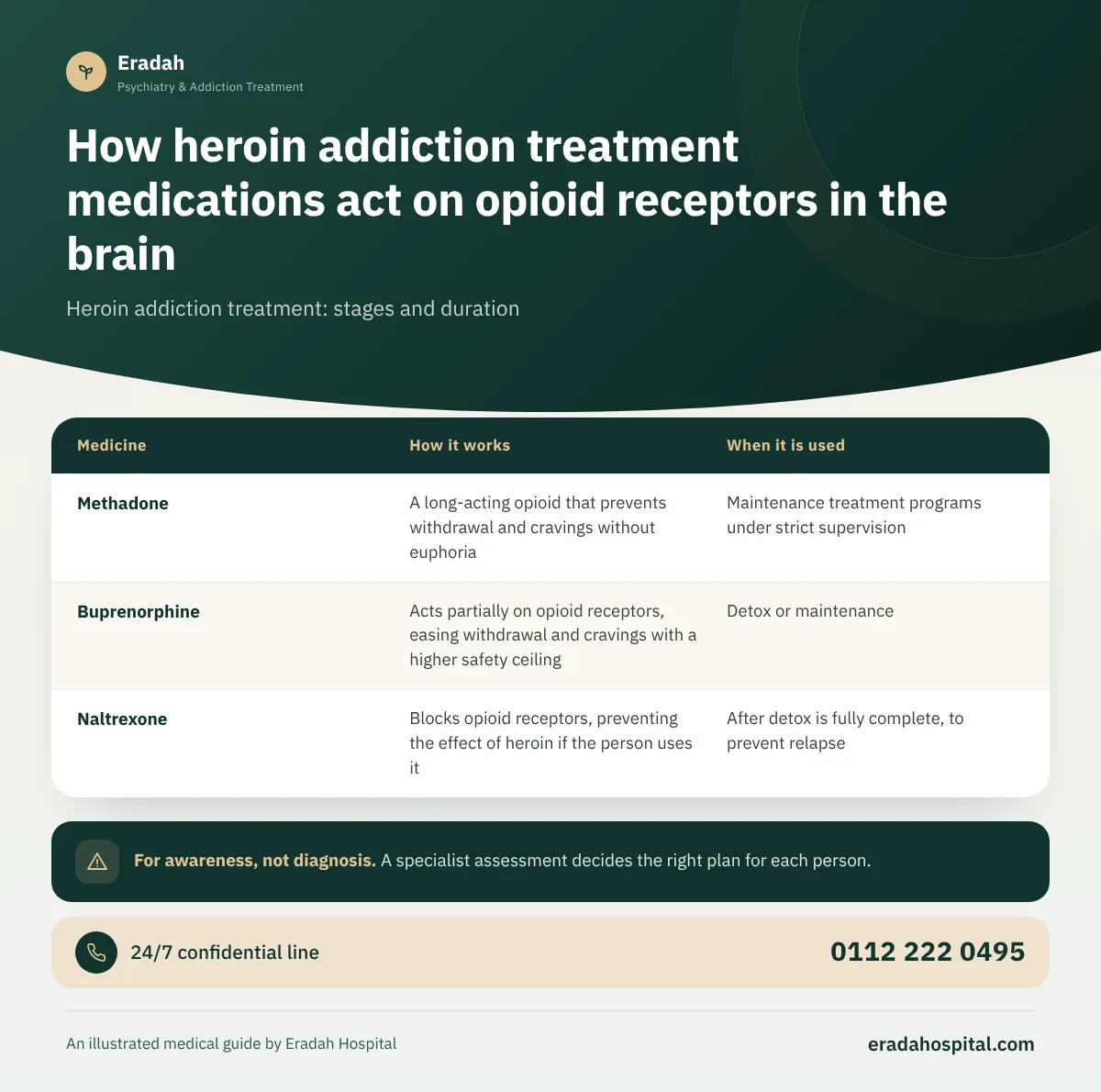
International medical guidelines rely on three main medications to treat opioid dependence, and the doctor chooses the suitable one according to the case and what is available and licensed:
| Medicine | How it works | When it is used |
|---|---|---|
| Methadone | A long-acting opioid that prevents withdrawal and cravings without euphoria | Maintenance treatment programs under strict supervision |
| Buprenorphine | Acts partially on opioid receptors, easing withdrawal and cravings with a higher safety ceiling | Detox or maintenance |
| Naltrexone | Blocks opioid receptors, preventing the effect of heroin if the person uses it | After detox is fully complete, to prevent relapse |
Other medications may be used to ease particular symptoms during withdrawal, such as anxiety, sweating, cramps and insomnia. No medication should be started or stopped without a doctor.
Psychological and behavioral therapy
Helps the patient understand their thoughts and triggers and build new ways of handling stress and cravings.
A safe space to share the experience with others going through the same journey.
Rebuilds trust and teaches the family how to support without enabling drug use.
Treating co-occurring depression, anxiety or trauma at the same time.
How long does heroin addiction treatment take?
| Stage | Approximate duration |
|---|---|
| Detox | 5 to 10 days |
| Residential treatment and rehabilitation | From 4 to 12 weeks or more |
| Outpatient treatment | Several months |
| Follow-up and relapse prevention | At least a year, and it may extend longer |
Research indicates that staying in treatment for long enough is one of the most important success factors, and that very short programs are linked to higher relapse rates. The treatment team sets the right length according to each patient's progress.
Residential or outpatient treatment?
The doctor decides the type of program after the assessment, but this general comparison helps you understand:
| Residential treatment | Outpatient treatment | |
|---|---|---|
| Suitable for | Severe addiction, failed previous attempts, or a co-occurring mental health condition | Stable cases, or after residential treatment |
| Supervision | around the clock | Regular sessions and appointments |
| Distance from triggers | Full coverage throughout the stay | Needs strong family support |
| Daily life | A temporary break from work or school | Can continue |
Heroin addiction treatment in pregnant women and teenagers
Pregnant women: Recent medical guidelines recommend approved medication treatment, such as methadone or buprenorphine, instead of detox during pregnancy, with joint follow-up between the addiction doctor, the obstetrician and pediatric care after delivery. The goal is to protect mother and baby from the swings of use and withdrawal.
Teenagers: They need a program suited to their age that involves the family strongly, keeps school going as far as possible, and treats any co-occurring mental health condition or learning difficulty. Early intervention at this age is linked to much better chances of recovery.
Myths about heroin addiction treatment
| The myth | The truth |
|---|---|
| "Treatment only works if the patient wants it from the start" | Many people begin treatment hesitant or under family pressure, and their motivation grows during treatment with the help of the treatment team. |
| "A relapse means treatment failed" | Relapse can happen in any chronic illness, and it means the plan needs adjusting, not that the road is closed. |
| "Detox is the whole treatment" | Detox is only a first step, and it must be followed by medication treatment, psychological treatment and follow-up. |
The family's role in heroin addiction treatment
The family is part of the treatment itself and has a real role in it. Programs that involve the family are linked to better outcomes, because they address the communication patterns that feed the addiction, teach the family how to set healthy boundaries without harshness, how to recognize early signs of relapse, and how to protect themselves from emotional exhaustion.
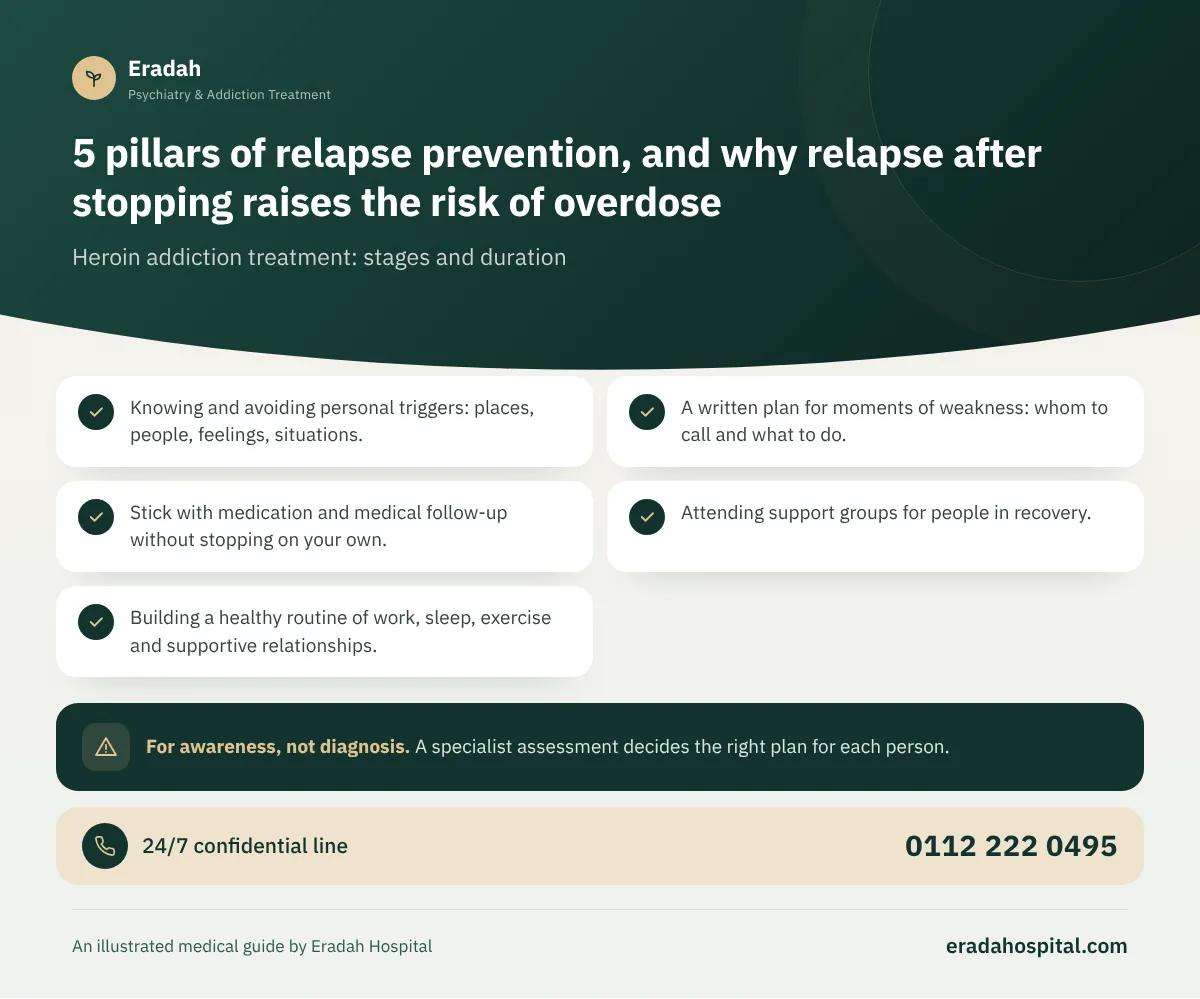
Relapse prevention after heroin treatment
- Knowing and avoiding personal triggers: places, people, feelings, situations.
- A written plan for moments of weakness: whom to call and what to do.
- Stick with medication and medical follow-up without stopping on your own.
- Attending support groups for people in recovery.
- Building a healthy routine of work, sleep, exercise and supportive relationships.
How do you choose a center for heroin addiction treatment?
- Officially licensed, with psychiatrists who specialize in addiction treatment.
- Provides medically supervised detox around the clock.
- Assesses mental health and treats dual diagnosis.
- Has a family program and a clear plan for follow-up after discharge.
- Respects confidentiality and dignity, and explains the plan and duration clearly.
- Does not promise a miracle cure in a few days, and does not rely on isolation alone.
Choosing a hospital for heroin addiction treatment
Many families judge a center by how fast it ends withdrawal symptoms, and that is a misleading measure with heroin. The week of detox is the relatively easy part; what decides the outcome is what is built afterward: medication treatment that reduces cravings if the doctor sees it as suitable, psychological rehabilitation, and distance from the neighborhood or friends tied to drug use. A center that discharges the patient after a few days with no plan leaves them facing low tolerance and a risk of overdose.
| Question | The answer that should reassure you |
|---|---|
| What comes after withdrawal ends? | A written rehabilitation program with clear stages, not a direct discharge. |
| Is approved medication treatment for opioids discussed? | A doctor who explains the options according to the case, without an absolute refusal or a promise made in advance. |
| Is the patient given any injection without the family knowing? | A frank explanation of every medical step and prior consent. |
| Are the liver and injection-related infections checked? | Tests at the first assessment and referral when needed. |
| How does the family handle a first slip? | Practical training for the family and a number to call right away. |
At Eradah, the patient goes through connected stages that begin with assessment, then detox, then residential treatment, which includes individual and group sessions and a medication plan set by the doctor, then follow-up after discharge. If the patient is a woman, we provide the first consultation and guide her to a suitable facility. Also read about how long heroin withdrawal symptoms last to know what to expect.
Eradah's phone and WhatsApp line 01122220495 is available day and night, and you can also message us through the website. The first consultation costs you nothing and stays confidential between you and the doctor, and residential admission at the center is for men only.
Heroin addiction treatment at Eradah
At Eradah we begin with a comprehensive assessment that sets the right plan, then safe detox under round-the-clock medical supervision, followed by a residential treatment program that combines medication, psychological and family therapy, then follow-up after discharge. We treat any co-occurring mental health condition within the same plan, in complete confidentiality from the first call.