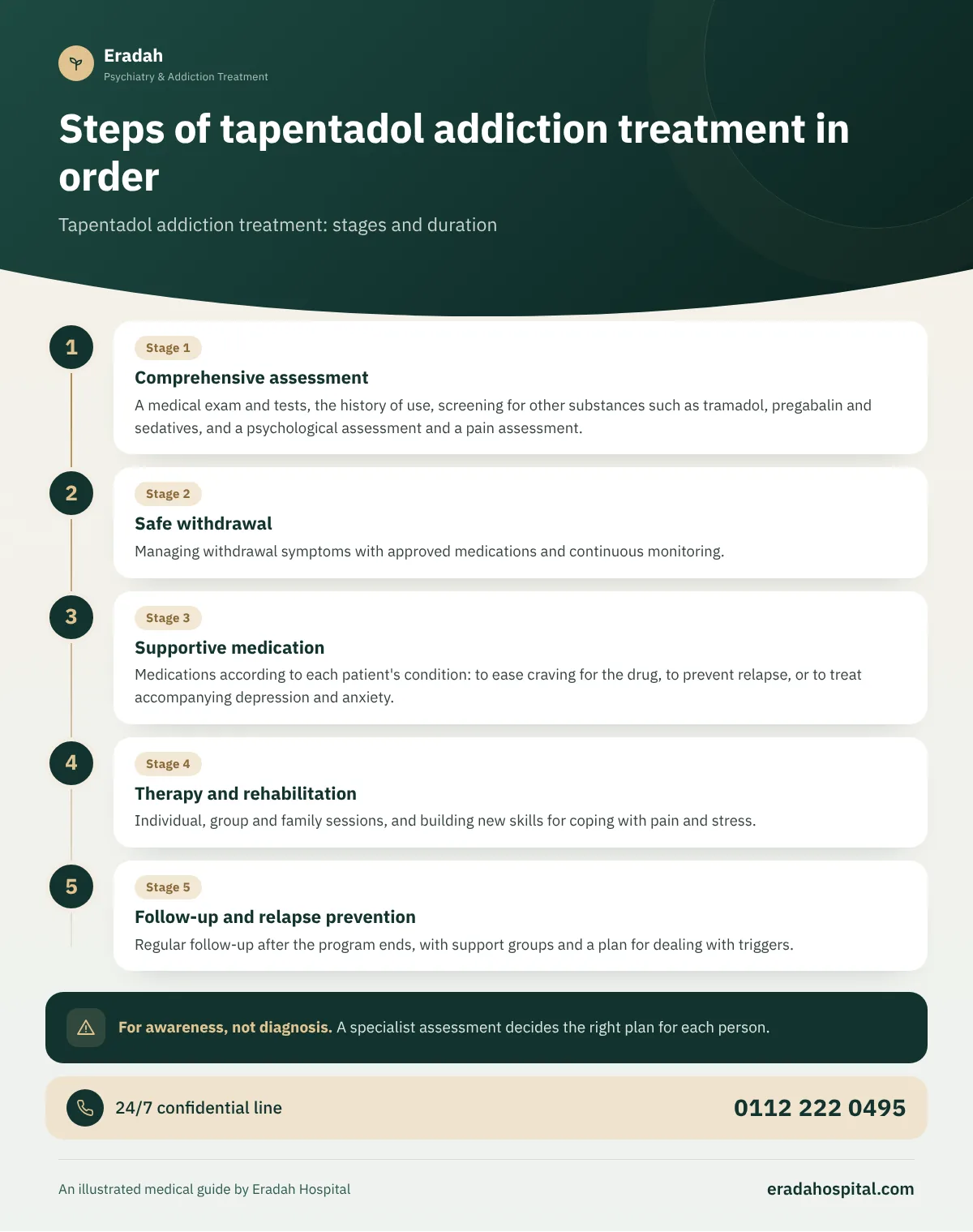
Stages of tapentadol addiction treatment
- Stage 1Comprehensive assessment
A medical exam and tests, the history of use, screening for other substances such as tramadol, pregabalin and sedatives, and a psychological assessment and a pain assessment.
- Stage 2Safe withdrawal
Managing withdrawal symptoms with approved medications and continuous monitoring.
- Stage 3Supportive medication
Medications according to each patient's condition: to ease craving for the drug, to prevent relapse, or to treat accompanying depression and anxiety.
- Stage 4Therapy and rehabilitation
Individual, group and family sessions, and building new skills for coping with pain and stress.
- Stage 5Follow-up and relapse prevention
Regular follow-up after the program ends, with support groups and a plan for dealing with triggers.
Why does treatment start with an assessment?
Many people dependent on tapentadol have a history with tramadol or other opioids, and some mix it with pregabalin or sedatives. The withdrawal from each substance differs from the others, and stopping some of them suddenly can lead to seizures. So the assessment decides at the outset which substance to start withdrawal with and at what speed, and also uncovers any mental health condition or chronic pain that needs treating at the same time.
Tapentadol withdrawal: the first step, not the last
The aim of detox is to stop tapentadol with as little suffering and risk as possible, and it may be done by gradual reduction or by switching to a longer-acting treatment medication, as the doctor decides. But withdrawal alone is not enough to treat addiction; the brain keeps the memory of the tablet, and the reasons that led to it remain.
Medications doctors use in tapentadol addiction treatment
Dependence on tapentadol is treated like an opioid use disorder, and the doctor chooses medications according to severity and the presence of other substances or a mental health condition, including:
| Medication or class | Role |
|---|---|
| Buprenorphine | Eases withdrawal and strong cravings, and is used for withdrawal or maintenance in cases of severe dependence. |
| Methadone | Used in some programs that treat severe opioid dependence, under strict medical supervision. |
| Naltrexone | Blocks opioid receptors and so helps avoid relapse, and is started only once withdrawal is complete. |
| Symptom-relief medications | Ease anxiety, sweating, cramps, diarrhea and lack of sleep during withdrawal. |
| Antidepressants or anti-anxiety medications | If a co-occurring mental health condition is present, the doctor chooses the suitable type, taking interactions into account. |
Do not start or stop any of these medications except on a doctor's decision, and we have not listed doses because they vary from one patient to another.
Psychological and behavioral therapy
Shows the patient the thoughts and circumstances that lead them to the tablet, and teaches them different ways of dealing with them.
A space to share the experience with others who have been through dependence on painkillers.
Repairs trust among family members, and trains them to support without making it easier to use.
Treats the depression, anxiety or insomnia that accompany addiction within the same plan.
What about the patient who has real pain?
Some patients began taking tapentadol to treat chronic pain that is still present. Here, stopping the medication is not enough; an alternative plan for treating the pain must be drawn up with a pain, orthopedic or neurology doctor, and it may include physical therapy, non-opioid painkillers, medications for nerve pain chosen carefully by the doctor, and psychological therapies that help in living with pain. Pain left untreated is among the main things that drive relapse.
How long does tapentadol addiction treatment take?
| Stage | Approximate duration |
|---|---|
| Assessment | A few days |
| Safe withdrawal | Usually one to two weeks, longer when other substances are mixed in |
| Residential treatment and rehabilitation | Between 4 and 12 weeks, and it may be more |
| Follow-up and relapse prevention | At least one year |
These durations are estimates, and the treatment team sets them according to each patient's improvement. One of the strongest links with success is that the patient stays in treatment long enough.
Do you need to stay in the hospital, or is outpatient treatment enough?
| Residential treatment | Outpatient treatment |
|---|---|
| Taking tapentadol with pregabalin, sedatives or alcohol | Tapentadol alone and for a shorter period |
| A previous overdose or severe depression | A stable mental state |
| Previous failed attempts to stop | A supportive family and commitment to treatment appointments |
| An environment that makes tablets easy to get | Surroundings that help avoid triggers |
How do you avoid relapse after tapentadol treatment?
- Knowing the triggers: pain, exhaustion, stress, and particular friends.
- A written plan for moments of weakness: whom to call and what to do.
- Telling any doctor you visit about your history with opioids so they are not prescribed again.
- Safe treatment for pain, insomnia and depression.
- Family members knowing the signs of overdose and the ambulance number.
Misconceptions about treating painkiller addiction
| The common belief | The truth |
|---|---|
| “Treatment means just a week of withdrawal” | Withdrawal is a beginning, and recovery needs psychological therapy and follow-up for months. |
| “Opioid treatment medications are a new addiction” | When used under medical supervision they are an approved treatment that helps with stability, and the doctor determines how long they are used and how they are stopped. |
| “A pain patient can't be treated for addiction” | Both can be treated together with a plan that brings together an addiction doctor and a pain doctor. |
What should you look for in a tapentadol addiction treatment center?
- A psychiatrist specialized in addiction, and medical follow-up day and night during withdrawal.
- Ability to handle mixed substances and co-occurring mental health conditions.
- Cooperation with pain doctors to draw up a genuine alternative plan.
- A psychological and family treatment program and clear follow-up after discharge.
- An official license, and protection of the patient's confidentiality and dignity.
A good hospital for tapentadol addiction treatment: how to choose?
A tapentadol patient rarely comes alone: many have been through tramadol before it, or mix it with pregabalin or sedatives, and some have real back or nerve pain. Each of these substances has a different withdrawal pattern, and some raise the likelihood of seizures with sudden stopping. Also, because tapentadol is an opioid, the body's tolerance drops after withdrawal, and going back to it becomes more dangerous. Compare facilities using these questions:
| Question | The answer that should reassure you |
|---|---|
| How do you handle tapentadol mixed with pregabalin? | After the assessment, we decide which substance to reduce first and how fast. |
| Who monitors the patient at night during withdrawal? | A doctor and nursing staff on site at all times. |
| What about chronic pain? | An alternative plan in coordination with a pain or neurology doctor. |
| What is the discharge plan? | An explicit warning about the risk of overdose, and follow-up with scheduled appointments. |
These answers apply to Eradah: continuous medical supervision in the withdrawal stage, a medication plan set by the doctor, individual and group psychological therapy, then follow-up that prevents relapse. You can review tapentadol withdrawal symptoms before calling.
The first call does not commit you to anything: a free, confidential consultation on 01122220495 by phone or WhatsApp at any hour, or through the Eradah contact page. Residential treatment is for men, while we direct women to a suitable facility after the consultation.
How do we treat tapentadol addiction at Eradah?
The plan at Eradah begins with a full assessment to identify all the substances the patient uses and any mental health condition or chronic pain, followed by safe withdrawal under medical supervision day and night, then a program of medication, psychological and family therapy, with a plan for treating pain where it exists, and follow-up after discharge, all in complete confidentiality from the first call.