Why do withdrawal symptoms appear when you stop tapentadol?
With repeated use, the brain adapts to the presence of tapentadol, reducing the sensitivity of opioid receptors and adjusting norepinephrine activity. When use stops suddenly, the body abruptly loses this balance, the nerves become overactive, and the familiar symptoms of opioid withdrawal appear.
The official leaflet states clearly that stopping suddenly in someone who is physically accustomed to the drug may cause serious withdrawal symptoms, and advises gradual reduction under the doctor's supervision. The appearance of these symptoms does not necessarily mean the person is addicted; they can occur in a patient who has followed their prescription for a long time, but in every case they need a medical plan.
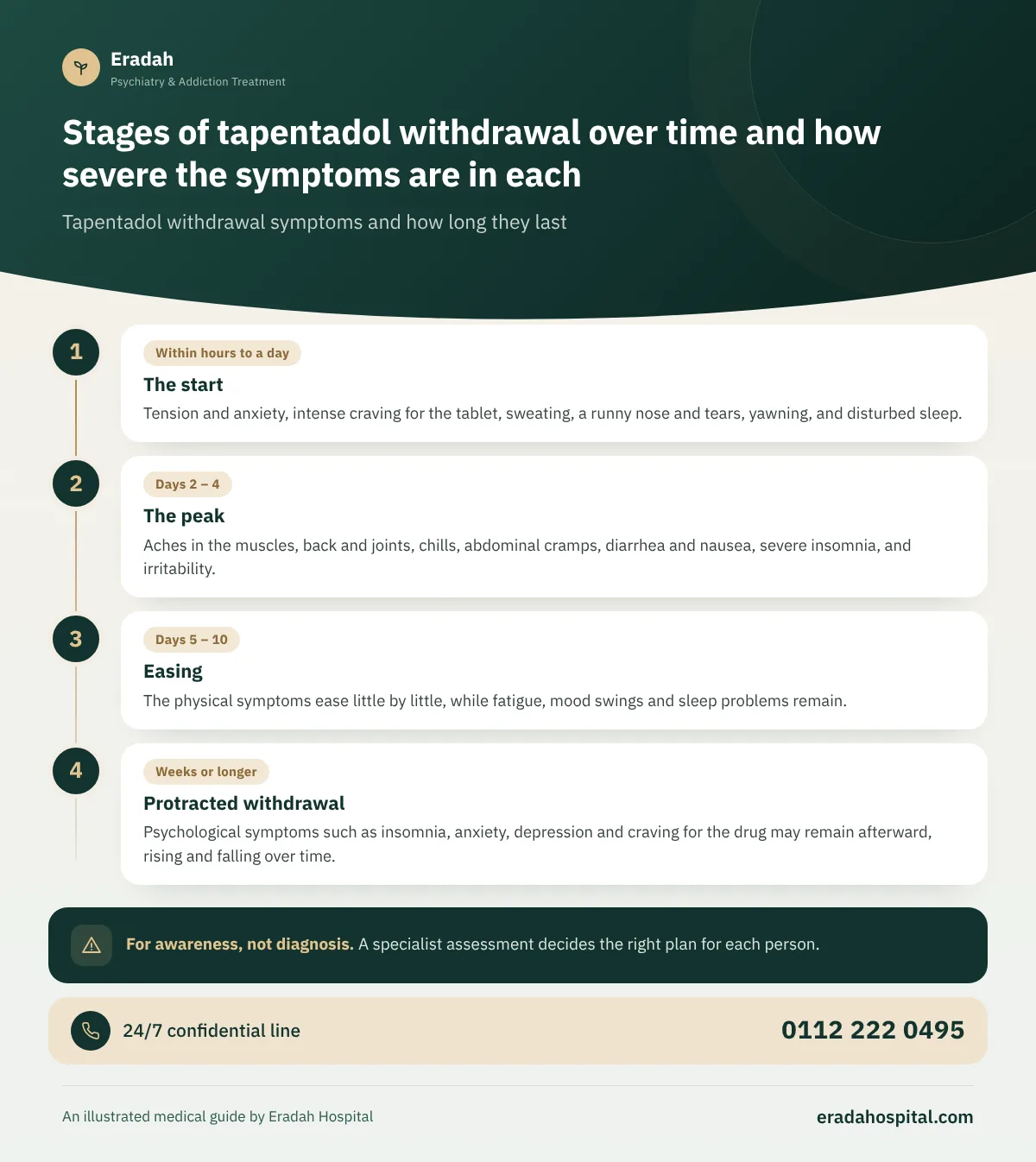
Timeline of tapentadol withdrawal
The course below is approximate, and varies with the length of use, the amount, whether the tablets were immediate-release or extended-release, and the presence of other substances:
- Within hours to a dayThe start
Tension and anxiety, intense craving for the tablet, sweating, a runny nose and tears, yawning, and disturbed sleep.
- Days 2 – 4The peak
Aches in the muscles, back and joints, chills, abdominal cramps, diarrhea and nausea, severe insomnia, and irritability.
- Days 5 – 10Easing
The physical symptoms ease little by little, while fatigue, mood swings and sleep problems remain.
- Weeks or longerProtracted withdrawal
Psychological symptoms such as insomnia, anxiety, depression and craving for the drug may remain afterward, rising and falling over time.
What are the symptoms of tapentadol withdrawal?
The official leaflet lists the following symptoms, which resemble withdrawal from other opioids:
| Type | Symptoms |
|---|---|
| Early physical | Restlessness, sweating, a runny nose and tears, yawning, chills, and dilated pupils. |
| Later physical symptoms | Aches in the muscles, joints and back, weakness, abdominal cramps, diarrhea, nausea and vomiting, and loss of appetite. |
| Heart and breathing | A faster heartbeat and breathing, with raised blood pressure. |
| Psychological | Irritability, tension and insomnia, with an intense craving to go back to the drug. |
The return of pain: the other face of withdrawal
Many people who take tapentadol began it for real pain. When they stop, this pain may return, and the patient may temporarily feel it is worse than before, because the body had become used to the presence of the painkiller. This is among the most important reasons for a quick return to the drug, which is why stopping needs an alternative plan for pain relief that the doctor draws up before starting.
Is tapentadol withdrawal dangerous?
Opioid withdrawal alone rarely threatens the life of a healthy person, but it is not completely safe, and its danger may rise in certain situations:
- Mixing with sedatives or alcohol: stopping these substances suddenly can lead to seizures, so medical follow-up is indispensable.
- Severe depression: the patient may have thoughts of harming themselves, and then intervention is needed without delay.
- Dehydration and salt imbalance: as a result of diarrhea and vomiting, which is more likely in older adults and those with heart or kidney disease.
- Relapse: going back to the old amount after tolerance has dropped raises the risk of overdose and breathing stopping.
For someone who takes tapentadol on a doctor's prescription
Someone who has taken tapentadol for a long time for real pain should not cut it off all at once, and should not adjust the dose on their own. Agree with your doctor on reducing the dose step by step; they decide the pace of reduction based on your condition and how long you have used the medication, and help you find other ways to control the pain when needed.
Stopping the medication suddenly or withdrawing under medical follow-up?
| Aspect | Stopping suddenly at home | Withdrawal under medical supervision |
|---|---|---|
| Symptom severity | Strong symptoms with no relief | Milder symptoms with approved medications |
| Return of pain | Sudden pain that pushes a return to the drug | An alternative plan for pain relief |
| Mixed substances | Possible seizures if alcohol or sedatives are involved | Planned withdrawal for each substance |
| Risk of relapse | Very high | Lowered by support and continued treatment after withdrawal |
Why is tapentadol withdrawal at home not advisable?
Stopping suddenly at home means facing the hardest days without medication to ease symptoms, without monitoring of mental state, and without protection from relapse. A medically equipped place, by contrast, makes it possible to:
- Find out whether other substances are present that need a separate withdrawal.
- Give approved medications to ease pain, anxiety, lack of sleep and diarrhea.
- Monitor mental state and sleep around the clock.
- Start the treatment and rehabilitation program immediately after withdrawal.
Common myths about tapentadol withdrawal
| The myth | The truth |
|---|---|
| Three days of endurance and the problem is over | The physical symptoms may ease within days, but the psychological symptoms and craving for the drug may last weeks. |
| Switching to tramadol eases withdrawal | This transfers the dependence to another opioid and delays treatment, and is only appropriate within a medical plan. |
| Sedatives solve the insomnia problem in withdrawal | Using them without supervision may shift the dependence onto them and double the risk of suppressed breathing. |
| Stopping without help proves willpower | Addiction is a disease, and the safest and most successful way to stop is medical withdrawal. |
What are sleep and mood like after the acute withdrawal passes?
Many people, even after the physical symptoms disappear, struggle for a while with difficulty sleeping, mood swings, low energy and poor concentration. This is normal and expected, and it improves little by little with regular sleep times, physical activity and psychological therapy. If depression or anxiety continues severely, it may be an earlier mental health condition that needs its own treatment.
How can the family support their relative during tapentadol withdrawal?
- Know that the irritability and anxiety they show are symptoms of withdrawal, and that they do not mean it toward you.
- Help them stick to the plan the doctor set, and refrain from giving them any medication found in the home.
- If you notice signs of severe depression or worrying thoughts, contact the medical team without waiting.
- Keep the home calm, and make sure they sleep regularly and get enough food and fluids.
What comes after withdrawal is the most important stage, and we explained it in detail on the page about tapentadol addiction treatment.
Signs of tapentadol overdose: call an ambulance (123) immediately
- Very slow, shallow or stopped breathing, or unusual snoring during sleep
- Pupils that are extremely small, like pinpoints
- Extreme drowsiness and difficulty waking, or loss of consciousness and no response to being called
- Blue lips and nails, cold skin and a slow pulse
- Seizures, or agitation with fever, heavy sweating and shaking if it was mixed with drugs that raise serotonin
Call an ambulance on 123 immediately, place the person on their side (recovery position) so they do not choke, give them nothing by mouth, stay with them until help arrives, and keep the medication box. Emergency doctors use naloxone to reverse the respiratory depression caused by opioids.
Call the ambulance 123