Short-term harms of tapentadol
These harms can begin within hours of taking tapentadol, and become more severe as the amount increases or with tablets of unknown strength:
- Nausea, vomiting and dizziness, among the most common side effects in the official leaflet.
- Drowsiness, slowed thinking and poor concentration, which raise the chance of road and workplace accidents.
- Constipation, dry mouth, itching and sweating.
- Headache and sleep disturbances that affect some users.
- Respiratory depression, with a greater risk at the start of use, when the amount is increased, or when mixed with other depressants.
Why is respiratory depression the most serious harm of tapentadol?
All opioids slow the breathing center in the brainstem, and tapentadol is no exception. Its official leaflet warns at the top that respiratory depression can be serious or life-threatening, and that the risk is highest in the first days of use and after any increase in dose.
- Mixing it with benzodiazepines such as Xanax and Rivotril, or with pregabalin and gabapentin.
- Drinking alcohol while using it.
- Chronic lung disease and sleep apnea.
- Advanced age or severe frailty.
- Going back to the old amount after a break during which tolerance dropped.
Serotonin syndrome and seizures
Although tapentadol's effect on serotonin is smaller than tramadol's, its official leaflet warns of serotonin syndrome when it is combined with medications that raise serotonin, such as some antidepressants, migraine medications and tramadol itself. Its signs include:
Agitation or severe restlessness, mental confusion, or hallucinations.
A high temperature, a fast heartbeat, heavy sweating, and unstable blood pressure.
Tremor, stiffness, involuntary twitching, and loss of balance.
The leaflet also notes that tapentadol may increase the number of seizures in people with epilepsy, so any history of seizures must be reported to the doctor before it is prescribed. It must not be combined with monoamine oxidase inhibitor (MAOI) medications or taken within two weeks of stopping them.
Long-term harms of tapentadol to the body's systems
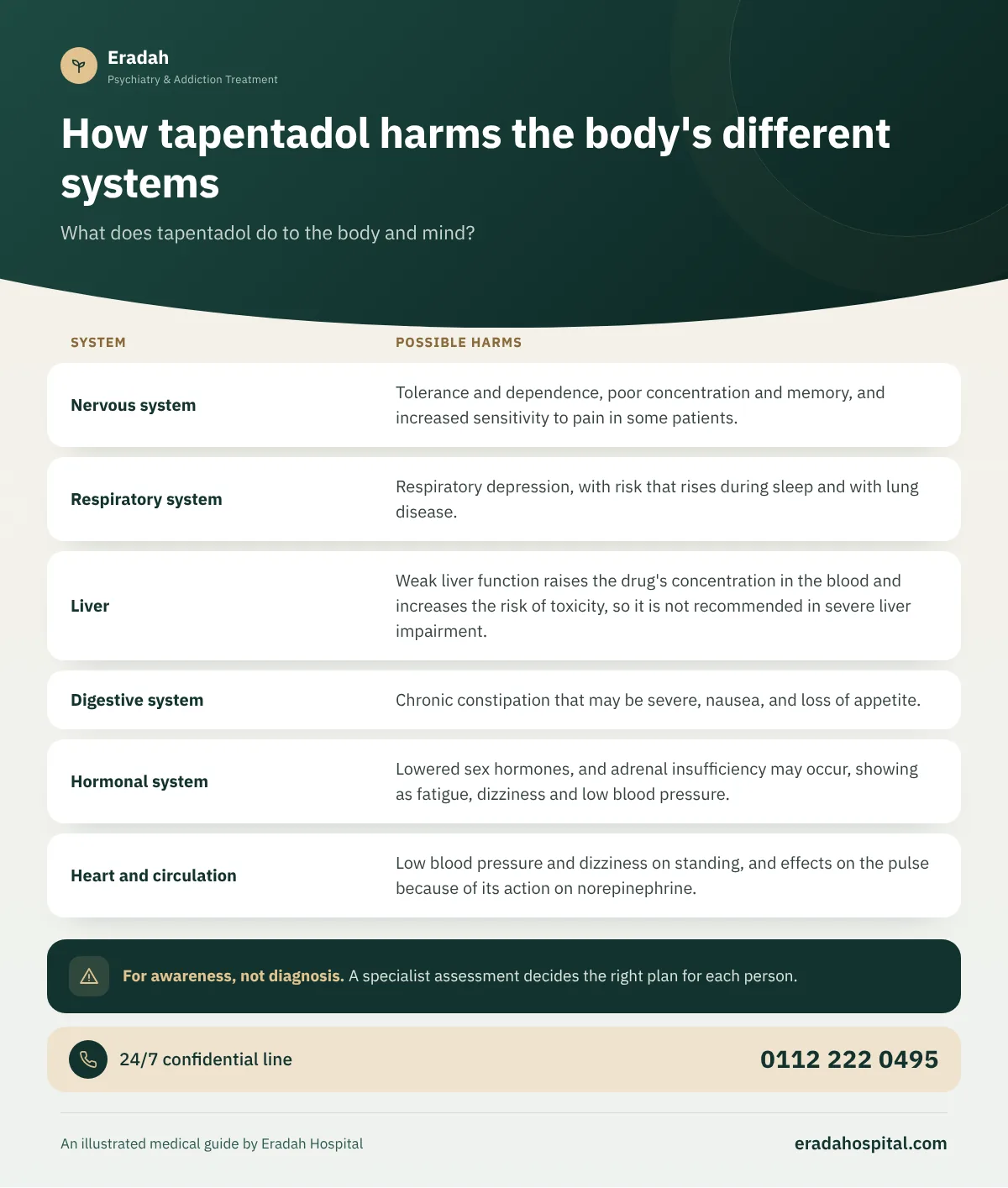
When use is repeated for weeks and months, especially away from a doctor's follow-up, its effects build up on the body's organs:
| System | Possible harms |
|---|---|
| Nervous system | Tolerance and dependence, poor concentration and memory, and increased sensitivity to pain in some patients. |
| Respiratory system | Respiratory depression, with risk that rises during sleep and with lung disease. |
| Liver | Weak liver function raises the drug's concentration in the blood and increases the risk of toxicity, so it is not recommended in severe liver impairment. |
| Digestive system | Chronic constipation that may be severe, nausea, and loss of appetite. |
| Hormonal system | Lowered sex hormones, and adrenal insufficiency may occur, showing as fatigue, dizziness and low blood pressure. |
| Heart and circulation | Low blood pressure and dizziness on standing, and effects on the pulse because of its action on norepinephrine. |
Does tapentadol harm sexual function and fertility?
Long-term use of opioids, including tapentadol, may lower sex hormones over time, weakening desire, erections and fertility in men, and disrupting the menstrual cycle in women. Any belief that these tablets “improve performance” ignores this accumulating harm. In most cases these disturbances improve with stopping and treatment.
The effect of tapentadol on mental health
- Mood swings, and anxiety and irritability between doses.
- Depression and loss of enjoyment of ordinary things with continued use.
- Disturbed sleep and declining motivation for work and study.
- A higher likelihood of suicidal thoughts in people with depression, which calls for intervention without delay.
Someone who already had a mental health condition needs treatment that covers both problems at once, and this is called dual diagnosis.
Risks of mixing tapentadol with other substances
| The mix | The main risk |
|---|---|
| Tapentadol + pregabalin or gabapentin | Doubled depression of breathing and consciousness. |
| Tapentadol + sedatives | Deep drowsiness and severe respiratory depression that can lead to coma and death. |
| Tapentadol + alcohol | Respiratory depression is multiplied, and the risk of choking on vomit rises. |
| Tapentadol + tramadol or antidepressants | Serotonin syndrome, and a stronger effect from the opioids. |
| Tapentadol + muscle relaxants | Increased drowsiness and respiratory depression, a mixture that has been found in smuggled tablets. |
Harms of tapentadol in pregnancy and breastfeeding
Regular use of tapentadol during pregnancy can lead to a baby born with neonatal opioid withdrawal syndrome, a condition that can threaten the baby's life if it is not detected and treated. A pregnant woman must not stop the medication suddenly on her own; she should see her doctor right away so that a safe plan can be made for her and the fetus, and she should also tell the doctor if she is breastfeeding.
How does tapentadol affect older adults?
Older adults are more sensitive to the harms of tapentadol, because they are more prone to respiratory depression and often take other medications that may interact with it. Their main risks include dizziness, falls and fractures, confusion, severe constipation, and low blood pressure. A careful assessment and close follow-up are therefore needed before it is prescribed to them.
Why are the harms of tapentadol more severe for teenagers and young adults?
The brain in adolescence and early adulthood is still developing, especially the areas responsible for planning and impulse control. For this reason a young person exposed to opioids early is more likely to become addicted, and more inclined to try dangerous mixtures with pregabalin, hashish or alcohol without realizing the risk of breathing stopping.
Also, the tablets that reach young people are often outside any medical framework, of unknown source and strength, and may be much stronger than the person taking them thinks. Early conversation within the family, free of exaggeration and scare tactics, is one of the strongest means of prevention.
Do the harms of tapentadol go away after stopping?
Most of this harm improves little by little with stopping and treatment: sleep becomes regular, appetite, hormones and sexual function return to normal, and mood and concentration improve within weeks to months. What matters is that stopping is done under medical supervision, not suddenly at home, and that the original reasons for use, such as pain or depression, are treated.
Signs of tapentadol overdose: call an ambulance (123) immediately
- Very slow, shallow or stopped breathing, or unusual snoring during sleep
- Pupils that are extremely small, like pinpoints
- Extreme drowsiness and difficulty waking, or loss of consciousness and no response to being called
- Blue lips and nails, cold skin and a slow pulse
- Seizures, or agitation with fever, heavy sweating and shaking if it was mixed with drugs that raise serotonin
Call an ambulance on 123 immediately, place the person on their side (recovery position) so they do not choke, give them nothing by mouth, stay with them until help arrives, and keep the medication box. Emergency doctors use naloxone to reverse the respiratory depression caused by opioids.
Call the ambulance 123
23Social and professional harms