Stages of Mydriapid eye drop addiction treatment
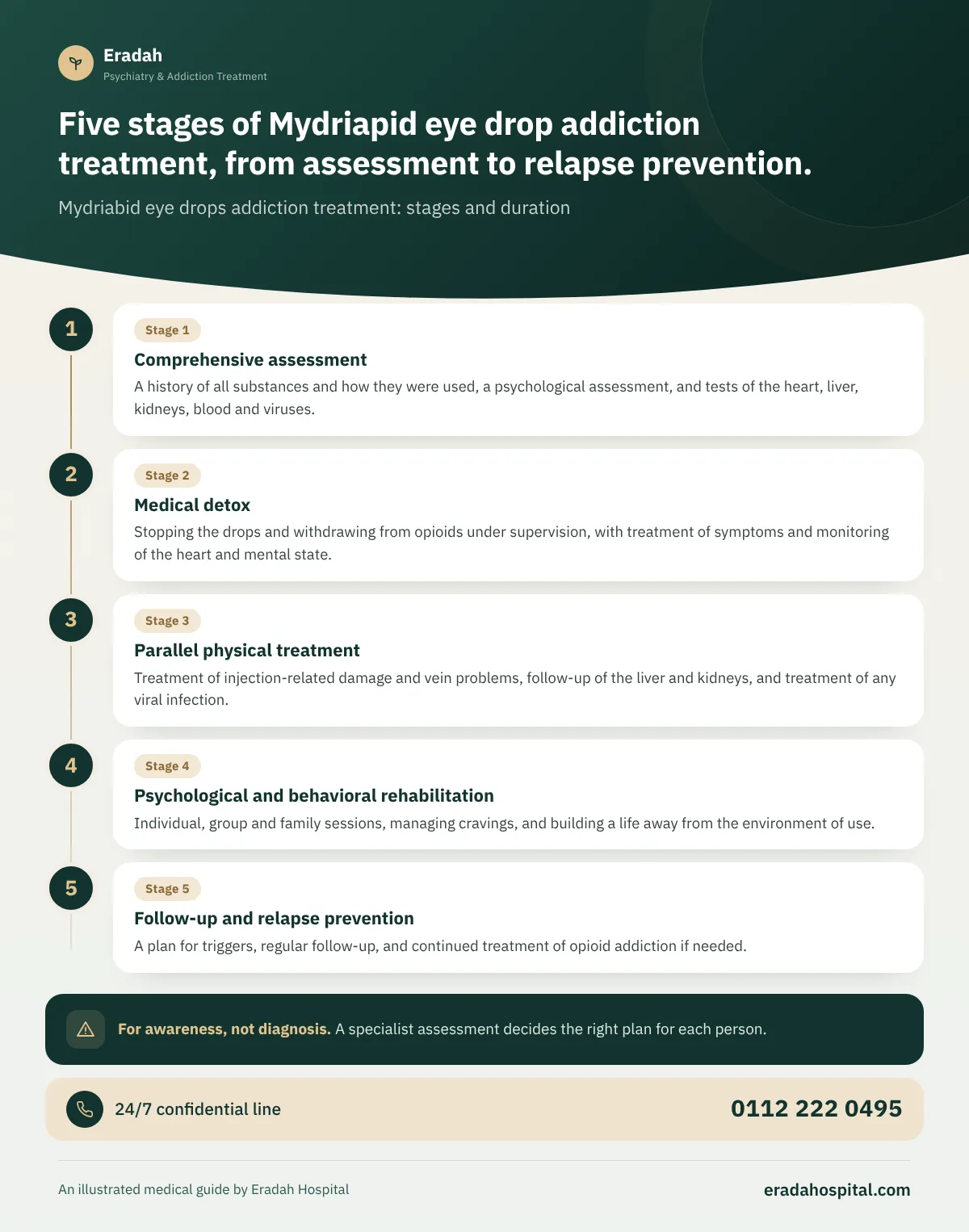
Eye drop addiction is rarely an addiction to a single substance, so treatment is built on one plan that deals with the drops, the opioids, the harms of injecting and the person's mental state at the same time.
- Stage 1Comprehensive assessment
A history of all substances and how they were used, a psychological assessment, and tests of the heart, liver, kidneys, blood and viruses.
- Stage 2Medical detox
Stopping the drops and withdrawing from opioids under supervision, with treatment of symptoms and monitoring of the heart and mental state.
- Stage 3Parallel physical treatment
Treatment of injection-related damage and vein problems, follow-up of the liver and kidneys, and treatment of any viral infection.
- Stage 4Psychological and behavioral rehabilitation
Individual, group and family sessions, managing cravings, and building a life away from the environment of use.
- Stage 5Follow-up and relapse prevention
A plan for triggers, regular follow-up, and continued treatment of opioid addiction if needed.
Withdrawal from the drops and opioids: what to expect
The oldest published description of withdrawal from these drops dates to 1975, in a patient addicted to eye drops: anxiety, sweating, nausea, vomiting, muscle stiffness and tremor, with anxiety and agitation peaking on the seventh day. The 2022 clinical review notes that withdrawal symptoms lasted an average of 5 to 7 days, while craving for the drops remained marked afterward, continuing for 20 to 30 days after opioid withdrawal ended.
On the psychological side, reports describe sharp mood swings, severe distress and episodes of agitation, and a wish to leave the hospital immediately, along with a stated desire for the drops. The guide to heroin withdrawal explains the opioid side of this stage.
Are there medicines to treat eye drop addiction?
The clinical review says researchers have found no unified approach to treating these patients, that the mainstay of treating the poisoning is to stop exposure to the substance, and that there is no approved way to reverse the effect of tropicamide on the body. The doctor decides which supporting medicines to use in each case:
| Goal | How the doctor helps |
|---|---|
| Opioid use disorder | Approved medicines for opioid addiction chosen by the doctor to suit the case, such as buprenorphine or others. |
| Insomnia, anxiety and agitation | Medicines chosen for a limited period and under follow-up; doctors have noted that these patients sometimes needed stronger treatment than usual. |
| Hallucinations and psychosis | Antipsychotics when needed, on the psychiatrist's decision. |
| Organ damage and infections | Specialist treatment for the liver, kidneys, heart and hepatitis viruses. |
In a Turkish report of two hospital cases, combining a medicine for opioid addiction with some psychiatric medicines helped, but the review stresses there are no data supporting this regimen in the long term. Never start or stop any medicine without a doctor; we do not give any doses here.
Why does rehabilitation need longer?
The review's authors interviewed five men who had recovered from eye drop addiction 4 to 9 years earlier. Notably, three of them had repeated relapses after short hospital stays, and then did not relapse after they completed comprehensive rehabilitation programs. Although these are only five cases and cannot support a general conclusion, they illustrate the difference between clearing the substance from the body and treating the addiction itself.
Understanding the triggers and the thoughts tied to use, and building new ways of dealing with cravings and pressure.
Helps a person who is ambivalent discover their own reasons for change.
Tangible rewards for commitment and for negative test results.
Rebuilding trust and teaching the family to support without enabling.
Treating physical harm in parallel
- An ECG to monitor heart rate and rhythm.
- Tests of liver and kidney function and a blood count.
- Testing for hepatitis viruses and HIV for everyone who has injected.
- Treatment of wounds and leg ulcers, and follow-up of the veins.
- Planned nutrition to make up for weight loss.
How long does Mydriapid eye drop addiction treatment take?
| Stage | Approximate duration |
|---|---|
| Assessment and tests | One day to several days |
| Medical detox from the drops and opioids | One to two weeks or more |
| Acute cravings ease | Several weeks |
| Psychological and behavioral rehabilitation | Several weeks to a few months |
| Follow-up and relapse prevention | Several months, and it may extend to a year or more |
The duration varies with how long and how much the person used, the accompanying substances, organ damage and mental state, and the treatment team sets it according to each person's progress.
Does eye drop treatment require a hospital stay?
In most cases, yes. Combined injecting and opioid use, long withdrawal, intense cravings, and the possibility of hallucinations and worrying thoughts are all reasons that make residential treatment safer. Outpatient treatment then follows to complete rehabilitation and follow-up.
Relapse prevention after eye drop treatment
- Continuing opioid addiction treatment and not stopping it without the doctor.
- Staying away from the places and people linked to injecting.
- A written plan for moments of craving: who to call and what to do.
- Following the mental state and treating any depression or anxiety.
- Regular follow-up sessions after discharge, and periodic tests if agreed.
If a slip happens, contacting the treatment team the same day matters more than feeling guilty, and the guide to relapse explains how to deal with it.
Mydriapid eye drop addiction treatment at Eradah
At Eradah we begin with a comprehensive psychiatric and medical assessment covering all substances, and run tests of the heart, liver, kidneys and viruses. We then set a plan for medically supervised detox that treats opioids and the drops together, followed by individual and group psychological rehabilitation, dual diagnosis treatment when needed, and follow-up after discharge, in complete confidentiality from the first call.
Danger signs after using Mydriabid drops: call an ambulance (123) immediately
- Seizures, loss of consciousness, or no response to calling
- Slow or weak breathing, especially if the drops were mixed with heroin or other opioids
- Severe palpitations, an irregular pulse or chest pain
- High fever with hot, dry skin and very wide pupils
- Delirium or severe agitation with a risk of harming themselves or others
Call an ambulance on 123 immediately. If the person is unconscious but breathing, place them on their side so they do not choke on vomit. Stay with them and do not leave them alone, keep syringes and sharp objects away from them, give them no medication or other substance, and tell the paramedics that they used eye drops and everything else they took with them.
Call the ambulance 123