Physical signs of Mydriapid eye drop misuse
The symptoms of Mydriapid eye drop misuse combine the picture of anticholinergic poisoning with signs of injecting, and they are often mixed with the signs of heroin that is used alongside.
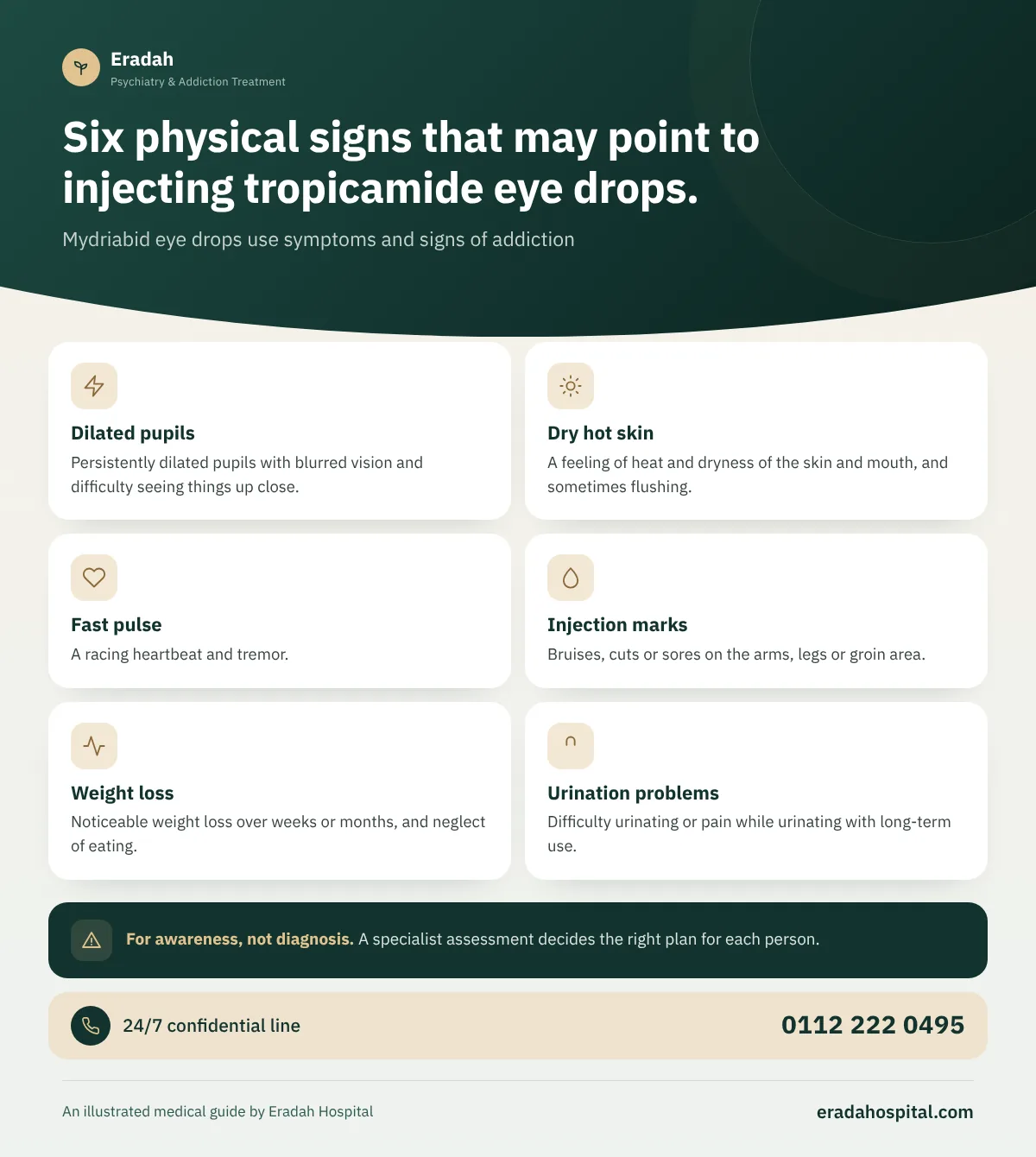
Persistently dilated pupils with blurred vision and difficulty seeing things up close.
A feeling of heat and dryness of the skin and mouth, and sometimes flushing.
A racing heartbeat and tremor.
Bruises, cuts or sores on the arms, legs or groin area.
Noticeable weight loss over weeks or months, and neglect of eating.
Difficulty urinating or pain while urinating with long-term use.
Why might the eyes of a person who uses heroin not reveal the addiction?
One of the best-known signs of opioids is narrowed pupils, to the point of looking like “pinpoints.” Tropicamide does exactly the opposite, which is why the 2022 clinical review notes that some people use the drops to hide this sign and avoid questions. So if you know your son used heroin and his pupils are now persistently wide, do not assume he has stopped, and calmly go over the other heroin addiction symptoms.
Behavioral signs of eye drop addiction
- Large numbers of empty eye drop bottles in the room, the car or the trash can.
- Syringes or needle caps, or constantly wearing long sleeves even in the heat.
- Visiting different pharmacies to buy the drops, or unclear prescriptions for them.
- Staying in the room most of the day, sleeping for long periods, and withdrawing from the family.
- Asking for money often, or items disappearing from the house.
These are not theoretical signs. In France alone, a pharmacovigilance center in one region received 91 reports of suspicious requests for tropicamide at pharmacies. The review describes a young man who slept most of the day, never left his room, and lost 14 kilograms in nine months.
Psychological and cognitive signs
- Visual or auditory hallucinations, and talking about things or beings that are not there.
- Movements of picking things up from the floor or walls, or staying in a strange position for a long time.
- Suspicion and paranoia, such as fear of being poisoned or believing the phone is being monitored.
- Sharp swings between elevated mood, severe distress and aggression, and urgent, meaningless demands.
- Gaps in memory about periods of use.
What does the person look like during and after the effect?
The review cites Russian doctors who described patients who used the drops alone: an unusual lightness and difficulty standing, then strong drowsiness minutes later, followed by a feeling of warmth in the body with frequent urination, and then nervousness, aggression, urgent demands, mood swings and blurred vision. After the effect ends, a severe “crash” with distress and depression may follow. With heroin, the picture is closer to deep drowsiness and slowness, with a “second wave” of sensations after injection.
Signs that can be misread
| The sign | Other possible explanations |
|---|---|
| Dilated pupils | A recent eye exam with dilating drops, stimulants, or severe anxiety. |
| An eye drop bottle | Treatment prescribed for an eye problem; check the name and the prescription. |
| Hallucinations and confusion | Other substances such as benzhexol (Parkinol) or synthetic cannabis, or a fever, or a psychotic disorder. |
| Weight loss and withdrawal | Depression, a physical illness, or other substances that need assessment. |
That is why the safest approach is to gather your observations calmly and bring them to a doctor who can connect them and order the right tests, without the observation turning into a hasty accusation.
Different symptoms when the drops are mixed with stimulants
It is not limited to opioids. According to the 2022 clinical review, studies published between 2000 and 2015 recorded tropicamide being used with various stimulants, and people who combined it with amphetamines usually started the drops in the second or third year of use. In this pattern, the picture the family sees changes:
- Injecting many times a day and carrying on even while under the effect, unable to say how much was used.
- Intense paranoid thoughts that can go as far as refusing food for fear of poisoning.
- Vivid visual hallucinations that overshadow the other symptoms.
- A severe psychological “crash” after the effect wears off, which may come with thoughts that life is pointless, so do not leave the person alone during this period.
If empty drop bottles are found together with signs of stimulant use, such as staying awake for days, loss of appetite and rapid speech, the situation needs urgent specialist assessment. You will find these signs in detail on the crystal meth (shabu) use symptoms page, and if thoughts of self-harm appear, get help immediately through the mental health support line (16328).
When does using the drops become addiction?
The DSM-5 diagnostic manual has no category specifically for tropicamide, and its addiction is diagnosed under “other (or unknown) substance use disorder,” often alongside opioid use disorder. The same criteria are applied over a 12-month period, including: using more or for longer than intended, cravings, failed attempts to stop, continuing despite harm, tolerance, and symptoms when stopping. The review describes in people who use the drops a clear compulsive urge and a steady rise in how often they inject, which are signs of addiction, not just experimentation.
What should you do if you notice these symptoms?
- If a seizure, loss of consciousness or weak breathing appears, call ambulance (123) immediately.
- Write down your observations and keep the empty bottles to show the doctor.
- Choose a time when the person is alert and calm, and express your worry about their health rather than your anger.
- Ask openly and without threats about other substances, especially opioids.
- Offer a clear step such as a confidential consultation, and use the guide on persuading a person with addiction to accept treatment if they refuse.
Danger signs after using Mydriabid drops: call an ambulance (123) immediately
- Seizures, loss of consciousness, or no response to calling
- Slow or weak breathing, especially if the drops were mixed with heroin or other opioids
- Severe palpitations, an irregular pulse or chest pain
- High fever with hot, dry skin and very wide pupils
- Delirium or severe agitation with a risk of harming themselves or others
Call an ambulance on 123 immediately. If the person is unconscious but breathing, place them on their side so they do not choke on vomit. Stay with them and do not leave them alone, keep syringes and sharp objects away from them, give them no medication or other substance, and tell the paramedics that they used eye drops and everything else they took with them.
Call the ambulance 123