Why do withdrawal symptoms happen?
With repeated use, the body and brain adapt to the presence of heroin, so the brain reduces its natural production of endorphins and other systems become active to make up for the constant suppression. When use stops suddenly, this balance is upset and symptoms appear that are mostly the opposite of heroin's effects: instead of calm, drowsiness and small pupils, there is anxiety, insomnia, enlarged pupils and pain.
Heroin withdrawal timeline
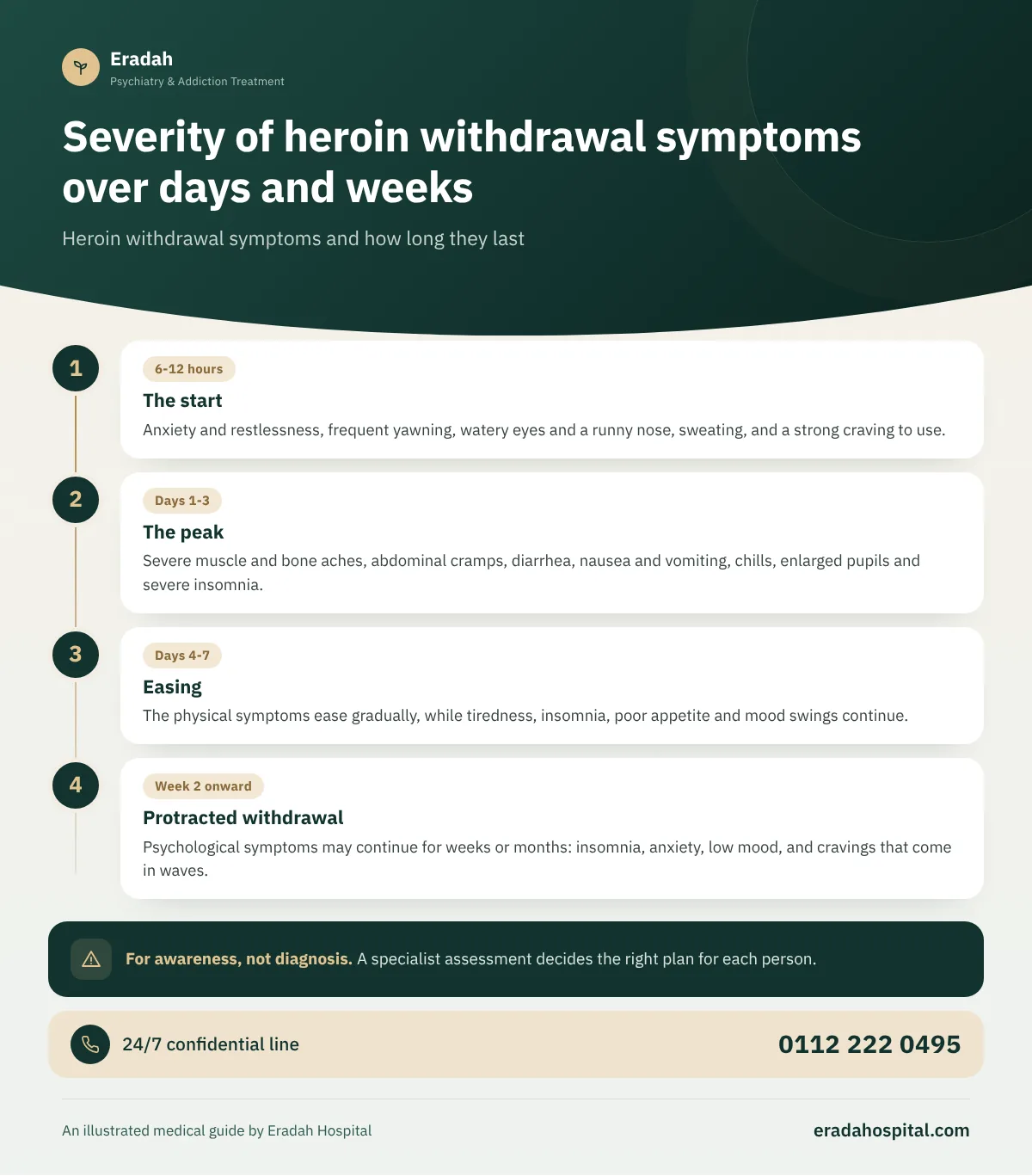
The length varies from person to person depending on how long and how much the person has used and their health, but the usual course is as follows:
- 6-12 hoursThe start
Anxiety and restlessness, frequent yawning, watery eyes and a runny nose, sweating, and a strong craving to use.
- Days 1-3The peak
Severe muscle and bone aches, abdominal cramps, diarrhea, nausea and vomiting, chills, enlarged pupils and severe insomnia.
- Days 4-7Easing
The physical symptoms ease gradually, while tiredness, insomnia, poor appetite and mood swings continue.
- Week 2 onwardProtracted withdrawal
Psychological symptoms may continue for weeks or months: insomnia, anxiety, low mood, and cravings that come in waves.
What determines the severity and length of withdrawal?
- How long the person has used: The longer the period, the more severe and longer the withdrawal.
- Amount and frequency of use: Larger amounts mean greater adaptation by the body.
- Mixing heroin with other substances: Such as sedatives or alcohol, which complicates withdrawal and makes it more dangerous.
- Physical and mental health: Chronic illness, depression and anxiety make withdrawal harder.
- How the person stops: Stopping suddenly without support is much harder than a planned, medically supervised withdrawal.
Heroin withdrawal compared with other opioids
The timing of withdrawal depends on how long a substance acts: with short-acting opioids, withdrawal starts sooner and ends sooner, and with long-acting ones it starts later and lasts longer:
| Substance | Onset of symptoms | Nature of withdrawal |
|---|---|---|
| Heroin | Within 6-12 hours | Acute and relatively short |
| Methadone | Within about 1 to 1.5 days | Slower to start and longer lasting |
| Tramadol | Within hours | May come with more anxiety and psychological symptoms |
Physical and psychological symptoms of heroin withdrawal
| Stage | Symptoms |
|---|---|
| Early | Anxiety and restlessness, muscle aches, watery eyes and runny nose, sweating, frequent yawning, insomnia. |
| Late | Abdominal cramps, diarrhea, nausea and vomiting, enlarged pupils, chills and goosebumps. |
| Psychological | Intense cravings, irritability, depression, difficulty concentrating. |
Is heroin withdrawal dangerous?
Heroin withdrawal rarely threatens the life of a healthy person in itself, unlike alcohol and sedative withdrawal, but it is not completely safe:
- Dehydration and electrolyte imbalance from vomiting and diarrhea, especially in older people and people with heart or kidney disease.
- Choking on vomit and the pneumonia it can cause.
- Worsening of existing conditions such as heart disease, because of a faster pulse and higher blood pressure.
- Relapse to escape the pain, which is the most common reason home attempts to stop fail.
Withdrawal during pregnancy: why is stopping suddenly not recommended?
If a pregnant woman uses heroin, stopping suddenly is not the safe solution, because acute withdrawal can expose the pregnancy to risks such as premature birth, fetal distress and miscarriage. This is why recent medical guidelines recommend approved medication treatment under medical supervision instead of detox during pregnancy.
After birth, the newborn may show what is known as neonatal withdrawal syndrome, an expected condition that the pediatric team monitors and treats. What matters is that the pregnant woman goes straight to a specialist doctor, without fear or shame, who will set up a plan that protects mother and baby together.
Common myths about heroin withdrawal
| The myth | The truth |
|---|---|
| "When withdrawal ends, the addiction is over" | Withdrawal treats only the physical dependence; cravings and the psychological causes need treatment and rehabilitation afterward. |
| "They have to bear the pain to learn the lesson" | Pain does not treat addiction; it pushes many people to relapse. Medical relief of symptoms is an essential part of treatment. |
| "Locking them in a room for a few days is enough to get rid of it" | Isolation without medical care can cause dehydration and complications, does not prevent a return to use after release, and raises the risk of overdose. |
| "After withdrawal, they can use safely once" | This is one of the most dangerous ideas; tolerance falls after stopping, and the amount that used to be usual may now be fatal. |
Why is it not recommended to withdraw from heroin at home?
Stopping suddenly at home without medical support means facing the hardest days of withdrawal without medication to ease the symptoms, without monitoring for dehydration and complications, and without protection against relapse. In a medical setting it is possible to:
- Use approved medications that ease pain, anxiety, insomnia and diarrhea.
- Monitor vital signs and fluids around the clock.
- Start medications that reduce cravings and prevent relapse when needed.
- Move straight into a psychological treatment and rehabilitation program.
How can the family support a person going through withdrawal?
- Encourage them to withdraw under medical supervision instead of stopping alone at home.
- Treat irritability and agitation as part of the symptoms, not as a personal insult.
- Provide a calm environment, plenty of fluids, and light food.
- Do not leave money or opportunities around that make it easy to return to use in the first days.
- Learn the signs of overdose, since the risk rises if they relapse.
Protracted withdrawal: what comes after the first week?
After the acute physical symptoms end, a person in recovery may go through a period of insomnia, anxiety, mood swings and low energy, with cravings that come in waves, especially when exposed to triggers such as places or people linked to drug use. This stage is one of the periods of highest relapse risk, and it is managed with psychological treatment, medication when needed, regular sleep and activity, and continued support. Knowing that it is a temporary and expected stage helps a great deal in getting through it.
How are withdrawal symptoms eased medically?
The doctor sets the protocol for each case, and it may include medications that act on opioid receptors to ease withdrawal gradually, or medications that ease particular symptoms such as anxiety, sweating and cramps, along with medications for nausea, diarrhea and sleep, plus fluids, nutrition and rest. None of these medications should be used without medical supervision.
Signs of a heroin overdose: call ambulance (123) immediately
- Pupils that are extremely small, like pinpoints
- Very slow, irregular or stopped breathing
- Blue lips and fingernails
- Loss of consciousness, with no response to calling or touch
- Gurgling or unusual snoring sounds
Call ambulance (123), place the person on their side so they do not choke, and stay with them until help arrives. The drug naloxone reverses the effect of an overdose if given in time, and it is available in emergency departments.
Call the ambulance 123