Why does tramadol withdrawal happen?
With repeated use, the brain adapts to having tramadol present in two systems at once: the opioid system and the serotonin and norepinephrine system. When tramadol is stopped suddenly, both systems are thrown off balance at the same time. That is why tramadol withdrawal combines the usual opioid withdrawal symptoms with symptoms similar to those seen when some antidepressants are stopped abruptly.
Tramadol withdrawal timeline
The course below is approximate. It varies with the length of use and the amount taken, whether the tablets were regular or extended-release, and whether other substances were involved:
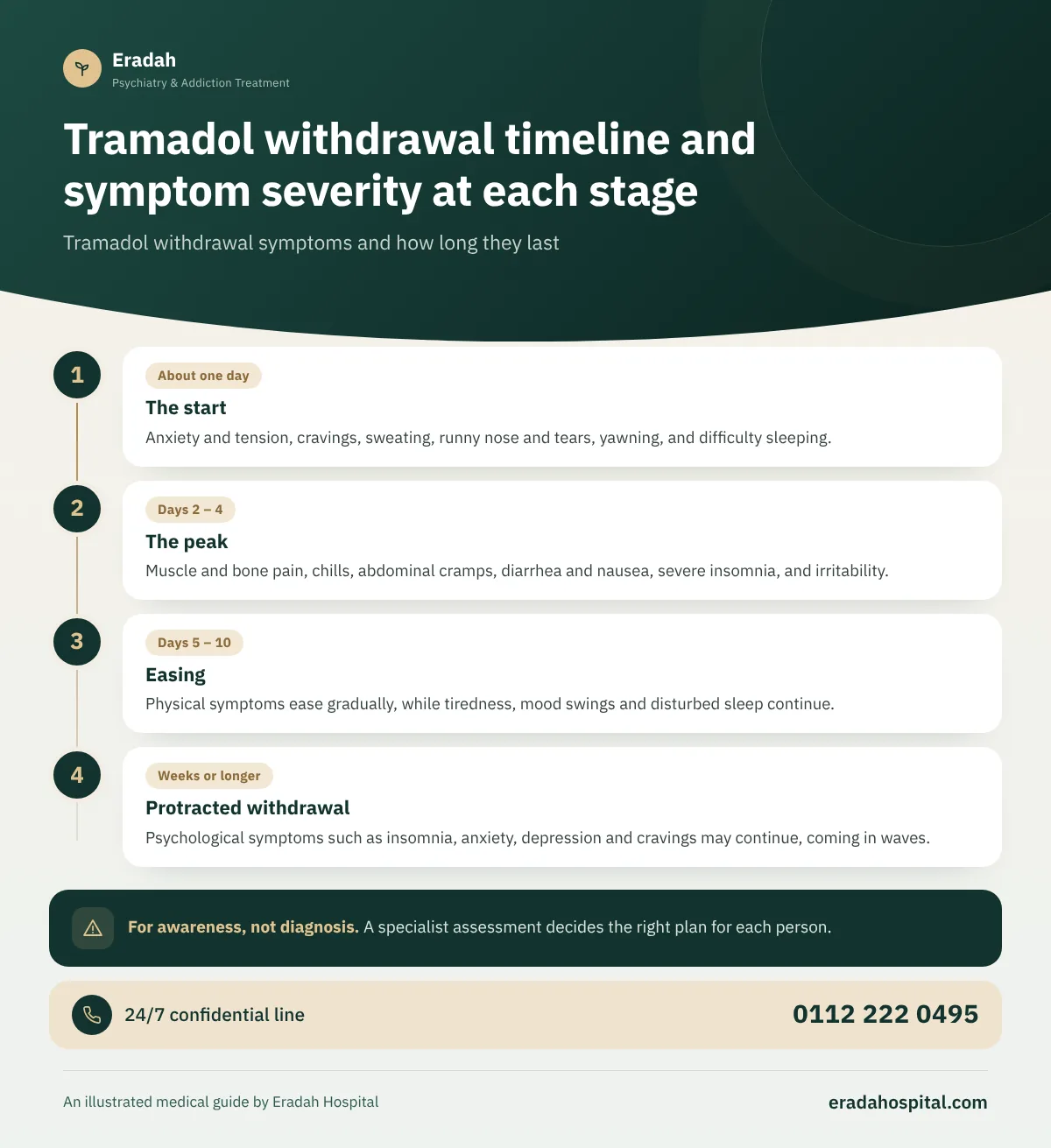
- About one dayThe start
Anxiety and tension, cravings, sweating, runny nose and tears, yawning, and difficulty sleeping.
- Days 2 – 4The peak
Muscle and bone pain, chills, abdominal cramps, diarrhea and nausea, severe insomnia, and irritability.
- Days 5 – 10Easing
Physical symptoms ease gradually, while tiredness, mood swings and disturbed sleep continue.
- Weeks or longerProtracted withdrawal
Psychological symptoms such as insomnia, anxiety, depression and cravings may continue, coming in waves.
Typical tramadol withdrawal symptoms
These symptoms resemble withdrawal from other opioids, and the official drug label lists them:
| Type | Symptoms |
|---|---|
| Early physical | Sweating, runny nose and tears, yawning, chills, and dilated pupils. |
| Later physical symptoms | Muscle, joint and back pain, abdominal cramps, diarrhea, nausea and vomiting, and loss of appetite. |
| Heart and breathing | Faster pulse and breathing, and raised blood pressure. |
| Psychological | Anxiety, irritability, insomnia, and strong cravings to return to the drug. |
What are the atypical withdrawal symptoms?
Tramadol is distinctive in that some people develop symptoms not usually seen in withdrawal from other opioids, which are thought to be linked to its effect on serotonin and norepinephrine. The official drug label lists these among them:
Sudden, intense fear with a pounding heart and shortness of breath, which a person may mistake for a heart attack.
Intense tension that is hard to control, stronger than what is expected in usual opioid withdrawal.
A feeling of numbness or pins and needles in the limbs.
Rarely, hallucinations, confusion or unfounded suspicions occur, and they call for immediate medical assessment.
Is tramadol withdrawal dangerous?
Tramadol withdrawal on its own rarely threatens the life of an otherwise healthy person, but it is not completely safe, and it can become more dangerous in certain situations:
- Mixing with sedatives or alcohol: stopping these suddenly can cause seizures, which makes medical supervision essential.
- Severe depression: thoughts of self-harm may appear, a situation that calls for immediate intervention.
- Dehydration and electrolyte imbalance: caused by vomiting and diarrhea, especially in older adults and people with heart or kidney disease.
- Relapse: returning to the old amount after tolerance has dropped raises the risk of poisoning and seizures.
Common myths about tamol withdrawal
| The myth | The truth |
|---|---|
| You just have to get through three days and it's all over | Physical symptoms may ease within days, but psychological symptoms and cravings can last for weeks. |
| Sedatives solve the withdrawal problem | Using them without supervision may shift the dependence onto them and double the danger. |
| Panic and numbness mean a serious nerve disease | They are most often atypical withdrawal symptoms and improve with time and treatment. |
| Someone who stops alone has a stronger will | Addiction is an illness, and medical detox is the safest and most successful route. |
If you take tramadol on a prescription
If you have been taking tramadol for real pain over a long period, do not stop it suddenly and do not change your dose yourself. Ask your doctor for a gradual tapering plan. The doctor will set the right pace based on how long you have taken it and your condition, and will look with you for other ways to relieve pain if needed.
Abrupt stopping compared with supervised withdrawal
| Aspect | Stopping suddenly at home | Withdrawal under medical supervision |
|---|---|---|
| Symptom severity | Strong symptoms with no relief | Milder symptoms with approved medications |
| Atypical symptoms | They can cause alarm, and no one knows how to handle them | Assessed and treated right away |
| Mixed substances | Risk of seizures if sedatives or alcohol are involved | Planned withdrawal for each substance |
| Risk of relapse | Very high, as a way to escape the pain | Lower with support and moving on to treatment |
Why is it not recommended to detox from tramadol at home?
Stopping suddenly at home means facing the hardest days without medicines to ease the symptoms, without monitoring of the atypical psychological symptoms, and without protection from relapse. In a medical setting, it is possible to:
- Determine whether other substances need separate withdrawal management.
- Use approved medications that ease pain, anxiety, insomnia and diarrhea.
- Monitor the psychological state, panic attacks and depression around the clock.
- Move straight into a treatment and rehabilitation program.
Sleep and mood after acute withdrawal ends
Even after the physical symptoms have gone, many people complain for a while of insomnia, mood swings, and low energy and concentration. This stage is normal and expected, and it improves gradually with regular sleep, physical activity and psychological therapy. If depression or anxiety stays severe, it may be a mental health condition that existed before tramadol and needs its own treatment.
How can families support someone going through tramadol withdrawal?
- Understand that irritability and anxiety are part of withdrawal and are not directed at you personally.
- Encourage them to stick to the medical plan, and do not give them any medicines from the home.
- Watch for signs of severe depression or worrying thoughts, and contact the medical team immediately.
- Provide a calm environment, regular sleep, and enough food and fluids.
After withdrawal ends, the most important stage begins; you will find its details on the tramadol addiction treatment page.
Signs of tramadol overdose: call an ambulance (123) immediately
- Convulsions or a sudden epileptic seizure, even in someone who does not have epilepsy
- Very slow, irregular or stopped breathing
- Pupils that are extremely small, like pinpoints
- Blue lips and fingernails and cold skin
- Loss of consciousness, with no response to calling or touch
Call an ambulance on 123 immediately. If the person is convulsing, place them on their side away from hard objects, do not put anything in their mouth, and stay with them until help arrives. Emergency doctors use naloxone to reverse respiratory depression, while being ready to manage seizures.
Call the ambulance 123