Stages of tramadol addiction treatment
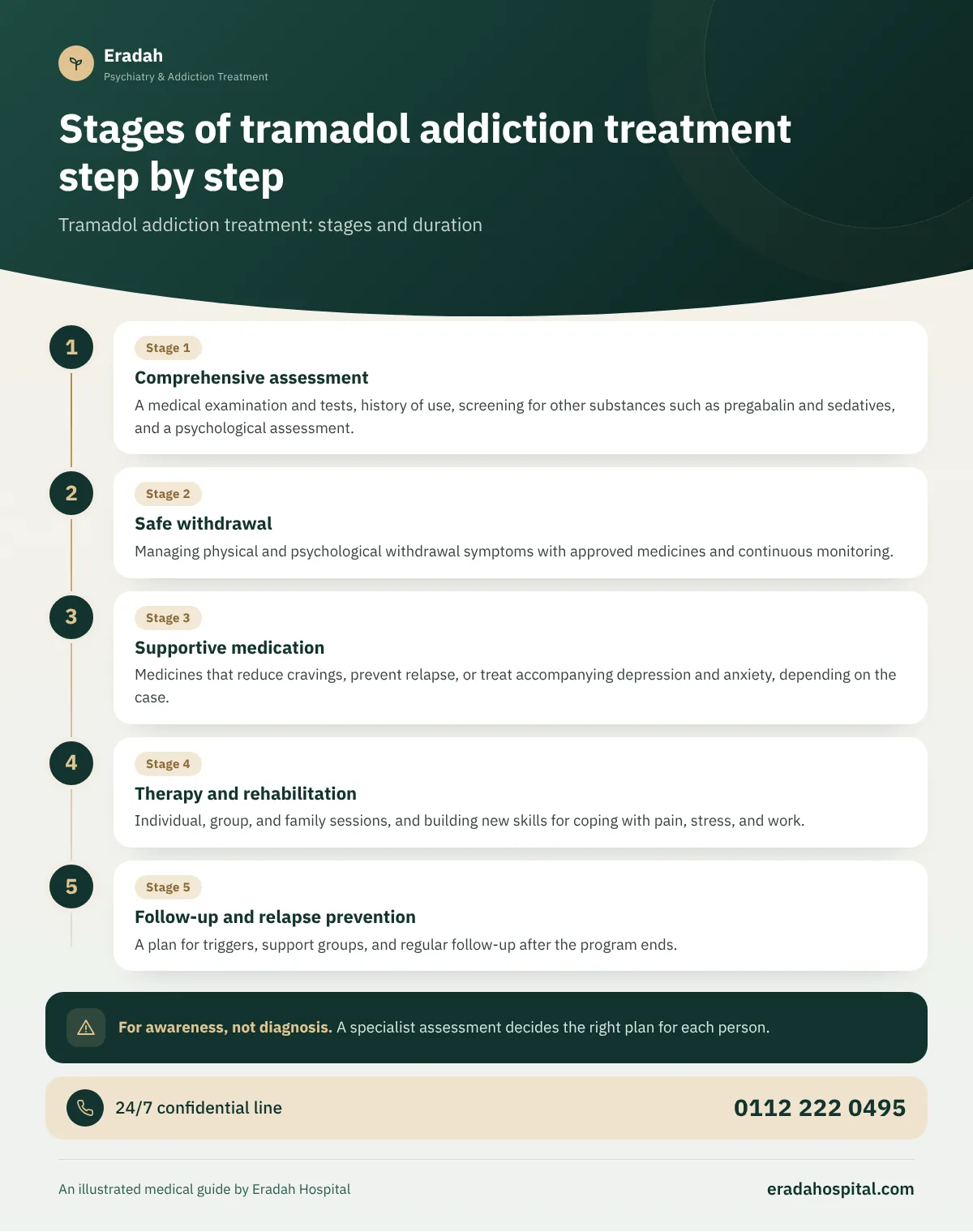
- Stage 1Comprehensive assessment
A medical examination and tests, history of use, screening for other substances such as pregabalin and sedatives, and a psychological assessment.
- Stage 2Safe withdrawal
Managing physical and psychological withdrawal symptoms with approved medicines and continuous monitoring.
- Stage 3Supportive medication
Medicines that reduce cravings, prevent relapse, or treat accompanying depression and anxiety, depending on the case.
- Stage 4Therapy and rehabilitation
Individual, group, and family sessions, and building new skills for coping with pain, stress, and work.
- Stage 5Follow-up and relapse prevention
A plan for triggers, support groups, and regular follow-up after the program ends.
Why does treatment start with an assessment?
Tramadol is rarely the only substance; many patients in Egypt combine it with pregabalin, sedatives, or hashish. Each substance has a different withdrawal, and some can cause seizures if stopped suddenly. That is why the initial assessment determines the order and pace of withdrawal, and uncovers any psychiatric disorder or chronic pain that needs parallel treatment.
Tramadol withdrawal: the first step, not the last
The aim of detox is to stop tramadol with the least suffering and risk, and it may be done by stopping and treating the symptoms, or by gradual reduction, as the doctor decides. But on its own it does not treat addiction, because the brain still remembers the pill, and the reasons that led to it remain.
Medicines used in treating tramadol addiction
The doctor chooses medicines according to the severity of dependence and the presence of other substances or a psychiatric disorder, including:
| Medication or class | Role |
|---|---|
| Buprenorphine | Eases withdrawal and cravings in cases of severe dependence, and is used for detox or maintenance. |
| Methadone | An option in some programs treating severe opioid dependence under strict supervision. |
| Naltrexone | Blocks opioid receptors to prevent relapse after withdrawal is completely finished. |
| Symptom-relief medications | For anxiety, sweating, cramps, diarrhea, and insomnia during withdrawal. |
| Antidepressants or anti-anxiety medications | If a co-occurring mental health disorder is present, the doctor chooses the appropriate type. |
None of these medications should be started or stopped without a doctor, and we do not give doses because they differ from one patient to another.
Medicines for tramadol addiction treatment by stage: when is each used?
Not all tramadol addiction treatment medicines are used at once; each stage has a different goal, and mixing them can cause harm. The table shows the general idea, while only the doctor decides the medicine, its dose, and its duration:
| Stage | Goal | Examples of what the doctor may decide |
|---|---|---|
| Withdrawal | Easing withdrawal and preventing complications | Gradual reduction, or buprenorphine in severe dependence, with medicines for symptoms such as diarrhea, cramps, and insomnia |
| Stabilization | Treating what accompanies addiction | Medicines for depression, anxiety, or chronic pain using non-opioid methods |
| Relapse prevention | Protecting what has been achieved | Naltrexone, after making sure the body is free of opioids |
| Maintenance | Long-term stability for selected cases | Buprenorphine or methadone within a structured program |
Naltrexone blocks opioid receptors so the person does not feel the effect of tramadol if they go back to it. But it does not treat withdrawal; it may even cause it or worsen it if taken too early. That is why the US National Library of Medicine (MedlinePlus) stresses telling the doctor about any opioid used in the 7 to 10 days before starting. It comes as tablets and as an intramuscular injection given by a care provider once every 4 weeks, and it is used as part of a psychological treatment program, not as a substitute for it.
When tramadol is mixed with pregabalin or sedatives, the doctor usually starts with a plan that prevents seizures from withdrawal from the other substance before anything else, and may decide that the first days need medical withdrawal under supervision. If depression or anxiety is present, treating them as part of a dual diagnosis lowers the chances of going back.
Psychological and behavioral therapy
Helps you understand the thoughts and situations that drive the pill, and build new ways of coping with them.
A space to share the experience with others who have been through tamol themselves.
Rebuilds trust within the family, and teaches it to support without enabling use.
Treating accompanying depression, anxiety, or insomnia within the same plan.
What if there is real pain?
Some patients started tramadol because of chronic pain that is still there. Here stopping the medicine is not enough; an alternative plan for treating the pain must be made in cooperation with a pain, orthopedic, or neurology doctor, and it may include physical therapy, non-opioid painkillers, and psychological therapies that help in living with pain. Leaving pain untreated is one of the main causes of relapse.
How long does tramadol addiction treatment take?
| Stage | Approximate duration |
|---|---|
| Assessment | A few days |
| Safe withdrawal | One to two weeks usually, and longer with mixed substances |
| Residential treatment and rehabilitation | From 4 to 12 weeks or more |
| Follow-up and relapse prevention | At least one year |
The durations are approximate, and the treatment team sets them according to each patient's progress. Staying in treatment long enough is one of the most important factors for success.
Residential or outpatient treatment?
| Residential treatment | Outpatient treatment |
|---|---|
| Mixing tramadol with pregabalin, sedatives, or alcohol | Using tramadol alone for a shorter period |
| A history of seizures or severe depression | A stable mental state |
| Previous failed attempts to stop | Strong family support and keeping appointments |
| A home or work environment that makes pills easy to get | An environment that helps keep away from triggers |
Relapse prevention after tramadol treatment
- Knowing the triggers: exhaustion, work pressure, pain, and particular friends.
- A written plan for moments of weakness: whom to call and what to do.
- Telling any doctor you visit about your history with tramadol so it is not prescribed again.
- Treating pain, insomnia, and depression in safe ways.
- Building a daily routine of moderate work, sleep, exercise, and supportive relationships.
How do you choose a tramadol addiction treatment center?
- A psychiatrist who specializes in addiction treatment and round-the-clock medical supervision during withdrawal.
- The ability to handle mixed substances, seizures, and accompanying psychiatric conditions.
- A genuine psychological and family treatment program, not detox alone.
- A clear follow-up plan after discharge.
- Official licensing, with respect for confidentiality and patient dignity.
And beware of promises of “quick” treatment in a few days or of home remedies; addiction is a disease that needs time and a clear treatment plan.
Choosing a hospital for tramadol addiction treatment
Tramadol is not a pure opioid; it also affects serotonin, and it can cause seizures during use of large amounts, not only during withdrawal. In Egypt it rarely comes alone, as mixing it with pregabalin, sedatives, or hashish is common, and many started it to cope with hard labor or believing it improves sexual performance. These details determine the suitable place, so make sure of the following:
- A doctor who identifies all mixed substances before starting, because withdrawal from pregabalin or sedatives may take priority.
- The ability to handle seizures day and night, not only during clinic hours.
- A review of any antidepressant the patient takes, to avoid an interaction that raises serotonin.
- A plan for the chronic pain or exhaustion that was the reason for starting.
- A frank conversation about sexual performance after stopping, since fear of it is a frequent reason for going back.
At Eradah, the doctor and nursing staff monitor the patient around the clock during medical detox, the doctor sets the medication plan after assessment, specialists lead individual and group cognitive behavioral therapy sessions, and the family program involves the wife and relatives in understanding what is happening. For those hesitating because of sexual concerns, the page on the effect of tramadol on the marital relationship answers many of them.
Tramadol addiction treatment at Eradah
At Eradah we begin with a comprehensive assessment that identifies all substances used and any psychiatric disorder or chronic pain, then safe detox under round-the-clock medical supervision, followed by a program combining medication, psychological, and family treatment, a plan for treating pain if present, and follow-up after discharge, with complete confidentiality from the first call.