Physical signs of Xanax use
These signs appear within hours of taking Xanax, and are clearer with large amounts or when mixed with alcohol:
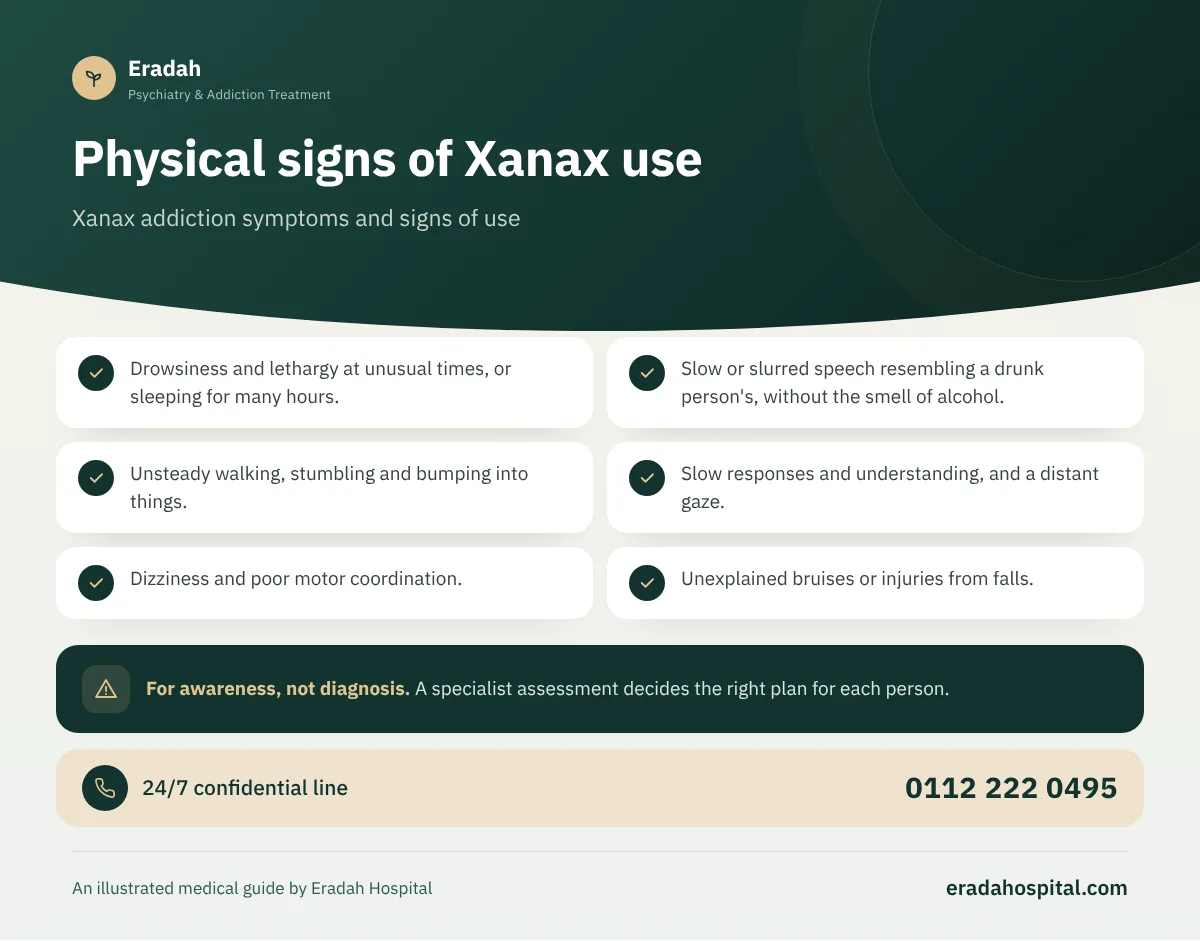
- Drowsiness and lethargy at unusual times, or sleeping for many hours.
- Slow or slurred speech resembling a drunk person's, without the smell of alcohol.
- Unsteady walking, stumbling and bumping into things.
- Slow responses and understanding, and a distant gaze.
- Dizziness and poor motor coordination.
- Unexplained bruises or injuries from falls.
Behavioral signs
- The medication running out before its expected date, with repeated excuses such as losing the box.
- Visiting more than one doctor or pharmacy to get prescriptions.
- Getting pills from friends or from outside pharmacies.
- Fiercely defending the drug and being upset by any talk of reducing it.
- Always carrying the pills and becoming anxious if they are not available.
- Neglecting work or study and family responsibilities.
- Combining Xanax with alcohol or painkillers.
Psychological and cognitive signs
- Forgetfulness: does not remember what they said or did during certain hours.
- Mood swings: excessive calm after the pill, then tension and irritability as the next one approaches.
- Emotional blunting: flatness and no interest in things that used to matter to them.
- Paradoxical reaction: in some people, recklessness, aggression or unusual behavior instead of calm.
How is Xanax addiction diagnosed?
The psychiatrist classifies the condition as a sedative, hypnotic or anxiolytic use disorder under the DSM-5 or ICD-11 criteria. In brief, the criteria include:
- Taking larger amounts or for longer than intended.
- A persistent desire, or failed attempts, to cut down.
- Spending a long time getting the drug or recovering from its effects.
- A strong craving to take it.
- Neglecting work, school or home because of it.
- Continuing despite social and health problems.
- Using it in dangerous situations such as driving.
- Tolerance, and symptoms when the drug runs low.
The number of criteria met within a year determines severity. It is important that the guidelines do not treat tolerance and physical dependence alone as evidence of addiction if the person takes the medication as the doctor prescribed.
Dependence on a prescribed drug or addiction?
This distinction matters for the family too: a patient who is physically dependent on a prescribed medication and sticks to it is not addicted, but needs a review of the treatment plan. When signs of loss of control and concealment appear, it goes beyond dependence to addiction and needs an integrated treatment program.
| Point of comparison | Physical dependence with medical use | Xanax addiction |
|---|---|---|
| Pattern of use | As the doctor prescribed | Larger amounts or without a prescription |
| Control | Preserved | Loss of control and failed attempts to cut down |
| Confidentiality | Does not hide it from the doctor or family | Hiding and lying about the amount and source |
| Effect on life | Limited | Clear decline in work and relationships |
| What is needed | Doctor review and a reduction plan | Specialized assessment and a treatment program |
How do you tell Xanax use from other substances?
The signs of sedatives can resemble those of other substances, but there are general differences that help with understanding, without replacing a medical assessment:
- Alcohol: similar slurring and unsteadiness, but with the smell of alcohol.
- Opioids: drowsiness with very small pupils, itching and constipation.
- Pregabalin: dizziness and unsteadiness, sometimes with a feeling of euphoria, and it can be hard to tell the two apart.
- Hashish: red eyes, increased appetite and altered perception.
It becomes even harder to tell when a person uses more than one substance at the same time, which is common with sedatives. So do not try to diagnose the substance yourself; focus on noticing the changes and recording them calmly to show the doctor, as these notes help the assessment a great deal.
Signs of Xanax use in teenagers
The picture may differ in teenagers, because they usually do not get it by prescription, and may take it at gatherings with friends or with alcohol. Signs worth noticing include:
- A sudden drop in grades and concentration, and sleeping in class.
- Unfamiliar pills in the bag or room, or blister packs that do not belong to anyone in the family.
- Sedative medications disappearing from the home medicine cabinet.
- Coming home drowsy and slurring, without the smell of alcohol.
- Changing friends, isolating, and excessive secrecy about the phone.
Signs that are easy to confuse in older adults
In older adults, signs of too much Xanax can appear as forgetfulness, confusion, slowness and frequent falls, so the family thinks it is the start of dementia or just aging. If a person has been taking a sedative for years, it is important for the doctor to review their whole medication list before judging these symptoms.
What is needed here is a calm assessment, not stopping the medication suddenly, and the assessment may end in a gradual reduction plan with which concentration and balance improve in many people.
How do you talk to someone you suspect is addicted to Xanax?
- Choose a calm time when the person is alert and not under the influence of the drug.
- Begin with your concern for them, using phrases like "I noticed" and "I'm worried," instead of accusing.
- Remember that many cases began with a prescription to treat anxiety, so do not treat them like a criminal.
- Do not ask them to stop immediately; abruptly stopping Xanax is dangerous.
- Suggest visiting a psychiatrist together to set a safe plan.