How do Xanax's properties contribute to addiction?
Xanax has pharmacological traits that make it quicker to cause dependence than some others in its family:
The person feels relief within a short time, so the brain quickly learns that the pill is the immediate fix for tension.
A short duration of action means the drug level drops quickly, so anxiety returns and the next pill is sought.
Rebound anxiety between pills is wrongly read as a need for the drug, so doses increase and move closer together.
With repetition, GABA receptors become less sensitive, so tolerance appears, then dependence.
Does Xanax addiction start from a prescription?
In many cases, yes. Xanax is prescribed for a panic attack or a period of severe anxiety, and it really does help, but the problem begins when use continues for months without review, or when the person raises the amount on their own because the effect has weakened.
This path does not mean the doctor made a mistake or that the patient is at fault, but it explains why guidelines recommend using benzodiazepines for the shortest possible time, with a clear plan for long-term treatment and for gradual discontinuation from the start.
The role of anxiety, insomnia, and psychiatric disorders
Xanax eases the symptoms of anxiety but does not treat its roots. If a person does not receive real psychological or drug treatment for an anxiety, panic, depression or trauma disorder, the pill becomes their only way of coping with their feelings, and this is where psychological dependence begins.
There is a strong link between sedative addiction and co-occurring psychiatric disorders, known as dual diagnosis, which needs both conditions to be treated together. Read about dual diagnosis.
Does genetics play a role in Xanax addiction?
Addiction research generally indicates that genetic factors explain a large part of a person's vulnerability to addiction, so someone with first-degree relatives who have addiction or anxiety disorders is more at risk. But genetics is a predisposition, not destiny, and always interacts with environment and experience.
A person may also inherit a higher sensitivity to anxiety itself, making them more inclined to seek quick relief. That is why asking the doctor about family history of addiction and anxiety before any sedative is prescribed is an important preventive step, not an intrusion on privacy.
Xanax and other substances
Some people use Xanax together with other substances, whether to soften the effects of stimulants or alongside alcohol or opioids such as tramadol. This pattern is among the most dangerous risk factors, because it raises the likelihood of multiple addictions and multiplies the risk of stopped breathing. A previous addiction to any substance increases the likelihood of misusing Xanax.
Environmental and social factors
- Easy access: the drug being in the medicine cabinet at home or with friends.
- Chronic stress: pressure from work or school, or family and financial problems.
- Trauma: traumatic experiences in childhood or adulthood raise the risk of addiction.
- A false idea of safety: believing the drug is completely safe because it is dispensed by a pharmacy.
- Loneliness and weak support: no one to notice and step in early.
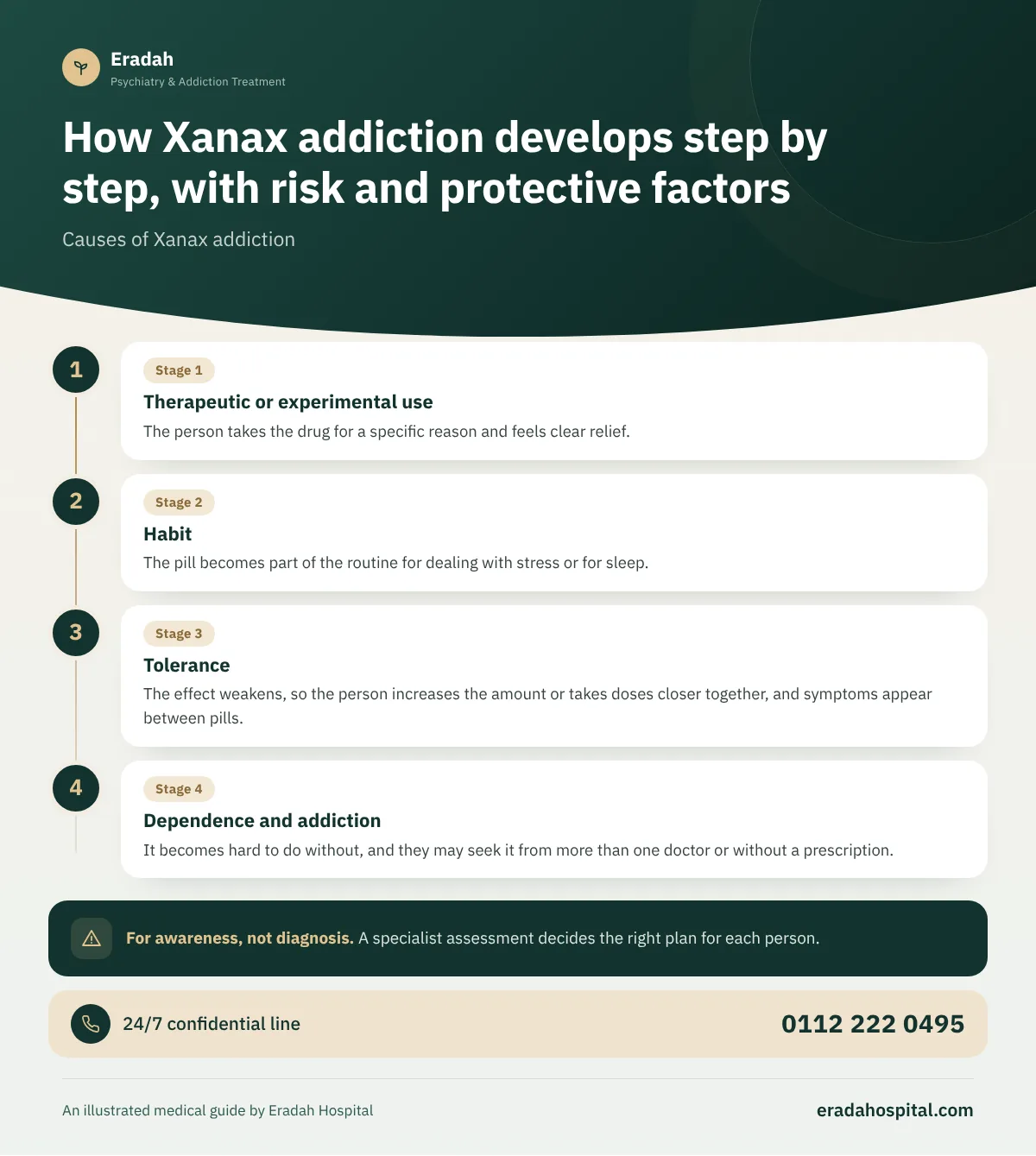
Stages of the shift from use to addiction
Having one or two of these factors does not mean the person will inevitably become addicted, but several together, such as untreated anxiety with ongoing stress and easy access to the drug, clearly raise the likelihood and deserve early attention.
- Stage 1Therapeutic or experimental use
The person takes the drug for a specific reason and feels clear relief.
- Stage 2Habit
The pill becomes part of the routine for dealing with stress or for sleep.
- Stage 3Tolerance
The effect weakens, so the person increases the amount or takes doses closer together, and symptoms appear between pills.
- Stage 4Dependence and addiction
It becomes hard to do without, and they may seek it from more than one doctor or without a prescription.
How does the brain lock in the Xanax habit?
Xanax does not release dopamine as strongly as stimulants or opioids do, but it affects reward circuits indirectly and quickly removes an unpleasant feeling. This kind of reward, removing pain or anxiety, is among the strongest things that cement habits in the brain.
Over time the drug becomes tied to specific situations: before sleep, before a meeting, or at the first sense of tension. Merely thinking about the situation becomes enough to trigger a strong craving for the pill, even before anxiety actually appears.
Does using Xanax for sleep increase the risk of addiction?
Many people use Xanax for sleep even though it is not a sleeping pill by design, and they feel better in the first nights. But regular nightly use leads to rapid tolerance to its effect on sleep, then rebound insomnia on nights when it is not taken, so it seems to the person that they cannot sleep without it.
This rebound insomnia pushes continued use and higher amounts, which is why guidelines recommend cognitive behavioral therapy for insomnia as the first choice for chronic insomnia, and that any sleep sedative be used for a very short time and under supervision.
What can the family do to prevent it?
- Ask the doctor when Xanax is prescribed: how long is it expected to be used, and what is the plan for stopping?
- Watch for any increase in the amount without consulting the doctor.
- Dispose safely of leftover pills after treatment ends instead of keeping them.
- Encourage anyone struggling with anxiety to get psychological treatment rather than relying on pills alone.
- Talk to your teenage children about the danger of pills passed around among friends.
Risk factors and protective factors
| Factors that raise the risk | Factors that protect against it |
|---|---|
| Daily use for a long time without review | A prescription limited in duration with regular follow-up |
| Untreated anxiety or depression | Effective psychological treatment for anxiety, such as cognitive behavioral therapy |
| Previous addiction or a family history of addiction | Telling the doctor about personal and family history |
| Mixing it with alcohol or other substances | Avoiding alcohol and other sedatives |
| Easy access to it | Keeping medications in a safe place |