“He started waking up late and getting angry over the smallest thing, and his salary runs out before mid-month, and when I ask he says it’s work pressure.” Many wives live for months between suspicion and denial before they ask openly: how do I know if my husband is addicted? This guide helps you read the signs calmly, tell addiction apart from other causes, and then act in safe steps.
How do I know if my husband is addicted? Start with the pattern, not the sign
No single sign proves addiction. Insomnia may come from work pressure, irritability may come from depression, and weight loss may be a physical illness. But the US medical encyclopedia MedlinePlus notes that among the best-known signs of a substance use disorder are secretive behavior to hide use, making excuses, declining performance at work, not caring about appearance, and giving up activities they used to enjoy. The practical rule: watch whether the changes are sudden, persistent for weeks, and occurring together, because that raises the likelihood of substance use.
Our general guide to the signs of drug use covers children and spouses together. Here we focus on what a wife sees specifically from inside the home and the relationship.
Signs of an addicted husband in six areas of daily life
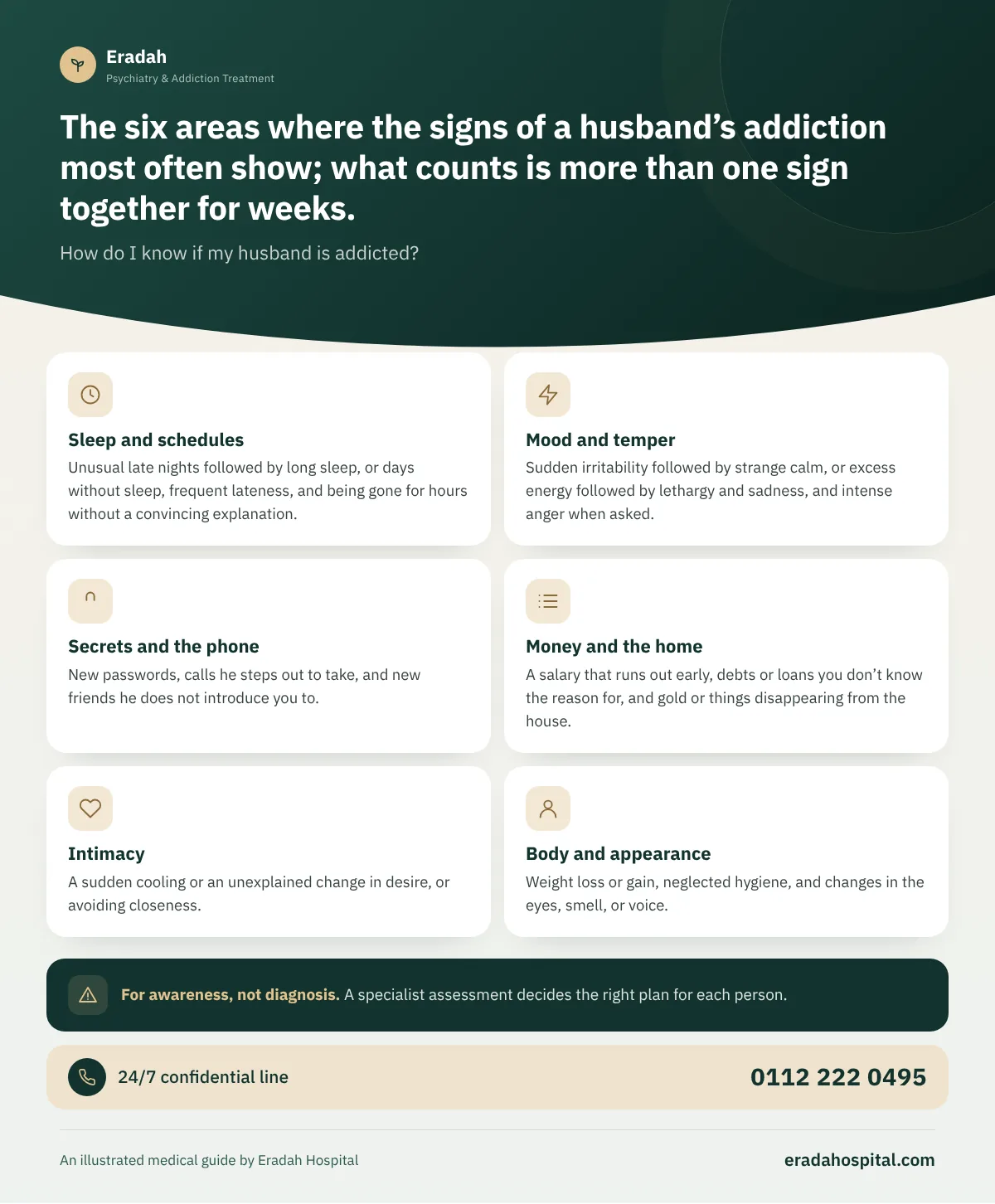
Unusual late nights followed by long sleep, or days without sleep, frequent lateness, and being gone for hours without a convincing explanation.
Sudden irritability followed by strange calm, or excess energy followed by lethargy and sadness, and intense anger when asked.
New passwords, calls he steps out to take, and new friends he does not introduce you to.
A salary that runs out early, debts or loans you don’t know the reason for, and gold or things disappearing from the house.
A sudden cooling or an unexplained change in desire, or avoiding closeness.
Weight loss or gain, neglected hygiene, and changes in the eyes, smell, or voice.
The US National Institute on Drug Abuse (NIDA) adds to the common signs: changes in eating and sleeping habits, loss of interest in favorite activities, frequent problems with family and friends, and feeling unable to stop no matter what.
Money: often the clearest sign of a husband’s addiction
Money problems are often the first thing a wife notices, because drugs require continuous spending that grows with tolerance. Pay attention to repeated requests for a “loan” with changing reasons, unpaid bills despite steady income, things sold from the house, and small sums withdrawn close together. This alone does not mean addiction, since gambling or debts could be the cause, and you will find its signs in our guide to gambling and betting addiction.
Physical signs by type of substance
Physical signs differ by substance, and may not appear at all in someone who uses small amounts or has only recently started. These are documented examples, not a diagnostic list:
| Substance | What you may notice | Source |
|---|---|---|
| Hashish | Red eyes, dry mouth, slowed responses, and poor short-term memory | MedlinePlus |
| Opioids such as heroin and tramadol | Drowsiness and heavy speech, very small pupils at high doses, then a runny nose, yawning, and wide pupils when the substance is stopped | MedlinePlus |
| Stimulants such as crystal meth (shabu) | Staying up for days and losing weight, and severe tooth decay and tooth loss over time | NIDA |
| Alcohol | Needing larger amounts for the same effect, then tremor, irritability, and insomnia on sudden stopping | MedlinePlus |
More detail on facial features, eyes, and body is on the page about acute drug intoxication and in the guides for each substance.
When are these signs not evidence of addiction?
- Depression and anxiety: They cause insomnia, irritability, withdrawal, and a cooling of the relationship without any substance use.
- Work pressure or burnout: Late nights, tension, and neglect of the home.
- Physical illnesses: Such as diabetes, thyroid disorders, and liver disease, where changes in weight and sleep are among the symptoms.
- Prescription medications: Some cause drowsiness, small pupils, or sexual difficulties.
- A marital conflict or another relationship: This could explain the secrets and the phone without any drugs.
So do not base your judgment on a single sign, and do not voice an accusation before you have considered these possibilities.
Should I give him a home test?
Home test strips detect a limited number of substances, and may give a false positive with some medications, or a negative despite use if enough time has passed. More important, testing secretly or by force destroys trust and creates a confrontation that can be dangerous. If it is unavoidable, let it be by agreement and in a reliable laboratory, and the details on accuracy and confirmation are on the drug testing page.
Your suspicion is confirmed: what do I do now?
- Choose a time when he is clear-headed and calm, not after an argument or while he is under the influence.
- Talk about what you saw and about your own worry: “I noticed your salary runs out early and you’re not sleeping, and I’m worried about you.”
- Avoid insults and threats of divorce in the first conversation, and leave the door open to treatment.
- If he refuses, ask for a consultation for yourself first, since a trained family is better able to persuade.
- Do not cover for his use or pay his debts in secret, because that postpones the moment of admission.
We explain the steps for conversation and daily coping in detail in our guide on living with an addicted husband, and research-based methods of persuasion in the guide on how to persuade a person with addiction to get treatment.
When does your safety take priority over any conversation?
Addiction is a treatable illness, and a husband who starts treatment early has a better chance. At Eradah the first consultation is free and confidential, and you can start with it alone to understand the situation. We offer an inpatient program for men, along with a family program that helps a wife protect herself and her children.