What are the stages of treating drug-induced psychosis?
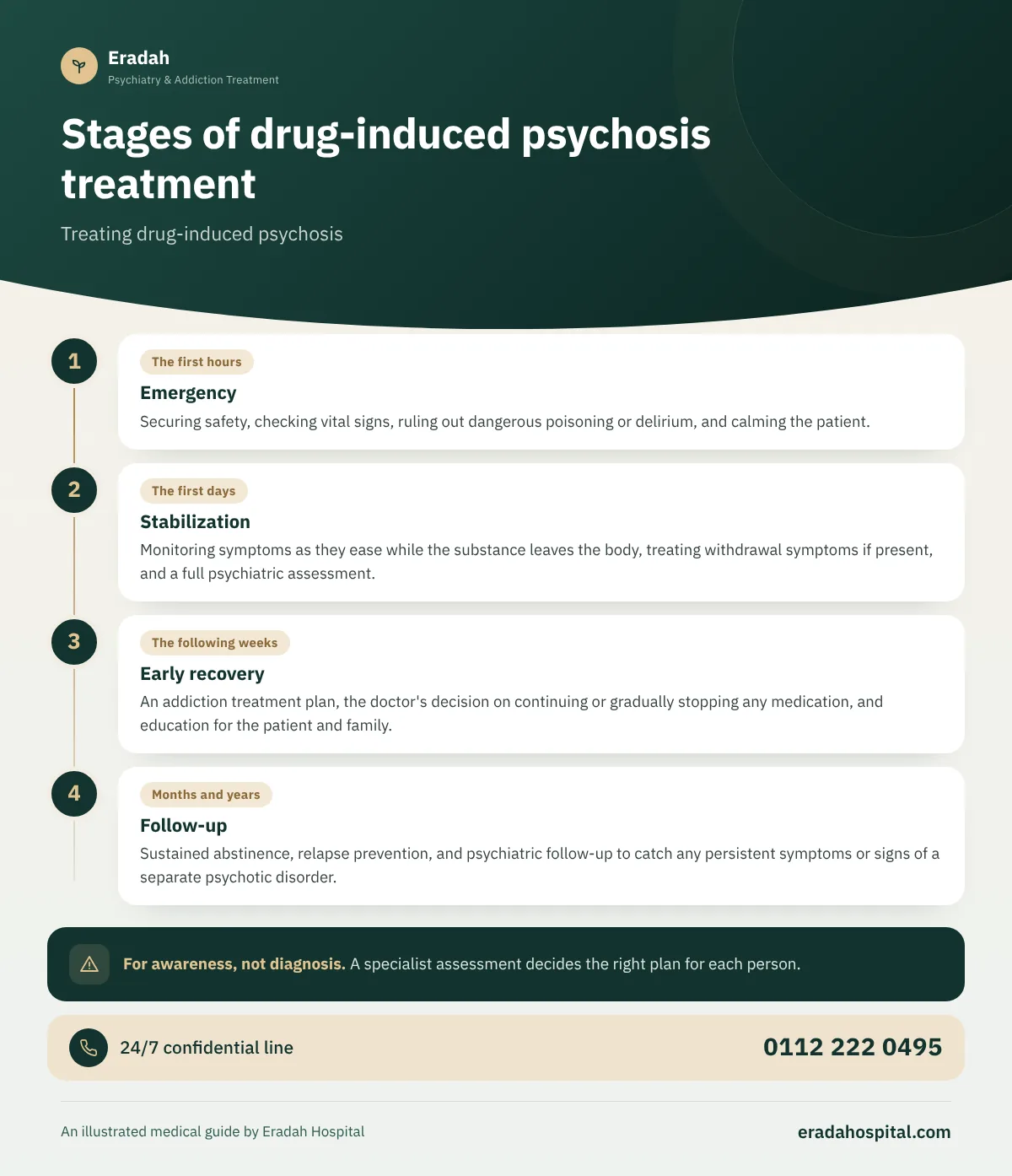
- The first hoursEmergency
Securing safety, checking vital signs, ruling out dangerous poisoning or delirium, and calming the patient.
- The first daysStabilization
Monitoring symptoms as they ease while the substance leaves the body, treating withdrawal symptoms if present, and a full psychiatric assessment.
- The following weeksEarly recovery
An addiction treatment plan, the doctor's decision on continuing or gradually stopping any medication, and education for the patient and family.
- Months and yearsFollow-up
Sustained abstinence, relapse prevention, and psychiatric follow-up to catch any persistent symptoms or signs of a separate psychotic disorder.
Not every case follows exactly this order; some settle within hours and leave the emergency department the same day, while others need a hospital stay of days or weeks.
How does the emergency department handle a psychotic episode after drug use?
Before treating the hallucinations, the medical team first makes sure there is no hidden physical danger. Agitation can mask a very high temperature, low blood sugar, a head injury, an infection, or delirium from alcohol withdrawal. That is why initial care usually includes:
- Measuring temperature, pulse, blood pressure, oxygen and blood sugar.
- A drug test and blood tests as the case requires, bearing in mind that the test does not detect every synthetic substance.
- Asking those with the person what they took and when, and about any medications or earlier illnesses.
- A quiet place with low light and noise, and reassuring talk from one person to calm the patient with words first.
- Continuous monitoring until the danger subsides.
What medications are used to treat drug-induced psychosis?
Medical references indicate that stopping the substance and giving a sedative or an antipsychotic is effective in most cases, and the doctor chooses according to the substance and the clinical picture:
| Category | When it is mostly used | Notes |
|---|---|---|
| Benzodiazepine sedatives | Agitation and severe anxiety with stimulants, and alcohol and sedative withdrawal | Given under medical supervision and for a short time, and not used at home without a prescription |
| Antipsychotics | Severe or persistent hallucinations and suspicions, especially with stimulants | The doctor decides how long they continue and stops them gradually after stabilization |
| Alcohol withdrawal treatment | Hallucinations or delirium during withdrawal | Includes sedatives, vitamins such as thiamine, and fluids, and often requires hospital care |
| Observation alone | Some mild hallucinogen cases | A calm, safe environment with monitoring until the effect wears off |
When does the patient need to be admitted to hospital?
- Clear danger to themselves or others, or suicidal thoughts.
- Delirium, confusion, or serious physical signs such as a high fever and seizures.
- Alcohol or sedative withdrawal that requires medical detox.
- Severe symptoms continuing even after the substance has left the body.
- No one who can safely watch the patient at home.
Staying at a center specialized in both psychiatry and addiction allows the episode to be treated and addiction treatment to begin in the same place, instead of leaving the emergency department and going back to the same environment. Egypt's Mental Health Care Law No. 71 of 2009 regulates admission without the patient's consent when there is danger, with safeguards for their rights. This is a general awareness overview and not legal advice.
Why is complete abstinence essential?
In this condition specifically, the substance is the direct cause. However effective medications are at calming the episode, returning to use often brings the danger back, and the next episode may come sooner and be more severe. That is why doctors recommend complete abstinence from the causative substance and from similar ones too: someone who has had shabu psychosis, for example, should not switch to Captagon or cocaine.
Caution is also advised with cannabis (hashish) even if it was not the cause of the episode, because of its strong link to psychosis and schizophrenia, and with alcohol, because it weakens judgment and makes relapse to other substances easier.
How is addiction treated after a psychotic episode?
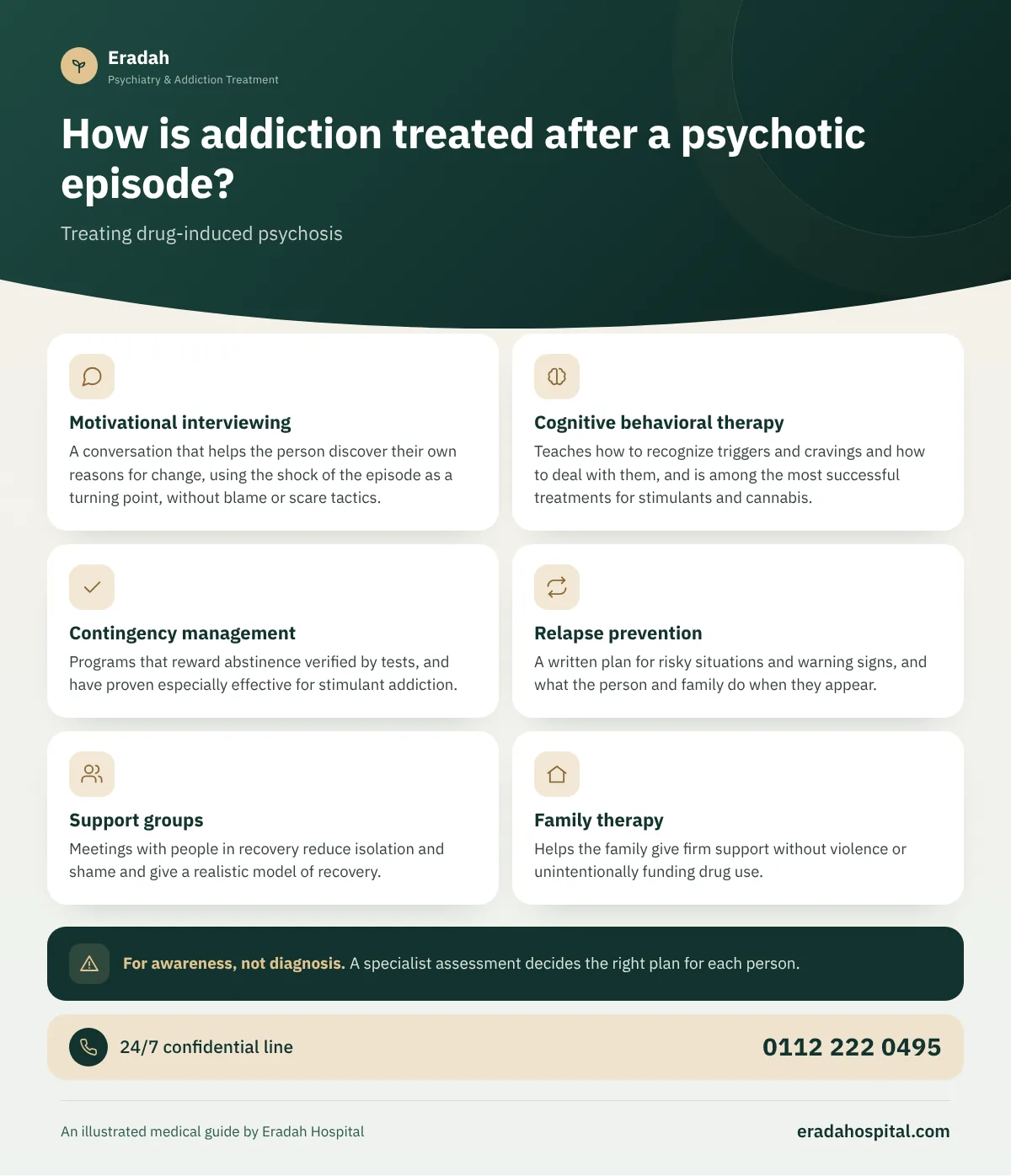
A conversation that helps the person discover their own reasons for change, using the shock of the episode as a turning point, without blame or scare tactics.
Teaches how to recognize triggers and cravings and how to deal with them, and is among the most successful treatments for stimulants and cannabis.
Programs that reward abstinence verified by tests, and have proven especially effective for stimulant addiction.
A written plan for risky situations and warning signs, and what the person and family do when they appear.
Meetings with people in recovery reduce isolation and shame and give a realistic model of recovery.
Helps the family give firm support without violence or unintentionally funding drug use.
You will find the detailed treatment plan for each substance on its own page, such as shabu addiction treatment, Strox addiction treatment and hashish addiction treatment.
Why does psychiatric follow-up continue after symptoms disappear?
Because in some of these cases it later becomes clear that the episode was the start of a separate psychotic disorder, and most of these transitions happen in the first years after the episode. Regular follow-up makes it possible to catch any sign early, such as lingering suspicions, withdrawal or declining performance without drug use, and to intervene before it develops into a full episode.
Follow-up also allows treatment of what appears after the episode, such as depression, anxiety or sleep disturbance, problems that may push the person back to drug use if left untreated. The UK's NICE guidelines recommend that anyone who has psychosis for the first time receive a specialist assessment and always be asked about substance use.
What is the family's role during treatment?
- Accompany him to follow-up appointments at first, and ask the doctor about early warning signs.
- Keep a substance-free home, and set clear rules about money and going out, by agreement.
- Encourage regular sleep, eating and physical activity; sleep deprivation is a strong trigger for episodes.
- Avoid constantly reminding him of what he did during the episode, and focus on the progress he is making.
- Know the emergency plan: when to call the doctor, and when to call ambulance (123).
Choosing a Hospital for Drug-Induced Psychosis Treatment
After the emergency department comes a stage where many people go wrong: the patient is discharged once the hallucinations have calmed, and goes back to the same environment and the same substance. So a suitable facility for drug psychosis must combine the psychiatric ability to follow the psychotic symptoms with the ability to treat the addiction that set them off, and must tell over time between psychosis that clears when the substance clears and a separate psychotic disorder that the substance revealed.
| What to look for | Cause |
|---|---|
| A psychiatrist who reviews the case regularly in the first days | Symptoms can change quickly, and deciding whether to continue or stop medication needs close observation |
| A safe environment free of anything the patient could harm themselves with | Suspicions and hallucinations can lead to sudden actions |
| Addiction treatment that starts in the same place | Returning to shabu, cannabis or stimulants is among the strongest causes of repeat episodes |
| Follow-up for months after discharge | To catch any symptoms that return without drug use |
At Eradah, the psychiatry department and the dual diagnosis program bring both sides together, with a doctor and nursing around the clock and ambulance transfer to the nearest general hospital for any physical complication. Residential treatment is for men only, and the first consultation is free and confidential for the family before any decision. Phone and WhatsApp are available day and night: 01122220495, or tell us what happened.
How is drug-induced psychosis treated at Eradah?
At Eradah we treat drug psychosis as a psychiatric and addiction condition at the same time: a comprehensive medical and psychiatric assessment, safe treatment of the episode and withdrawal symptoms in a monitored environment, then an addiction treatment program combining individual, group and family therapy, with psychiatric follow-up after discharge to catch any persistent symptoms. All of this is done with complete confidentiality and respect for the dignity of the patient and family.