“The medicine really calmed me down, but since then I can't sit still and my legs won't stop moving.” This restlessness is among the most common complaints of people starting aripiprazole, and it is a known effect with solutions. Here we explain the medication from the beginning: why it is prescribed, how it differs, and what you and your family should watch for.
What is aripiprazole (Abilify)?
Aripiprazole is an atypical antipsychotic. Its best-known brand names in Egypt are Abilify and Aripixan. It comes as regular tablets and tablets that dissolve in the mouth, and there is also a long-acting injection form. The UK's National Health Service (NHS) explains that it acts on dopamine and serotonin, and the StatPearls reference describes it as third-generation because it does not fully block dopamine receptors as most of its counterparts do, but modulates their activity instead.
What aripiprazole is used for
- Schizophrenia.
- Manic episodes and their prevention in bipolar disorder.
- Add-on treatment alongside an antidepressant in depression that has not responded sufficiently.
- Irritability and aggression associated with autism spectrum disorder.
- Tourette syndrome.
When does aripiprazole start working?
The NHS says it may take a few days or weeks to begin helping, and that the full effect can take two to three months. Its US label states that its half-life is about 75 hours and that its blood level stabilizes within about two weeks. That is why it should not be judged in the first few days, and the dose should be changed only on the doctor's decision.
Side effects of aripiprazole
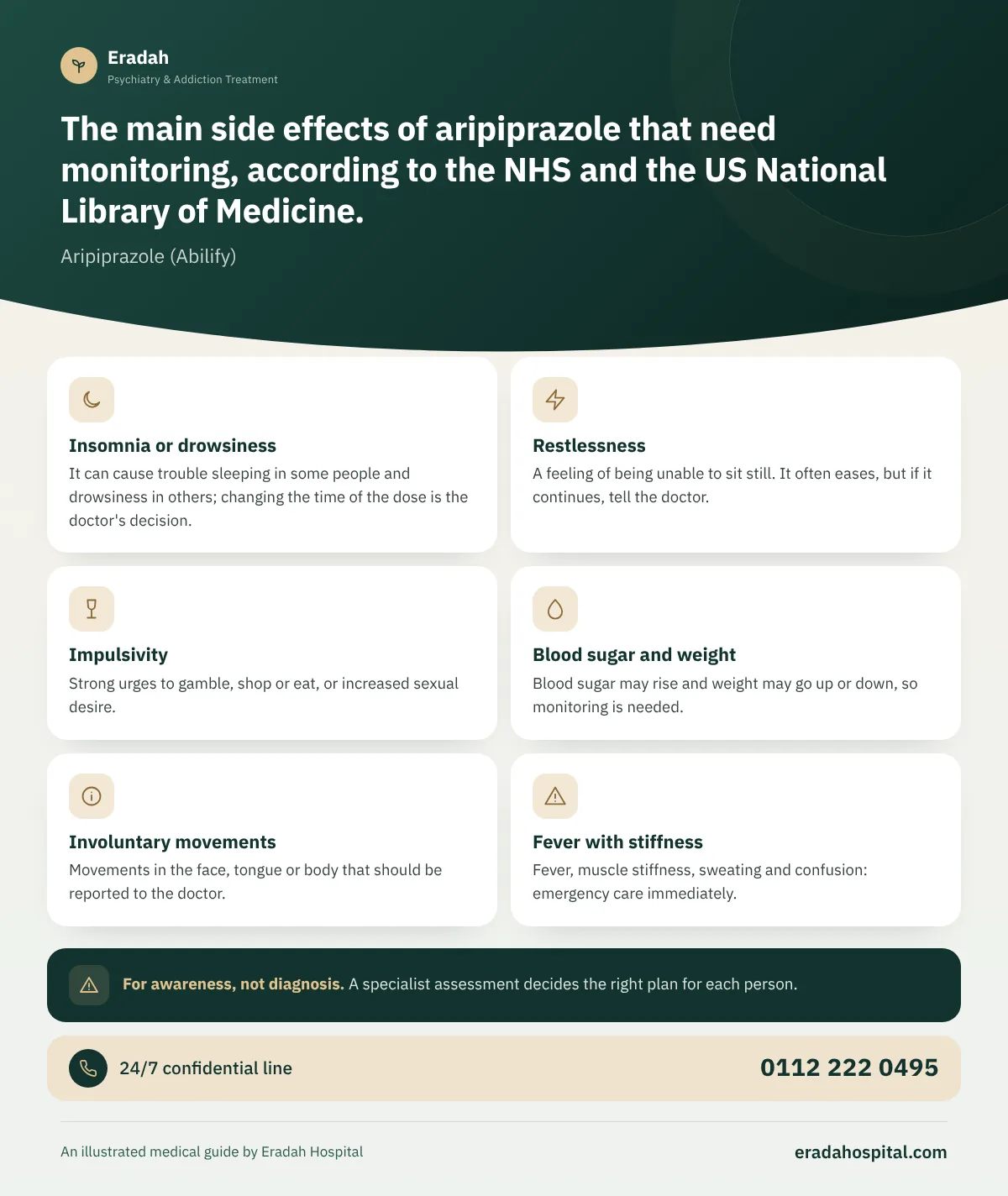
It can cause trouble sleeping in some people and drowsiness in others; changing the time of the dose is the doctor's decision.
A feeling of being unable to sit still. It often eases, but if it continues, tell the doctor.
Strong urges to gamble, shop or eat, or increased sexual desire.
Blood sugar may rise and weight may go up or down, so monitoring is needed.
Movements in the face, tongue or body that should be reported to the doctor.
Fever, muscle stiffness, sweating and confusion: emergency care immediately.
Other common effects include headache, constipation, dizziness and increased saliva. The NHS advises seeing a doctor immediately for a painful erection lasting more than two hours, sudden confusion or drowsiness, or signs of high blood sugar such as thirst and frequent urination.
Impulsivity deserves the family's attention in particular, because the person may not connect it to the medication. If a new pull toward gambling or spending appears, see the doctor and read about gambling addiction and its signs.
Interactions, pregnancy and follow-up
- Alcohol: the NHS advises avoiding it, as it increases drowsiness and unsteadiness and may worsen symptoms.
- Medications that affect how the liver breaks it down, and St. John's wort: they may change its level and require adjustment by the doctor.
- Dehydration and heat: tell the doctor if you have severe vomiting or diarrhea.
- Follow-up: periodic checks of weight, blood sugar and fats, according to the NHS.
The US National Library of Medicine notes that taking it in the last months of pregnancy may cause problems for the newborn, so any planned or unexpected pregnancy should be discussed with the doctor immediately, without stopping the medication on your own.
Is aripiprazole addictive? And how is it stopped?
The NHS confirms that aripiprazole is not addictive and does not change your personality. However, stopping it quickly may bring symptoms back, so if it is to be stopped, the doctor lowers it gradually. Many people need it for long periods to prevent relapse; it does not cure the illness, but it keeps symptoms under control.
When should you ask for help?
If hallucinations or strange thoughts return, worrying impulsivity appears, or the person refuses the medication altogether, early assessment prevents a harder relapse. In Eradah's psychiatry department, medications are adjusted with close follow-up, and if symptoms are linked to substance use, the dual diagnosis program treats both sides together. The first consultation is free and confidential.