“They told me there's a blood pressure pill that calms withdrawal symptoms. Can I get it from the pharmacy and quit at home?” This question comes up often, and the short answer is that clonidine really is used in detox, but using it on your own can expose you to a drop in blood pressure and fainting, then a dangerous rise if you stop suddenly. Here is the full picture.
What is clonidine and how does it work?
The StatPearls reference describes clonidine as a central stimulant of alpha-2 and imidazoline receptors that lowers blood pressure and heart rate by reducing activity of the sympathetic nervous system, which is responsible for the “fight or flight” response. Its best-known international brand name is Catapres, and the names available in pharmacies vary from country to country, so ask the pharmacist about the active ingredient, not the brand name.
Uses of clonidine
- High blood pressure. The UK's National Health Service (NHS) notes that it is not often used for this purpose now and is turned to when other medications do not suit.
- Attention-deficit hyperactivity disorder in children from age 6, as part of a complete treatment program.
- Tics associated with Tourette syndrome, according to StatPearls.
- Off-label, according to the US National Library of Medicine: opioid and alcohol withdrawal, help with quitting smoking, and hot flashes.
Clonidine for opioid withdrawal: what does the evidence say?
Many symptoms of heroin withdrawal and tramadol withdrawal are caused by overactivity of the sympathetic nervous system, such as sweating, anxiety and a racing heart, and this is where clonidine steps in. A 2016 Cochrane review pooled the results of 26 trials involving 1,728 participants and found that drugs of this class, including clonidine and lofexidine, reduced the chance of severe withdrawal compared with placebo and roughly doubled the chance of completing treatment. No important difference was seen in withdrawal severity over the whole period compared with a gradual methadone taper, although symptoms appeared and resolved earlier.
But clonidine does not treat every symptom and does not treat addiction itself. That is why the doctor adds medications for other symptoms depending on the case, and after withdrawal begins the work of relapse prevention, as in the guide to addiction treatment medications.
How is clonidine used in detox?
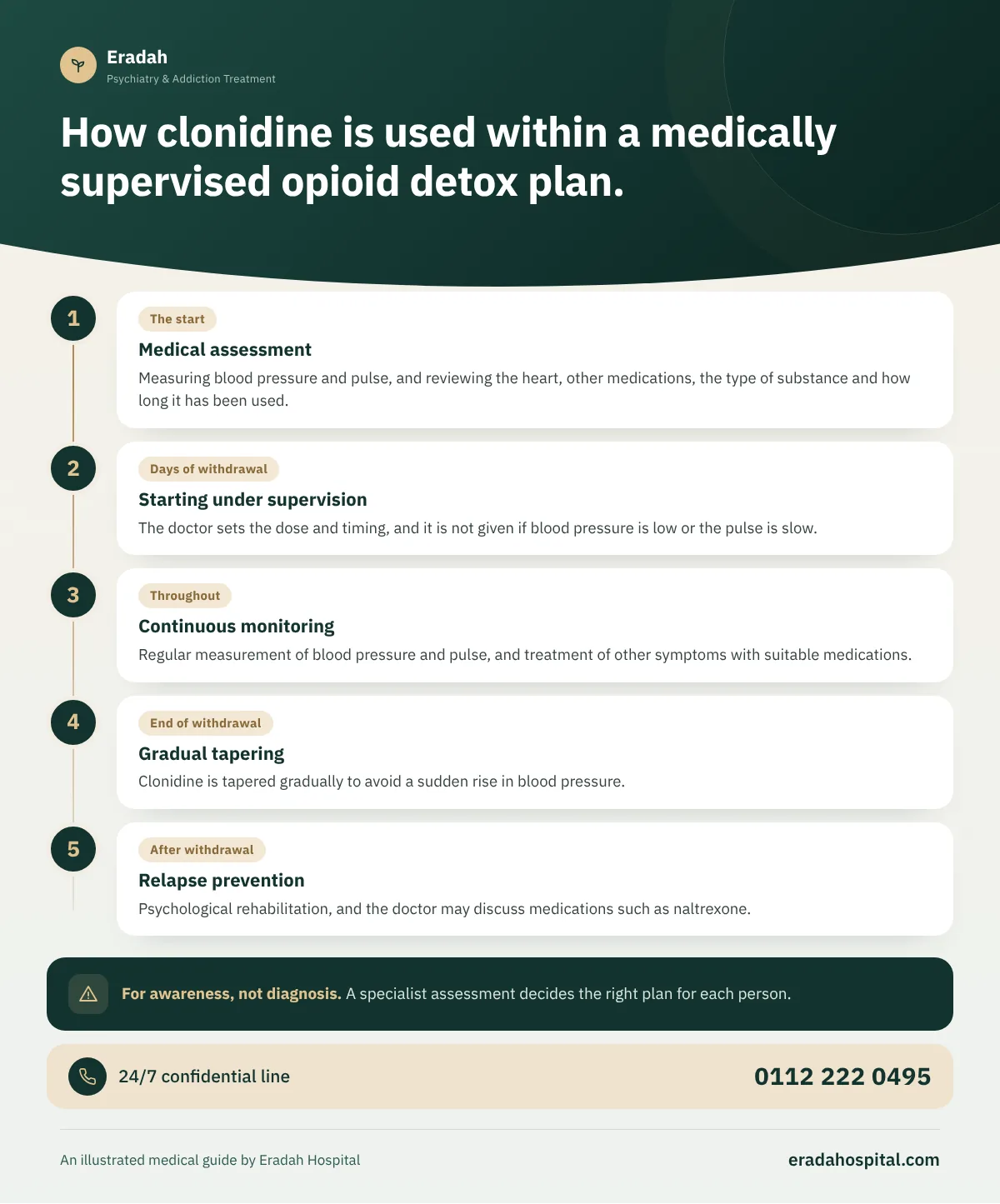
- The startMedical assessment
Measuring blood pressure and pulse, and reviewing the heart, other medications, the type of substance and how long it has been used.
- Days of withdrawalStarting under supervision
The doctor sets the dose and timing, and it is not given if blood pressure is low or the pulse is slow.
- ThroughoutContinuous monitoring
Regular measurement of blood pressure and pulse, and treatment of other symptoms with suitable medications.
- End of withdrawalGradual tapering
Clonidine is tapered gradually to avoid a sudden rise in blood pressure.
- After withdrawalRelapse prevention
Psychological rehabilitation, and the doctor may discuss medications such as naltrexone.
Side effects of clonidine
- Dry mouth.
- Tiredness, drowsiness and general weakness.
- Headache and nervousness.
- Dizziness or fainting on standing quickly, especially at the start.
- Nausea, vomiting or constipation.
- Sexual dysfunction.
The US National Library of Medicine warns of fainting with dehydration or extreme heat, which is possible during withdrawal with vomiting, diarrhea and sweating, and this is why medical supervision is essential.
Why must clonidine never be stopped suddenly?
The US label states that sudden discontinuation can cause nervousness, agitation, headache and tremor, accompanied or followed by a rapid rise in blood pressure, and that rare cases of hypertensive encephalopathy, stroke and death have been reported after stopping. The NHS stresses that it should be stopped only by gradual tapering under the doctor's supervision. The US tablet label does not carry a boxed warning, but this warning is among the most important things in it.
Is clonidine misused?
Clonidine is not a narcotic and does not cause euphoria in most people. However, a small study published in 2001 asked 15 people seeking treatment for opioid dependence, and 14 of them knew of its misuse; 10 had used it themselves to prolong the effect of heroin or reduce the amount needed. This combination is dangerous, because both opioids and clonidine can slow the heart and breathing. An overdose of it, according to the US National Library of Medicine, can cause fainting, a slow heartbeat, difficulty breathing and pinpoint pupils.
Safe detox at Eradah
In Eradah's detox program, the doctor chooses the right medications for each case, with medical monitoring of vital signs, and treatment then continues in the residential program for men. Women receive a free first consultation and a referral to a suitable facility. The first consultation is free and confidential on 01122220495.