“I've been taking Librax for my colon for years, and when I forget it I feel tense and can't sleep.” Many people in Egypt know Librax as a medication “for the colon and the nerves”, without knowing that half of it is a sedative from the same family as Valium and Xanax. This guide explains what is really in the box, and when the use becomes a problem.
What is Librax?
Librax is a brand name for a combination of two ingredients in one capsule or tablet:
- Chlordiazepoxide: the StatPearls reference describes it as a long-acting benzodiazepine, the same family as Valium, Xanax, and Rivotril, and it acts on GABA receptors to calm the nervous system.
- Clidinium: an anticholinergic that reduces spasms of the stomach and intestines.
The idea behind combining them is that tension and anxiety make bowel symptoms worse, so the medication addresses both sides together. But this same idea is what makes a person feel they cannot “feel at ease” without it.
Uses of Librax
According to the US National Library of Medicine MedlinePlus and the official drug label, Librax is used together with other treatments for:
- Irritable bowel syndrome, including pain, bloating, and diarrhea or constipation.
- Stomach ulcers.
- Acute inflammation of the intestines.
In other words, it is not a treatment for anxiety or insomnia in itself, nor a sole treatment for the bowel. And if anxiety is the main driver of the symptoms, treating it directly through anxiety treatment or understanding the psychosomatic symptoms pays off more in the long run.
Is Librax a sedative?
Yes. Half of the medication is a benzodiazepine sedative, so its label warns that it can cause drowsiness and affect concentration and driving, and that it can be misused and cause dependence. MedlinePlus notes that chlordiazepoxide “may be habit forming”, and asks you not to take a larger dose, take it more often, or take it for longer than your doctor directs, and to tell your doctor about any history with alcohol, drugs, or overuse of medications.
How does Librax turn into dependence?
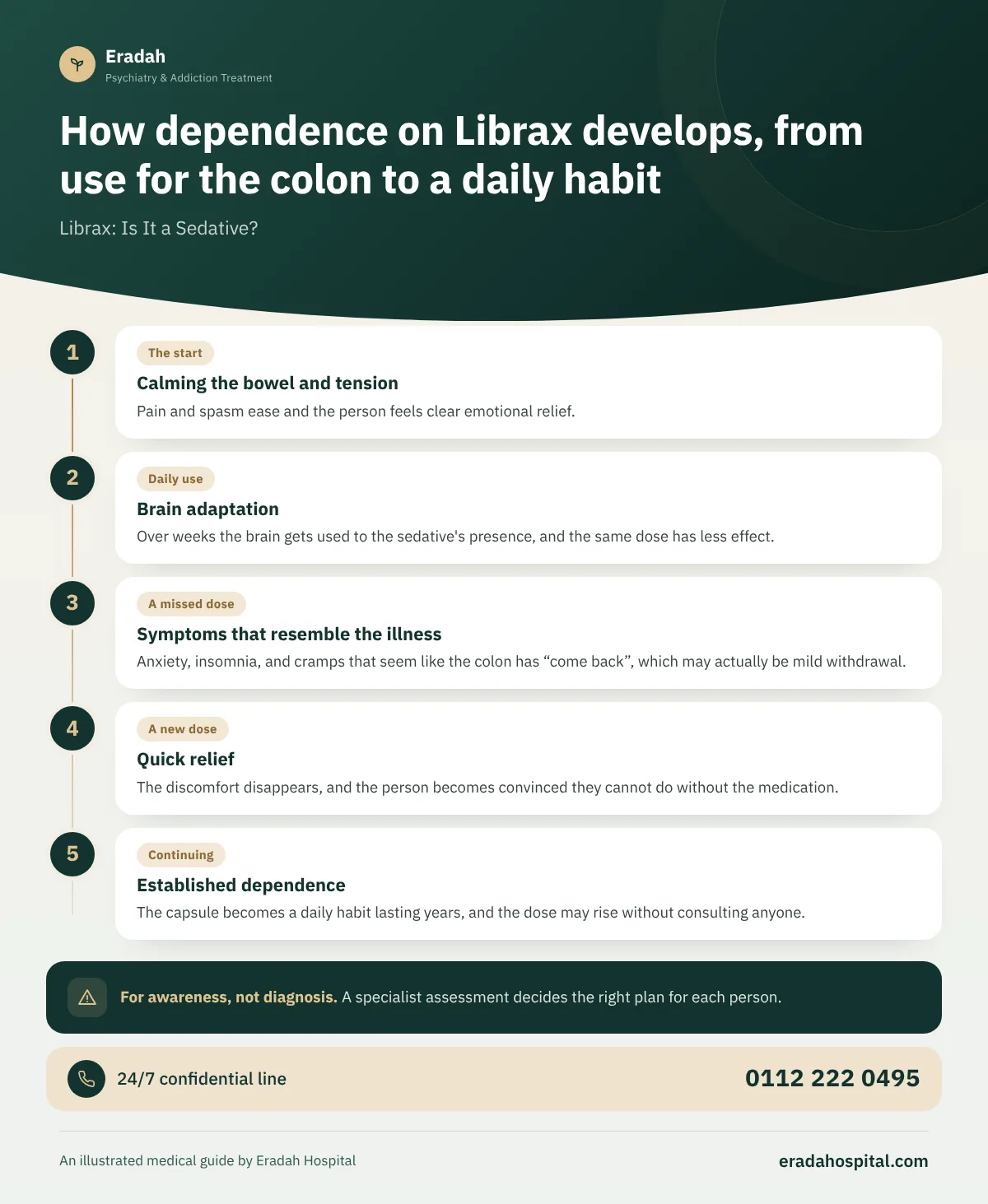
MedlinePlus states that physical dependence on chlordiazepoxide can occur, especially with use over several days to several weeks. It often moves through a cycle that the person does not notice:
- The startCalming the bowel and tension
Pain and spasm ease and the person feels clear emotional relief.
- Daily useBrain adaptation
Over weeks the brain gets used to the sedative's presence, and the same dose has less effect.
- A missed doseSymptoms that resemble the illness
Anxiety, insomnia, and cramps that seem like the colon has “come back”, which may actually be mild withdrawal.
- A new doseQuick relief
The discomfort disappears, and the person becomes convinced they cannot do without the medication.
- ContinuingEstablished dependence
The capsule becomes a daily habit lasting years, and the dose may rise without consulting anyone.
Harms and risks of Librax
- Drowsiness, fatigue, poor coordination, and confusion.
- Dry mouth, blurred vision, and constipation.
- Difficulty urinating.
- Changes in sexual desire or performance.
- Nausea.
- Agitation or anger in some people.
Librax is not suitable for people with glaucoma, an enlarged prostate, or a blocked bladder neck. MedlinePlus advises that adults over 65 do not usually take it because it is not the safest option for them. In pregnancy it may harm the fetus, and in breastfeeding it may pass into the milk and reduce milk supply, so you must consult a doctor. It may also increase depression or suicidal thoughts in some people.
Librax withdrawal symptoms
The drug label warns that stopping it suddenly may cause seizures, tremor, stomach and muscle cramps, vomiting, and sweating. MedlinePlus notes that stopping it suddenly may make your condition worse and cause withdrawal symptoms that can last from several weeks to more than 12 months. Because chlordiazepoxide is long-acting, symptoms may begin days after the last dose, as happens in Valium withdrawal.
When do you need specialist help?
If you have used Librax daily for months, increased the dose yourself, combine it with other sedatives or painkillers, or have tried to stop and failed, it deserves an assessment. At Eradah, sedative detox under medical supervision is carried out with a safe reduction plan, along with treatment of the accompanying anxiety through dual diagnosis, and residential treatment is available for cases where stopping at home is difficult.