“Since I started Risperdal the hallucinations have calmed down, but I feel like my body is stiff.” This equation sums up many patients' relationship with this medication: effective at controlling psychosis and mania, but with effects that need monitoring. Here we explain what Risperdal does, who it is prescribed for, and how to deal with its effects without stopping it on your own.
What is Risperdal?
Risperdal is a brand name for risperidone, a psychiatric medication from the group of atypical antipsychotics. In Egypt it is available as tablets and syrup, and as long-acting injections under the name Risperdal Consta, and under other brand names for the same substance such as Apexidone and Rispadex.
How does risperidone work?
Risperidone strongly blocks serotonin 5-HT2A receptors and dopamine D2 receptors, which eases the dopamine overactivity linked to hallucinations, delusions, and agitation. But blocking dopamine in the movement pathways explains the movement symptoms, and blocking it in the pituitary gland raises prolactin, because dopamine is what normally holds this hormone back.
Uses of Risperdal
- Schizophrenia in adults and adolescents: to ease hallucinations and delusions and prevent relapse, and you will find the full plan in schizophrenia treatment.
- Manic and mixed episodes in bipolar disorder, alone or with lithium or valproate.
- Severe irritability associated with autism in children, such as tantrums, aggression, and self-harm.
- Long-acting injections for people who find it hard to keep up with daily tablets, given at regular intervals at the clinic.
Side effects of Risperdal on the body
| System | Possible effect |
|---|---|
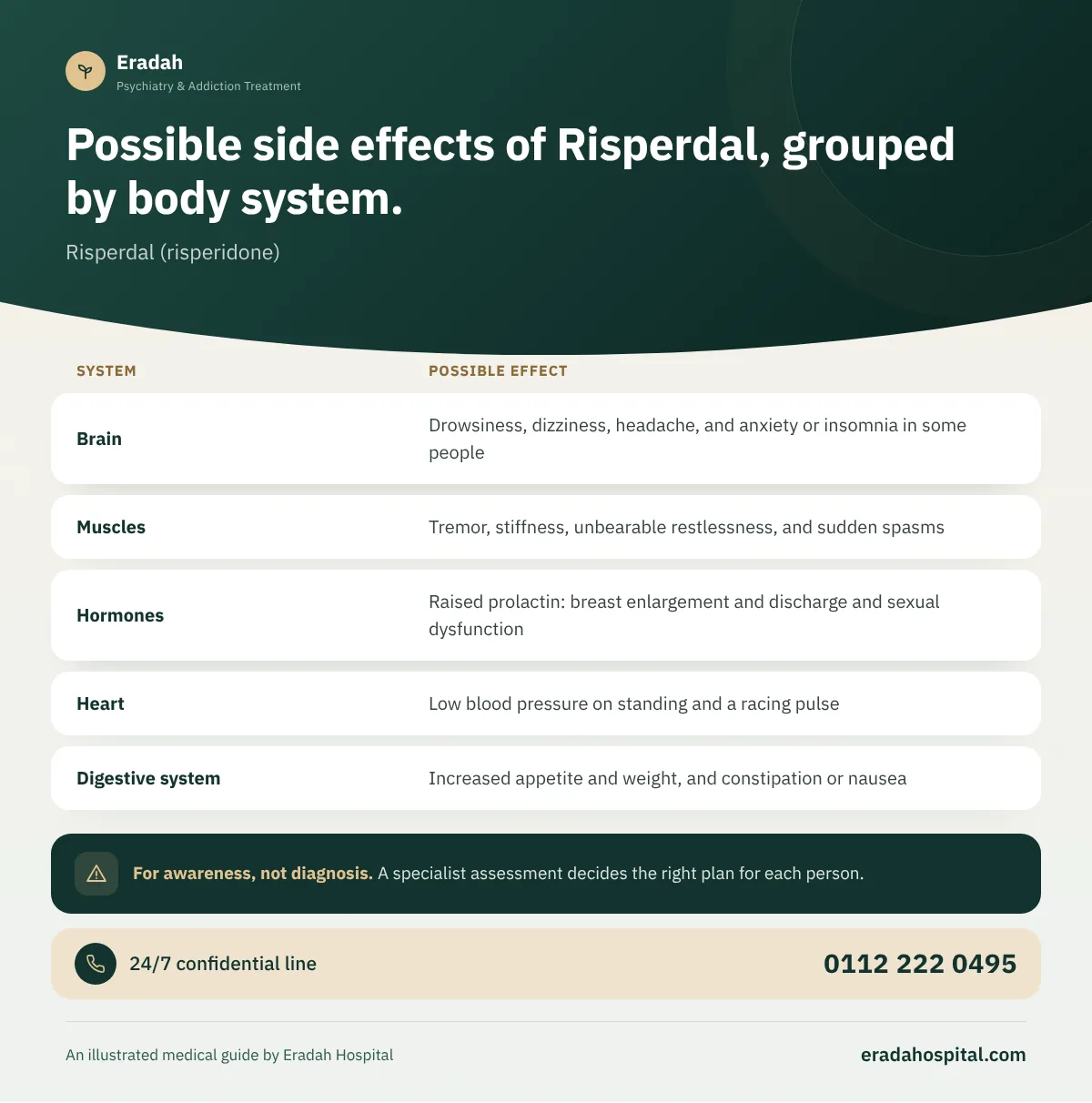
| Brain | Drowsiness, dizziness, headache, and anxiety or insomnia in some people |
| Muscles | Tremor, stiffness, unbearable restlessness, and sudden spasms |
| Hormones | Raised prolactin: breast enlargement and discharge and sexual dysfunction |
| Heart | Low blood pressure on standing and a racing pulse |
| Digestive system | Increased appetite and weight, and constipation or nausea |
Rare serious effects include neuroleptic malignant syndrome, tardive dyskinesia, high blood sugar, and low white blood cells. As with all antipsychotics, its label warns of an increased risk of death in older adults with dementia.
Risperdal and prolactin: what matters for men
Raised prolactin is one of the most common effects of risperidone compared with many other antipsychotics. In men it may appear as breast enlargement or pain, and reduced desire or erection problems, and it may affect fertility. These effects do not mean the medication has failed, but they are a good reason to see your doctor, who may measure the hormone and adjust the dose or move to an alternative. Embarrassment leads many people to stop the medication secretly, which can lead to relapse.
The severity of these effects varies from person to person, and many ease after the first weeks or with a simple adjustment to the dose or its timing. So note what you notice and discuss it at the next visit rather than judging the medication from the first days.
Important interactions with Risperdal
Fluoxetine and paroxetine raise the level of risperidone in the blood, while carbamazepine and some other epilepsy medications lower it. Alcohol and sedatives increase drowsiness and dizziness. Caution is needed with blood pressure medications because it may lower blood pressure, and with Parkinson's disease medications. As for pregnancy and breastfeeding, treatment is decided with the doctor.
Is Risperdal addictive?
No. Risperdal does not cause addiction or euphoria, and it is not known for any notable misuse. But stopping antipsychotics suddenly may cause nausea, sweating, insomnia, and a return of symptoms, so it is stopped gradually. And if the patient uses hashish or stimulants, this weakens the effect of treatment and raises the risk of relapse, as in the guide to schizophrenia and addiction.
Following up treatment and when to see your doctor
- Measure weight and waist circumference regularly.
- Check blood sugar and fats before and during treatment.
- Measure prolactin when hormonal symptoms appear.
- Examine movement for any involuntary movements.
- Immediate review for fever with stiffness and confusion.
At Eradah Hospital these indicators are followed within an integrated treatment plan, with stays in the inpatient program for acute episodes or in outpatient clinics once stable, involving the family in supporting adherence to treatment.