“I only take it to sleep.” This is a sentence doctors hear often about Seroquel, although it is originally a medication for serious psychiatric illnesses such as schizophrenia and bipolar disorder. This guide explains what Seroquel actually does, when it is necessary, which effects deserve monitoring, and why it should not be treated as an ordinary sleeping pill.
What is Seroquel?
Seroquel is a brand name for quetiapine, a psychiatric medication that belongs to the “atypical” or second-generation antipsychotics. In Egypt it is available under other names for the same substance, including Seroquel XR and Quetapex. It comes in two forms: regular tablets taken once to three times a day, and extended-release tablets taken once in the evening, according to the US National Library of Medicine MedlinePlus.
How does quetiapine work in the brain?
Quetiapine partially blocks dopamine D2 receptors and more strongly blocks serotonin 5-HT2A receptors, which calms hallucinations, unrealistic thoughts, and manic episodes. It also blocks histamine receptors, which is the reason for the clear drowsiness it causes, and alpha-adrenergic receptors, which explains the dizziness on standing suddenly.
What Seroquel is used for
- Schizophrenia: to ease hallucinations and delusions and prevent relapse, within a schizophrenia treatment plan.
- Manic episodes in bipolar disorder, alone or with lithium or valproate.
- Bipolar depression, and it is one of the few medications approved for this phase.
- Preventive treatment to prevent episodes in bipolar disorder, together with a mood stabilizer.
- Add-on treatment for depression together with an antidepressant, which is an approved use for the extended-release version.
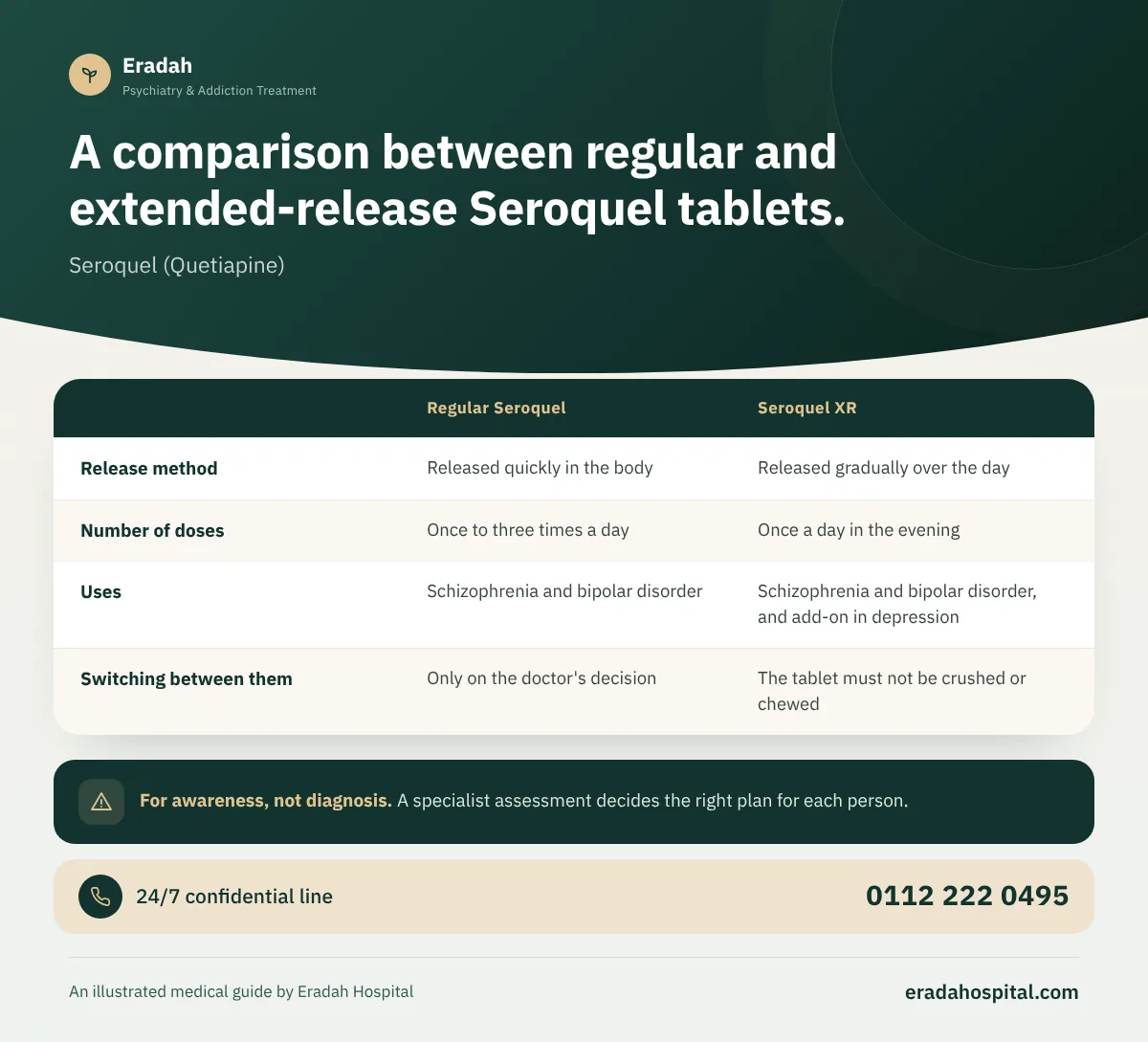
The difference between regular Seroquel and Seroquel XR
| Regular Seroquel | Seroquel XR | |
|---|---|---|
| Release method | Released quickly in the body | Released gradually over the day |
| Number of doses | Once to three times a day | Once a day in the evening |
| Uses | Schizophrenia and bipolar disorder | Schizophrenia and bipolar disorder, and add-on in depression |
| Switching between them | Only on the doctor's decision | The tablet must not be crushed or chewed |
Side effects of Seroquel
- Drowsiness and heaviness, especially in the first weeks.
- Dizziness on standing because of low blood pressure.
- Dry mouth and constipation.
- Increased appetite and weight.
- High blood sugar, cholesterol, and triglycerides.
- A fast heartbeat, and it may lengthen the QT interval on the heart tracing.
There are rarer but serious effects: neuroleptic malignant syndrome (high fever with muscle stiffness and confusion), tardive dyskinesia (involuntary movements of the face and tongue), and low white blood cells. Its label carries two boxed warnings: an increased risk of death in older adults with dementia treated with antipsychotics, and increased suicidal thoughts in children, adolescents, and young adults at the start of treatment.
Important interactions
Quetiapine is broken down in the liver by the CYP3A4 enzyme, so some antifungals, antibiotics, and antiviral medications raise its level, while carbamazepine and phenytoin lower it. Alcohol, sedatives, and tramadol increase drowsiness and slow responses, and caution is needed with any drug that lengthens the QT interval. As for pregnancy and breastfeeding, continuing or adjusting is decided with the doctor.
Is Seroquel addictive?
Seroquel is not classed as an addictive drug, and it does not cause the compulsive craving that sedatives or opioids cause in most patients. But a systematic review published in 2020 found that misuse has been observed mainly in people with a history of addiction and in prisons, and the researchers saw that some use it to soften the unpleasant effects of other substances. If you find yourself raising the dose or combining it with pregabalin or sedatives to seek a “spaced-out” state, this needs a specialist assessment.
Seroquel discontinuation symptoms
According to MedlinePlus, stopping suddenly may cause nausea, vomiting, and insomnia, as well as a risk of the original illness's symptoms returning. So stopping is gradual under a plan set by the doctor, even if the person feels fully better.
When should you see the doctor?
See your doctor immediately if fever with stiffness, fainting, severe palpitations, suicidal thoughts, or excessive thirst and frequent urination appear. At Eradah Hospital the medication plan is reviewed as part of integrated treatment that includes physical monitoring and psychological therapy, with a dual diagnosis program for people who have both a psychiatric illness and substance misuse.