Why do crystal meth withdrawal symptoms happen?
During repeated use, the brain works under constant pressure from elevated dopamine and norepinephrine, so it adapts by reducing its sensitivity and draining its stores of these neurotransmitters. When use stops, the brain suddenly finds itself with very low levels, and symptoms appear that are almost the opposite of the drug’s effects: exhaustion instead of energy, depression instead of euphoria, and long sleep instead of sleeplessness.
Unlike heroin or alcohol withdrawal, crystal meth withdrawal does not usually come with violent physical symptoms such as seizures or severe vomiting, which is why many people underestimate it. But the psychological symptoms can be very harsh, and they are the main reason for relapse in the first weeks.
Crystal meth withdrawal timeline
The duration varies from person to person depending on how long and how heavily the person used and on their psychological and physical condition, but the usual course in studies is roughly as follows:
- First hours – day 3The crash
Severe exhaustion, very long sleep, sudden hunger, sadness and emotional flatness, anxiety and irritability.
- The first weekThe acute phase
Depression and persistent fatigue, disturbed sleep that swings between oversleeping and insomnia, strong cravings, and difficulty concentrating. Some suspicion or hallucinations may continue in people who had psychosis.
- Weeks 2 to 3Gradual decline
Symptoms gradually ease in intensity, while fatigue, mood swings and waves of cravings continue.
- After the first monthThe prolonged phase
Loss of enjoyment, low energy and cravings in waves may continue for weeks or months, improving slowly with time and treatment.
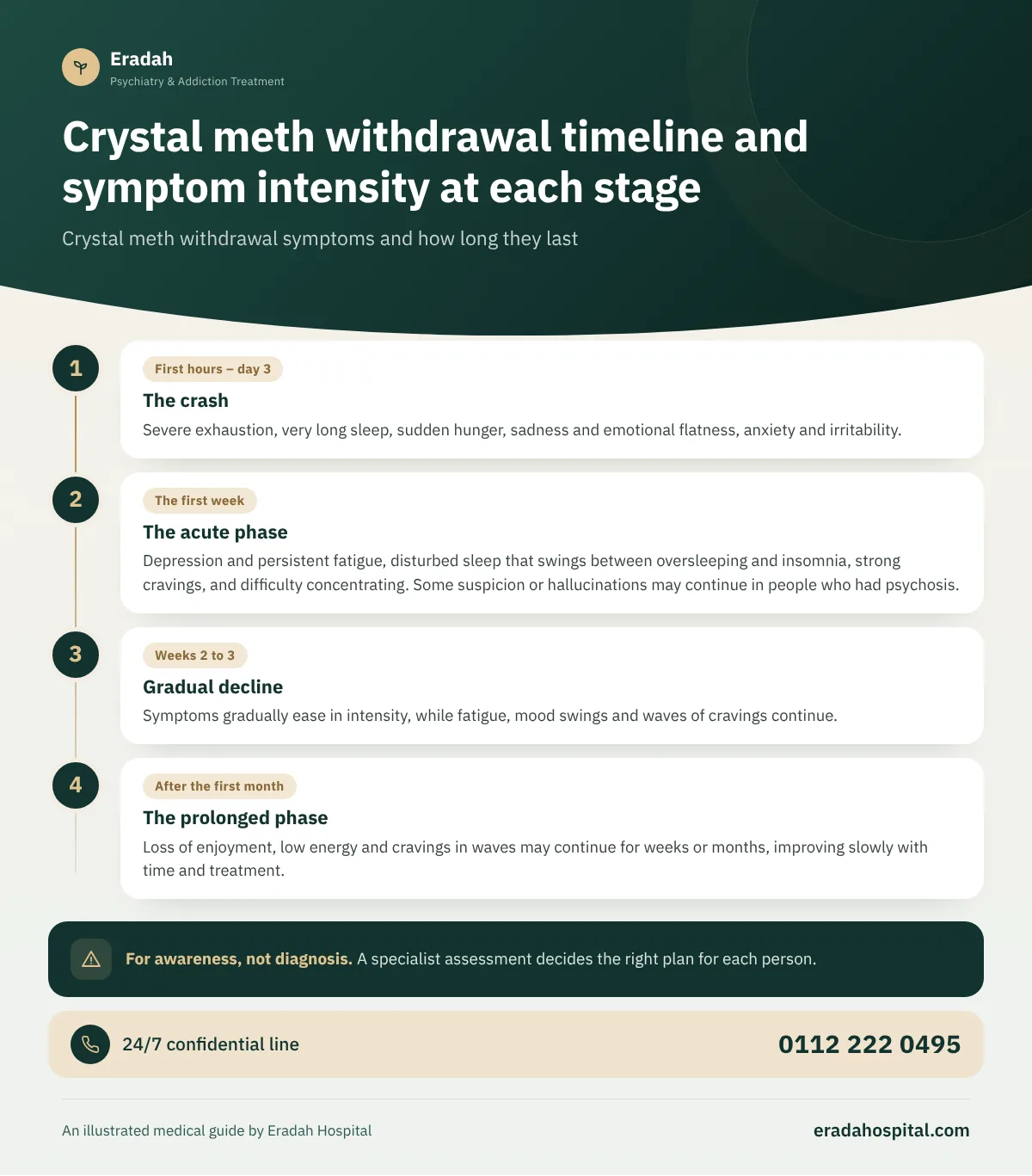
These durations are approximate and drawn from studies of people who used methamphetamine; they vary from person to person.
Psychological and physical symptoms of crystal meth withdrawal
| Type | Symptoms |
|---|---|
| Psychological | Depression, loss of enjoyment, anxiety, irritability, difficulty concentrating, and strong cravings to use. |
| Sleep | Very long sleep at first, then insomnia or broken sleep and disturbing dreams. |
| Physical | Severe exhaustion, slowed movement, increased appetite and weight gain, headache and general aches. |
| Psychotic | Suspicion or hallucinations may continue in some people who had psychosis during use, and they need specialized psychiatric treatment. |
Is crystal meth withdrawal dangerous?
Crystal meth withdrawal is not physically life-threatening in most cases, but it is not safe, and its danger lies in three main things:
In the first days and weeks, depression can reach suicidal thoughts, especially in people with a history of depression.
Hallucinations and suspicion may remain or come back, and may be accompanied by behavior that is dangerous to the person or to others.
Cravings and loss of enjoyment push a person back to use, and returning after a break can be more dangerous for the heart.
How does crystal meth withdrawal differ from heroin and alcohol withdrawal?
| Substance | Nature of withdrawal | Physical risk |
|---|---|---|
| Crystal meth (shabu) | Mainly psychological: depression, exhaustion, long sleep and cravings | Usually low; the main risk is psychological |
| Heroin | Physical and psychological: aches, diarrhea, vomiting and insomnia | Moderate, with a risk of dehydration |
| Alcohol and sedatives | Severe physical symptoms that may include tremor, hallucinations and seizures | High, and can be life-threatening |
This comparison does not mean crystal meth withdrawal is “easy”; its danger is of a different kind: a psychological risk that calls for monitoring mood and thoughts more than monitoring vital signs. Also read about heroin withdrawal for comparison.
What makes crystal meth withdrawal more severe in some people?
- A long period of use and repeated nonstop binges.
- Depression, anxiety or hyperactivity before use began.
- Psychosis during the period of use.
- Using at the same time as alcohol, sedatives or opioids.
- Little family and social support, and staying in the same environment tied to use.
- Poor nutrition and severe physical exhaustion.
How does a person in recovery deal with cravings during withdrawal?
Cravings for crystal meth come in waves that rise and then fall, usually within minutes to an hour. Knowing this helps you get through them without giving in:
- Remember that the wave will pass, and try to delay any decision, even by half an hour.
- Change your place or activity right away: a short walk, a shower, or a call with a supportive person.
- Stay away from your phone and the numbers of people tied to drug use.
- Write down the trigger that came before the craving so you can discuss it with your therapist later.
- Do not face cravings alone: contacting your therapist or support group is part of treatment, not weakness.
What is protracted withdrawal after quitting crystal meth?
After the acute phase ends, many people complain that they “feel nothing”: no joy, no enthusiasm, no energy. This feeling, which doctors call anhedonia (loss of enjoyment), is tied to the brain needing a long time to restore dopamine balance, and imaging studies have shown that recovery extends over many months and may approach two years for some functions.
Knowing this in advance protects against relapse: the emotional emptiness at this stage is a sign of a brain gradually recovering, and it does not mean life without crystal meth is unbearable. Physical activity, regular sleep and psychological treatment help speed improvement.
Why does crystal meth withdrawal need medical supervision?
- Monitoring depression and suicide risk daily in the first weeks, with quick intervention when needed.
- Treating psychosis if hallucinations or suspicion persist, with medicines determined by the psychiatrist.
- Regulating sleep and nutrition and restoring what the body lost during periods of use.
- Assessing the heart and general health, especially after long-term use or with chest symptoms.
- A safe environment away from the drug reduces the chance of relapse on the hardest days.
- Dealing with other substances: many people use crystal meth with alcohol, sedatives or opioids, and withdrawal from these can be physically dangerous and needs a special medical plan.
How can the family support someone going through crystal meth withdrawal?
- Let him sleep and rest in the first days; long sleep is a normal part of recovery.
- Provide healthy, regular meals and enough water.
- Expect irritability and sadness and do not take them personally, and avoid blame and lectures.
- Watch for signs of severe depression or talk about death, and seek help immediately if they appear.
- Encourage simple activities such as walking and getting out in daylight.
- Celebrate every day that passes without use; positive support reduces relapse.
What comes after withdrawal ends?
The end of withdrawal does not mean the end of addiction. The changes in the brain, in habits and in social circles remain, and cravings can return suddenly with stress, or with places or people tied to drug use. That is why stopping must be followed by a treatment program that includes cognitive behavioral therapy, contingency management and a relapse prevention plan. Learn the details on the page about crystal meth addiction treatment.
Signs of acute shabu poisoning: call an ambulance (123) immediately
- Chest pain or pressure, or severe, irregular palpitations
- Very high body temperature with hot, flushed skin and heavy sweating or sudden dryness
- Seizures, an epileptic fit or loss of consciousness
- Severe agitation, or hallucinations and paranoia that make the person a danger to themselves or others
- Signs of a stroke: weakness or numbness on one side, sudden difficulty speaking, or a sudden severe headache
Call an ambulance on 123 immediately, move the person to a quiet, cool place, loosen their clothing and cool their body with damp cloths, and speak to them calmly without confrontation. Do not restrain them by force, because resisting raises their temperature and strains the heart. If they lose consciousness or have seizures, move hard objects away, place them on their side and stay with them until help arrives.
Call the ambulance 123