What happens if PTSD is left without intervention?
Some people recover on their own; the World Health Organization notes that about 40% recover within a year. For others, however, the disorder becomes chronic, avoidance widens until life narrows, and physical, psychological and social complications pile up on top of the original trauma.
The problem is that avoidance, which is an attempt at protection, stops the brain from processing the memory, so it stays vivid and painful. Over time the suffering shifts from "the memory of an event" to "a way of life" ruled by fear, and this is where the complications we explain on this page appear.
How does the disorder affect sleep?
The U.S. National Center for PTSD notes that almost everyone with the disorder has trouble sleeping. Nightmares, hyperarousal that keeps the body on "guard duty" all night, and fear of sleep itself all make rest difficult.
If this continues, it can turn into chronic insomnia in its own right, which increases irritability and poor concentration and weakens the ability to cope with memories during the day, creating a vicious cycle between trauma and lack of sleep.
How does the disorder affect the heart and body?
When the alarm system stays active for long periods, the body is constantly exposed to stress hormones. Many studies have linked chronic PTSD to:
A higher risk of high blood pressure and heart disease, especially with poor sleep, smoking and inactivity.
Muscle and back pain, headaches, and heightened pain sensitivity in people who were physically injured in the event.
Stomach and bowel problems linked to constant tension.
Associations with blood sugar problems and weight changes, partly linked to the accompanying lifestyle.
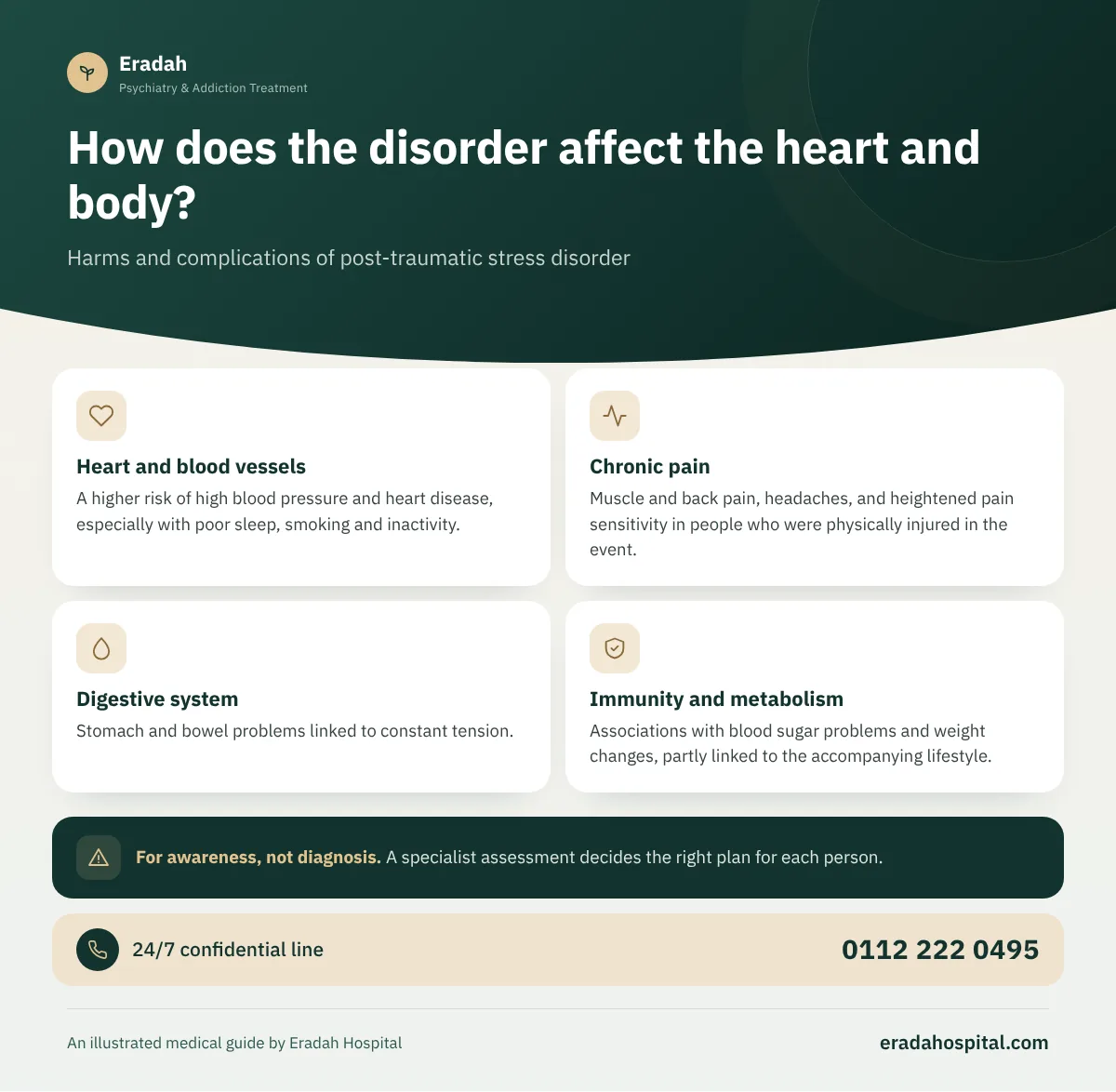
These are statistical associations influenced by many factors, but they confirm that the disorder is not "only in the head," and that treating it is also part of protecting physical health.
What psychological complications can accompany it?
The disorder rarely comes alone. It is often accompanied by depression, with its hopelessness and loss of energy, by anxiety disorders and panic attacks, and sometimes by dissociative symptoms in which the person feels detached from themselves or their surroundings. The longer it goes untreated, the more likely it is that these conditions accumulate.
Why does the risk of addiction rise with trauma?
The U.S. National Institute on Drug Abuse (NIDA) says that many people with the disorder also have a substance use disorder. It often starts as an attempt to sleep or to silence memories with alcohol, sedatives or cannabis, then turns into dependence that makes symptoms worse. We explain this relationship in detail on the page about PTSD and addiction.
Does the risk of suicidal thoughts rise?
Yes. The disorder, especially together with depression, addiction or deep guilt and shame, is linked to a higher risk of suicidal thoughts and attempts. The U.S. National Center for PTSD notes that using alcohol, cannabis and drugs to manage symptoms or sleep is linked to a higher risk.
How are work and study affected?
- Poor concentration and memory cause mistakes and delays in getting things done.
- Avoiding certain places or situations may mean absences or leaving particular jobs.
- Irritability can cause clashes with colleagues and managers.
- In students: declining grades, absences, and sometimes dropping out of school.
- All of this can lead to financial strain, adding a new burden on top of the trauma.
How does the disorder affect marriage and relationships?
Emotional numbness, withdrawal and quick reactions can make a partner feel shut out or rejected, and nightmares and disturbed sleep can drive spouses apart, even out of the same room. The person may avoid physical or social closeness, and be misunderstood as having "changed" or "no longer caring."
Without understanding, arguments multiply and some relationships may end. But when the family knows these are the effects of a treatable disorder, not fixed traits of the person, the way they respond changes a great deal.
How are children and the family affected?
Children may be affected when a parent is living with untreated trauma: they learn excessive caution, take on responsibilities beyond their age, or feel guilty about anger they do not understand. This is not inevitable; treating the parent and explaining things to children in simple language protects them and the relationship.
What is the effect of untreated trauma on children and teenagers who have it?
When a child or teenager develops the disorder and gets no help, their emotional and academic development can suffer: falling grades, difficulty making friends, loss of trust in adults, and a tendency toward withdrawal or aggression. In adolescence the risk of trying alcohol and drugs and of reckless behavior rises, and the effects can extend into young adulthood if there is no early intervention.
The reassuring news is that children respond well to specialist help, especially when parents and school take part, and that stability and safety at home are among their strongest protective factors.
Does untreated trauma affect pregnancy and the postpartum period?
Symptoms may increase during pregnancy or after birth, especially if the birth itself was a difficult experience, and they may be accompanied by postpartum depression, trouble sleeping and difficulty bonding with the baby. That is why a pregnant woman who has been through trauma needs to tell her obstetrician and her psychiatrist, so a plan can be made that takes into account her safety and the baby's.
Can complications be avoided?
Yes, to a great extent. The earlier intervention begins, the less chance avoidance has to become entrenched and depression, addiction and problems at work and in relationships to build up. This does not mean it is ever too late; treatment helps even after years.
- Ask for an assessment if symptoms last more than a month or disrupt your life.
- Do not rely on alcohol, sedatives or cannabis to sleep or forget.
- Keep a daily routine, stay physically active and stay in touch with supportive people.
- Treat sleep problems early, before they become chronic.
- Involve the family in understanding and support.
- Learn about the proven options for PTSD treatment.
Suicidal thoughts or danger to self? Get help now
- Talking about wanting to die, or that life is no longer worth living, or that others would be better off without them
- Severe despair and a feeling that the pain will never end, or overwhelming guilt and shame tied to the event
- Saying goodbye to family and friends, or suddenly giving away treasured belongings
- Severe detachment from reality, or reliving the memory as if it is happening now, with agitation that does not settle
- A sudden increase in drinking alcohol or using sedatives or drugs, or dangerous impulsiveness and recklessness
Stay with the person and do not leave them alone, listen calmly without judgment or argument, and ask them directly about their thoughts; asking does not plant the idea. Call ambulance (123) or go to the nearest emergency department, or call the mental health support line 16328, and keep medication and objects that could harm them out of reach until help arrives.
Ambulance 123 Mental health support line 16328