When do you need to lower cortisol and when do you need a doctor?
When people say "I want to lower my cortisol," they usually mean easing the effect of chronic stress: broken sleep, irritability, exhaustion, and a constant feeling of pressure. Here natural methods really do help, because they treat the cause, not the number.
But there are situations these methods are not enough for, where you should start with the doctor: purple stretch marks, muscle weakness and high blood pressure and sugar (see high cortisol: symptoms and causes), or use of cortisone medicines, or severe fatigue with weight loss. And remember that the goal is not "the lowest cortisol possible," since cortisol is essential, but a healthy rhythm that rises in the morning and falls at night.
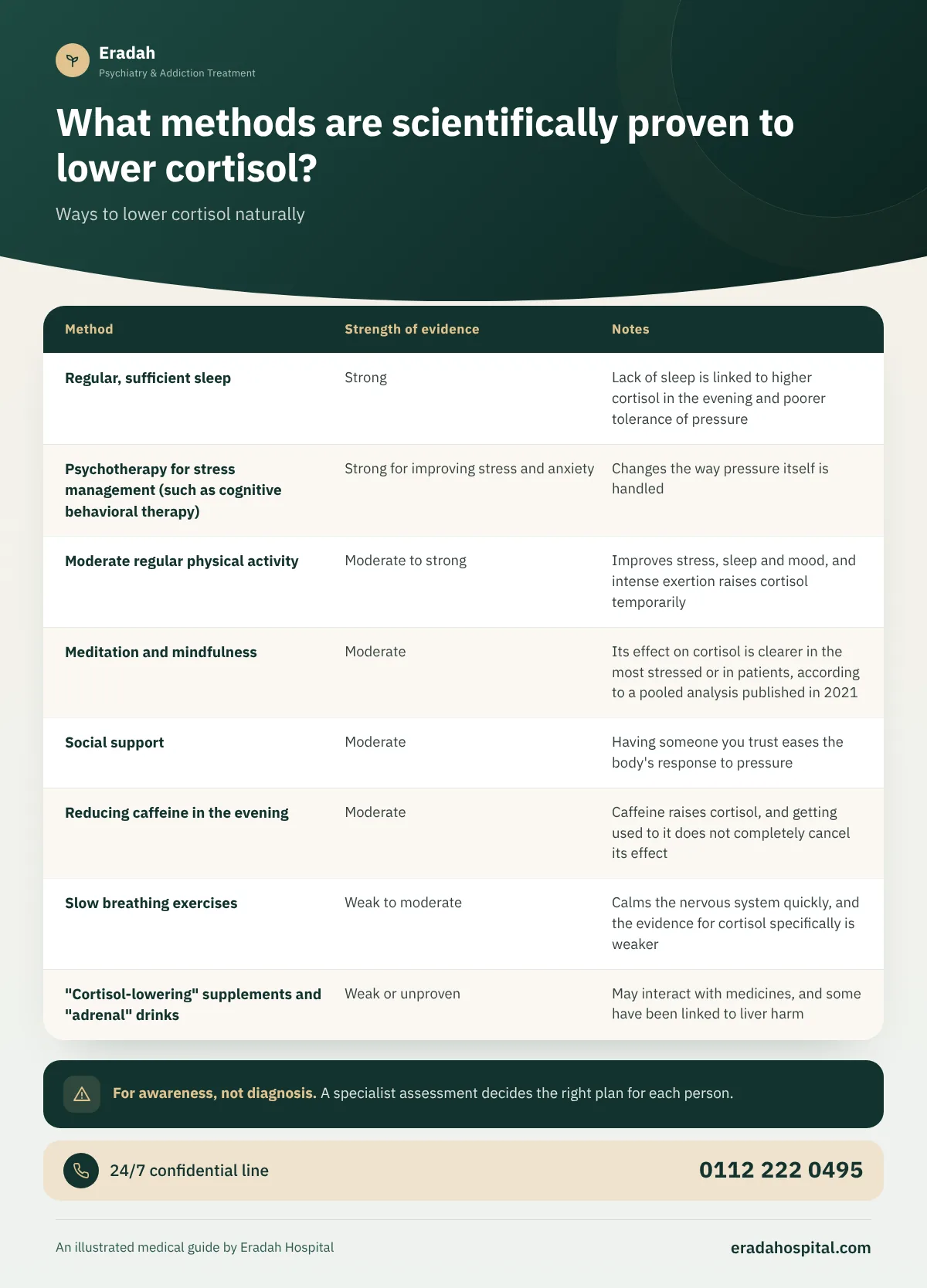
What methods are scientifically proven to lower cortisol?
Not all widely shared advice is equally strong. This is our assessment of the strength of the scientific evidence based on available medical references and systematic reviews, and it is a general assessment that may change with research:
| Method | Strength of evidence | Notes |
|---|---|---|
| Regular, sufficient sleep | Strong | Lack of sleep is linked to higher cortisol in the evening and poorer tolerance of pressure |
| Psychotherapy for stress management (such as cognitive behavioral therapy) | Strong for improving stress and anxiety | Changes the way pressure itself is handled |
| Moderate regular physical activity | Moderate to strong | Improves stress, sleep and mood, and intense exertion raises cortisol temporarily |
| Meditation and mindfulness | Moderate | Its effect on cortisol is clearer in the most stressed or in patients, according to a pooled analysis published in 2021 |
| Social support | Moderate | Having someone you trust eases the body's response to pressure |
| Reducing caffeine in the evening | Moderate | Caffeine raises cortisol, and getting used to it does not completely cancel its effect |
| Slow breathing exercises | Weak to moderate | Calms the nervous system quickly, and the evidence for cortisol specifically is weaker |
| "Cortisol-lowering" supplements and "adrenal" drinks | Weak or unproven | May interact with medicines, and some have been linked to liver harm |
How does regular sleep help lower cortisol?
Sleep and cortisol are linked in both directions: stress prevents sleep, and lack of sleep raises cortisol the next day and makes a person more sensitive to pressure. That is why improving sleep breaks a whole vicious circle, and it is usually the strongest single step.
- Fix your wake-up time every day, even on holidays; it is the "anchor" on which the cortisol rhythm is set.
- Get daylight in the morning, and dim bright lights and screens before sleep.
- Keep the room dark, quiet and at a moderate temperature.
- Do not try to sleep with alcohol or sedatives without a prescription; alcohol spoils sleep quality and raises stress hormones as it wears off.
- If insomnia continues for months it is a disorder that can be treated; see the guide on insomnia.
Does exercise raise or lower cortisol?
The answer: both. Exercise itself is a temporary stress on the body so cortisol rises during it, especially with intense or long exertion. But regular moderate activity trains the stress system to respond and then calm down quickly, and improves sleep and mood, so the long-term result is better tolerance of pressure.
For beginners: brisk walking, cycling, swimming, or any activity that raises the heart rate a little, on most days of the week. Continuous intense exercise without enough rest and with little sleep may increase exhaustion instead of easing it. For those with insomnia, it is better not to do intense exercise right before bedtime.
Do coffee and tea raise cortisol?
Yes, the caffeine in coffee, tea and energy drinks raises cortisol. In a study published in 2005, cortisol rose after caffeine in people who abstained from it, and a partial response remained even in those who drink it daily, meaning that habituation does not completely cancel the effect.
This does not mean banning tea and coffee, as they are part of our day in Egypt. The point is moderation, avoiding caffeine in the afternoon and evening because it delays sleep and so doubles the problem, and watching out for energy drinks that combine caffeine and sugar in large amounts. Someone who relies on caffeine to make up for missed sleep is treating the symptom and leaving the cause.
Breathing and meditation exercises: how do they lower cortisol in minutes?
Slow deep breathing sends the brain a message of safety, so the heart calms and muscle tension eases. This is a simple method you can practice anywhere:
- Sit upright or lie down, and place one hand on your belly.
- Breathe in slowly through the nose for about 4 seconds until your hand rises on the belly.
- Breathe out slowly through the mouth for a little longer, about 6 seconds.
- Repeat for a few minutes, and if you feel dizzy, breathe normally.
As for meditation and mindfulness, they are training in noticing thoughts and feelings without being carried away by them. A pooled analysis published in 2021 found that meditation interventions lowered blood cortisol moderately in groups most exposed to stress or illness, while the effect in saliva measurements was smaller. The bottom line: a real benefit but not a miracle, and it grows with regular practice.
What is the role of diet in lowering cortisol?
There is no food that "lowers cortisol" on its own, but your eating pattern affects your energy, sleep and blood sugar stability. The more helpful pattern is: regular meals without skipping breakfast and then eating heavily at night, vegetables, fruit, legumes and whole grains, less sugar and fried food, and drinking water.
And alcohol is not a relaxation method as is commonly claimed: it may give temporary calm, but it raises stress hormones as its effect fades, spoils sleep, and chronic excess can raise cortisol markedly. The same goes for smoking, which gives the smoker the illusion of relief while a large part of the "relief" is just the end of nicotine withdrawal symptoms (see smoking addiction).
Are there supplements that lower cortisol?
Many supplements are marketed with this promise, the best known being the herb ashwagandha and some other "adaptogenic" herbs. Some small studies pointed to an effect on stress, but the US National Institutes of Health state that the evidence is limited, that there are reports of liver injury, that they may affect the thyroid, and that they are not recommended in pregnancy.
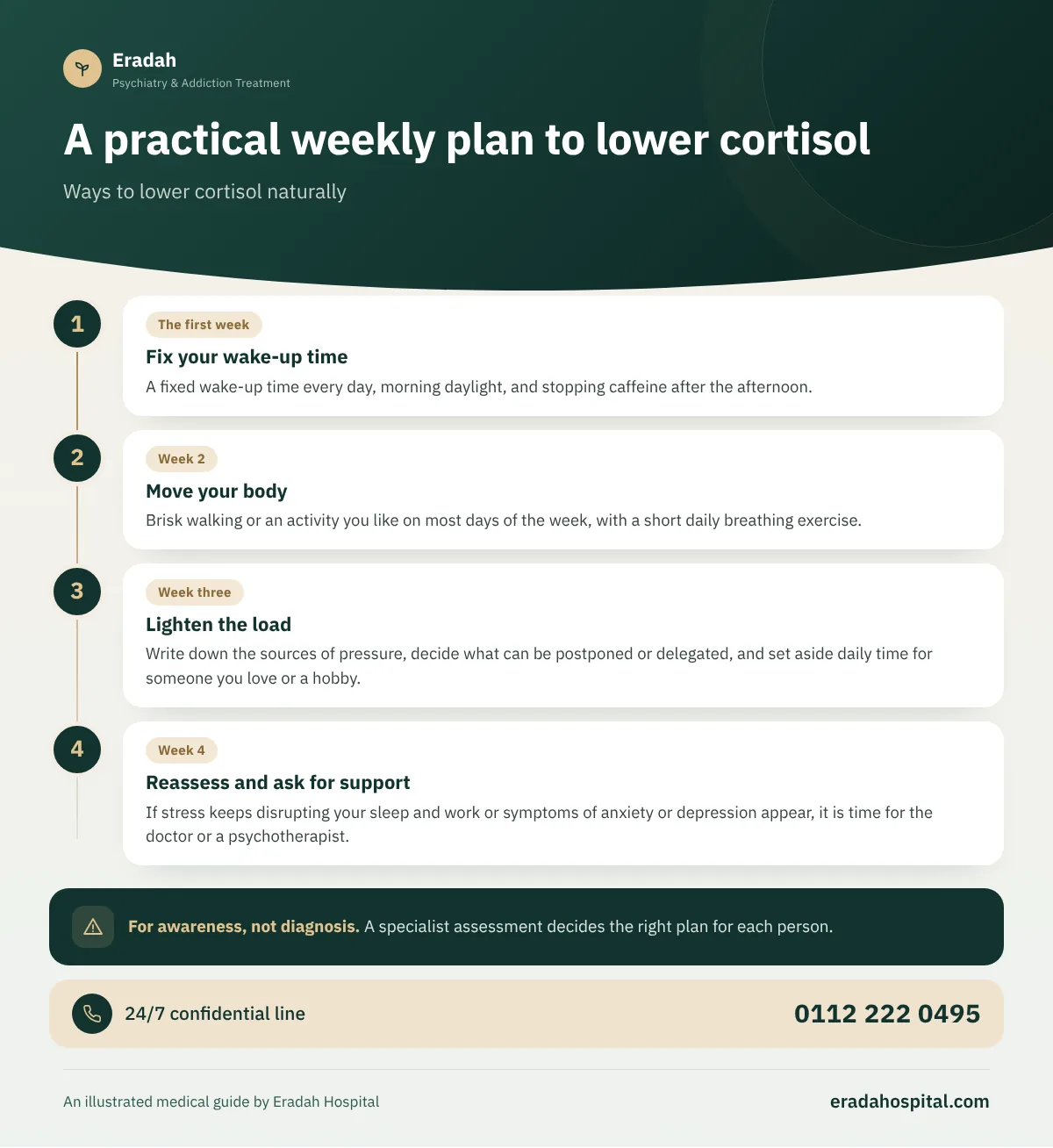
A practical weekly plan to lower cortisol
- The first weekFix your wake-up time
A fixed wake-up time every day, morning daylight, and stopping caffeine after the afternoon.
- Week 2Move your body
Brisk walking or an activity you like on most days of the week, with a short daily breathing exercise.
- Week threeLighten the load
Write down the sources of pressure, decide what can be postponed or delegated, and set aside daily time for someone you love or a hobby.
- Week 4Reassess and ask for support
If stress keeps disrupting your sleep and work or symptoms of anxiety or depression appear, it is time for the doctor or a psychotherapist.
17Do social support and psychotherapy lower cortisol?
People tolerate pressure better when they do not face it alone. Talking to a friend you trust, spending time with family, or taking part in a group activity all ease the body's stress response. Here cortisol meets the hormone oxytocin, which is linked to social bonding.
And when the stress comes from chronic anxiety, depression, trauma or addiction, psychotherapy, especially cognitive behavioral therapy, changes how pressures are thought about and handled. This has a deeper effect than any quick trick. Seek help immediately if the stress comes with hopelessness or thoughts of death: ambulance (123) or the mental health support line 16328.