What does high norepinephrine mean?
A temporary rise in norepinephrine is normal and happens every day: when you wake up, run, or hear a sudden noise. The problem begins when it rises sharply, for a long time, or for no suitable reason, so the body stays on alert, straining the heart, vessels, sleep and nerves.
Because norepinephrine works mainly as a neurotransmitter, the rise meant is usually overactivity of the nerves that release it in the brain and body, not a number on a test. The one near-exception is the rare tumors that release catecholamines into the blood, where testing becomes a real diagnostic tool.
What are the symptoms of high norepinephrine?
The symptoms of excess norepinephrine are similar whatever the cause, because they are all forms of the fight-or-flight response working more than it should:
- Palpitations and a fast heartbeat, sometimes irregular
- High blood pressure, which may be severe and sudden
- Heavy sweating, pallor and cold extremities
- Tremor in the hands and muscle tension
- Anxiety, tension and irritability and a feeling of being unable to relax
- Insomnia and severe difficulty sleeping with excessive alertness
- Dilated pupils and goosebumps
- Headache, which may be severe if blood pressure rises sharply
These symptoms may resemble panic attacks, an overactive thyroid and low blood sugar, so a person should not conclude the cause by themselves, especially if they recur or are severe.
What causes high norepinephrine?
| Cause | How does it raise norepinephrine? | Level of danger |
|---|---|---|
| Stimulants: cocaine, shabu, Captagon and amphetamine | Increase its release and block its reuptake | High, and may be an emergency |
| Opioid withdrawal | Locus coeruleus activity surges after opioids had suppressed it for a long time | Painful and exhausting, and needs medical supervision |
| Alcohol and sedative withdrawal | Sympathetic nervous system overactivity with brain overexcitation | May be dangerous |
| Suddenly stopping some blood pressure medications | Rebound in sympathetic nerve activity after stopping medications that suppressed it | May cause a sharp rise in blood pressure |
| MAOI interaction with foods or medications | Blocks its breakdown, so it builds up and pressure-raising substances surge | May cause a hypertensive crisis |
| Severe stress, panic and trauma | Repeated or continuous activation of the fight-or-flight response | Distressing, and needs treatment if it continues |
| Rare tumors that release catecholamines | Continuous or intermittent release into the blood | Dangerous until treated |
Why does norepinephrine rise during opioid withdrawal?
This is one of the clearest examples of the link between norepinephrine and addiction. Opioids such as heroin, tramadol and morphine suppress the activity of locus coeruleus cells. With continued use the brain adapts by raising these cells’ capacity to fire until balance returns despite the presence of the substance.
When the person stops suddenly, the brake disappears while the adaptation remains, so these cells fire excessively and flood the brain and body with norepinephrine. Scientific reviews describe this noradrenergic surge as the basis of part of the withdrawal symptoms, which is why medications that activate alpha-2 receptors are used to calm it, easing some symptoms without treating the addiction itself.
- The first hoursWithdrawal begins
Anxiety, yawning, and a runny nose and eyes as the substance begins to clear, with timing that varies by type of opioid.
- The first daysPeak of the surge
Sweating, tremor, chills, palpitations, severe insomnia and dilated pupils, with aches, diarrhea and irritability.
- AfterwardGradual easing
Physical symptoms ease gradually, while insomnia, tension and cravings may continue for weeks or longer.
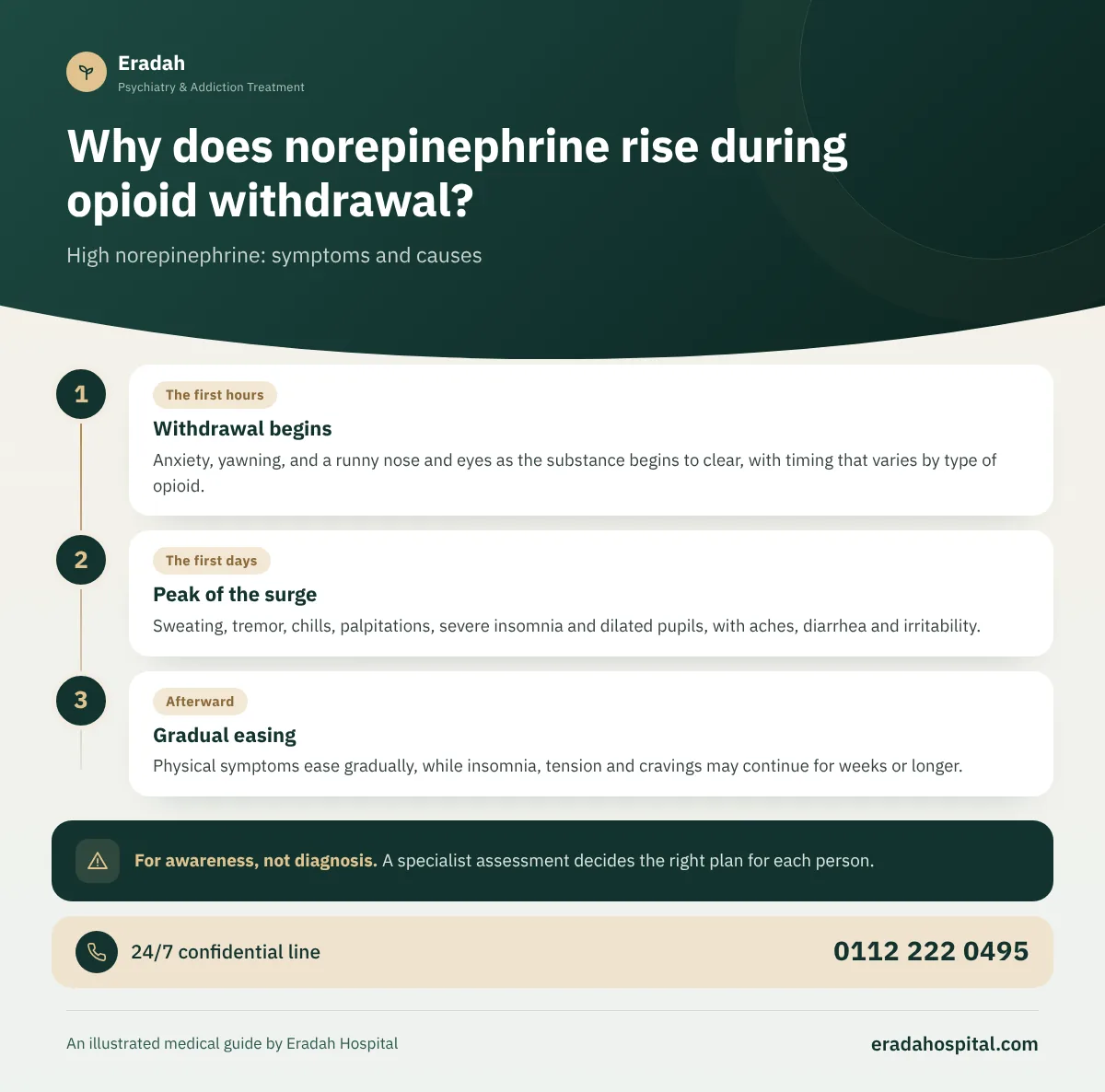
Timings are approximate and vary greatly with the substance, length of use and health. Details of withdrawal for each substance are on the pages for heroin withdrawal and tramadol withdrawal. Although opioid withdrawal alone rarely threatens the life of healthy people, dehydration and relapse after tolerance is lost carry real risk, so withdrawal under medical supervision is advised.
How do stimulants raise norepinephrine, and what do they do to the heart?
Cocaine blocks the reuptake of norepinephrine and dopamine, while amphetamines, including crystal meth (shabu) and Captagon, push cells to release large amounts of both. The result is excessive sympathetic activity: a fast heart, constricted vessels, high blood pressure and raised temperature.
The US National Institute on Drug Abuse notes that cocaine is linked to heart rhythm disorders, heart attacks, strokes and seizures, and that these complications can occur even in young people and from the first use. The risk rises when stimulants are mixed with alcohol or other stimulants, and with sleeplessness and dehydration. Misusing medical stimulant medications such as Ritalin to stay up or to study raises norepinephrine by the same mechanism.
Can medications raise norepinephrine dangerously?
Yes, in specific situations that patients and their families should know:
Antidepressants in this class block the breakdown of substances such as tyramine, found in aged cheeses, processed meats and fermented foods, so norepinephrine surges and blood pressure rises sharply. The doctor gives the patient a list of foods to avoid.
Combining antidepressants with stimulants, nasal decongestants or stimulating supplements without the doctor’s knowledge may raise blood pressure and pulse.
Suddenly stopping some blood pressure medications that suppress the sympathetic nerves or block beta receptors may cause a rebound rise in blood pressure and pulse.
SNRI antidepressants may raise blood pressure slightly in some patients, so the doctor monitors blood pressure during treatment.
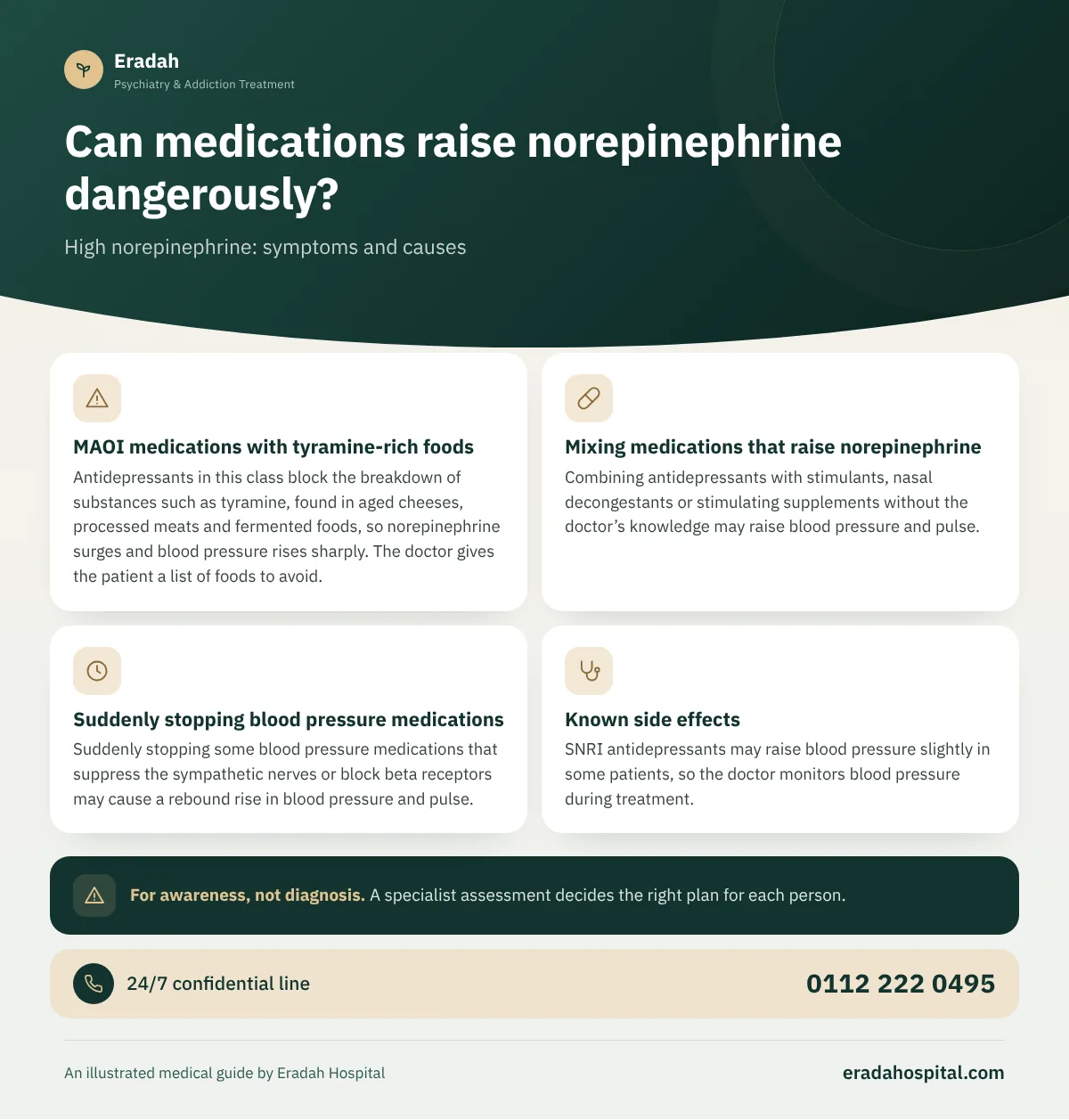
Do not stop any medication, and do not add a medication or supplement, without consulting the doctor or pharmacist, and always tell them everything you take.
Are there tumors that cause high norepinephrine?
Yes, but they are rare. The best known are pheochromocytoma in the adrenal medulla and paragangliomas outside it, which release adrenaline and norepinephrine into the blood, causing attacks of headache, sweating, palpitations and high blood pressure. Our guide to high adrenaline explains these tumors, their signs and diagnosis in detail.
What are the risks of persistently high norepinephrine?
| Organ or area | Possible complication |
|---|---|
| Heart | Heart rhythm disorders, angina, and heart attack, especially with stimulants |
| Vessels and brain | Hypertensive crisis, and stroke or brain hemorrhage |
| Kidneys and eyes | Damage with severe or repeated high blood pressure |
| Sleep and mental health | Chronic insomnia, anxiety, and excess alertness that feeds relapse |
| The body in general | Raised temperature and dehydration with stimulants and withdrawal |
A hypertensive crisis is the most serious of these complications, and medical references describe it as blood pressure reaching 180/120 or more, becoming an emergency if accompanied by chest pain, shortness of breath, signs of a stroke, blurred vision or confusion.
How is high norepinephrine diagnosed?
- An honest medical history: What substances or medications has the person taken? Have they recently stopped opioids, alcohol or a blood pressure medication?
- Measuring blood pressure, pulse and temperature and an ECG to detect rhythm disturbance.
- Blood tests for sugar, salts and thyroid function, and cardiac enzymes with chest pain.
- Urine drug testing when needed, confidentially and for the purpose of treatment.
- Metanephrines test in blood or urine if the doctor suspects a catecholamine-releasing tumor, with special instructions before the test.
How is high norepinephrine treated?
Treatment is always directed at the cause. We mention only the general categories, since the choice and doses are the doctor’s decision:
| The situation | Focus of treatment |
|---|---|
| Opioid withdrawal | Medical supervision, and medications that calm the noradrenergic surge, or substitute medications within an addiction treatment plan, along with fluids and nutrition |
| Stimulant toxicity | Emergency care: calming, heart monitoring and lowering temperature, and treating chest pain as a cardiac condition |
| Alcohol or sedative withdrawal | Gradual medical detox in an equipped facility to prevent seizures and delirium |
| Drug interactions | Stopping the cause with the doctor’s knowledge and controlling blood pressure in hospital when needed |
| Persistent anxiety and panic | Psychotherapy, medications chosen by the psychiatrist, regulating sleep and cutting back on stimulants |
At Eradah we handle opioid and stimulant withdrawal with a medical plan that monitors blood pressure, pulse and sleep daily, then move on to psychotherapy and relapse prevention, because calming the physical symptoms is a first step and not the whole treatment.
When should you go to the emergency room for high norepinephrine?
- Chest pain or pressure, especially after using stimulants, even if the person is young.
- A sudden severe headache with very high blood pressure, blurred vision or vomiting.
- Signs of a stroke: a drooping face, weakness in a limb, or sudden difficulty speaking.
- Severe irregular palpitations with dizziness or fainting.
- Severe agitation, high temperature or seizures during use or withdrawal.
Chest pain, very high blood pressure or signs of a stroke? Call the ambulance (123) immediately
- Pain or pressure in the chest that may spread to the arm or jaw, with sweating or shortness of breath, especially after using stimulants
- A sudden, severe headache unlike any before, with a big rise in blood pressure, blurred vision or vomiting
- Sudden drooping of the face, weakness in an arm or leg, or sudden difficulty speaking (signs of a stroke)
- A very fast or irregular heartbeat with severe dizziness or fainting
- Severe agitation with high temperature, or seizures after using stimulants or during alcohol withdrawal
Call the ambulance (123) immediately and do not wait for the symptoms to settle, and do not try to lower the blood pressure at home with medicines the doctor has not prescribed. Have the person sit or lie down in a quiet place and stay beside them, and note the time the symptoms began, because it matters for stroke treatment. Tell the ambulance team honestly about every medicine or substance the person has taken, because it changes the treatment and may save their life.
Ambulance 123 Mental health support line 16328