Physical signs of alcohol addiction
Some of these signs appear while under the influence of alcohol, and some build up with regular drinking over a long time:
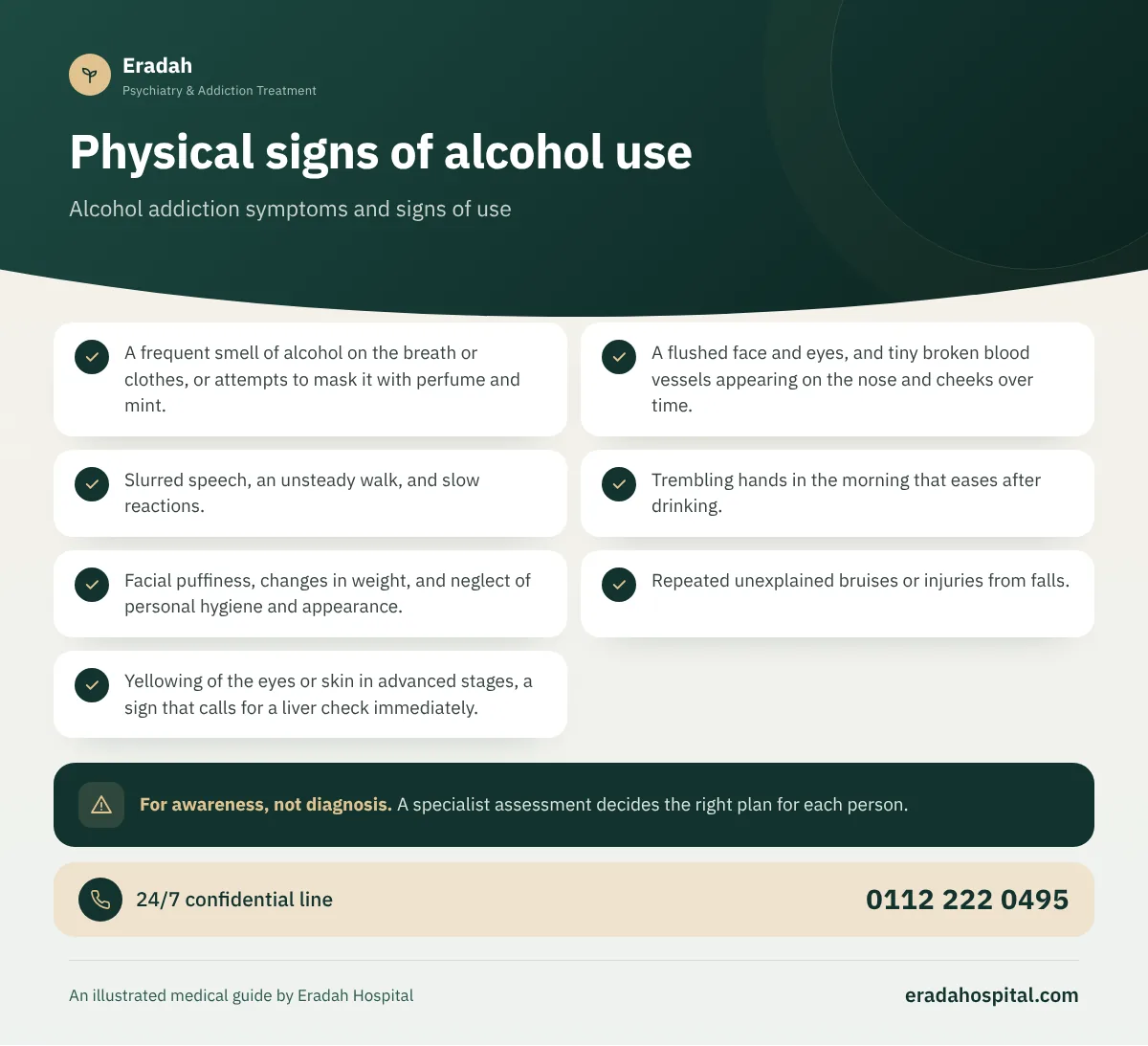
- A frequent smell of alcohol on the breath or clothes, or attempts to mask it with perfume and mint.
- A flushed face and eyes, and tiny broken blood vessels appearing on the nose and cheeks over time.
- Slurred speech, an unsteady walk, and slow reactions.
- Trembling hands in the morning that eases after drinking.
- Facial puffiness, changes in weight, and neglect of personal hygiene and appearance.
- Repeated unexplained bruises or injuries from falls.
- Yellowing of the eyes or skin in advanced stages, a sign that calls for a liver check immediately.
Behavioral signs of a person addicted to alcohol
- Hiding bottles or cans in the car, the closet, or the workplace.
- Drinking in the morning or before events “to calm down,” or drinking alone in secret.
- Repeatedly promising to cut down or stop, then returning quickly.
- Absence or lateness at work, especially at the start of the week.
- Driving after drinking, or getting into dangerous situations.
- Giving up hobbies, activities, and relationships that used to matter to him.
- Unexplained money problems, or irritability when drinking is mentioned.
Psychological and mood signs
Irritability and nervousness when not drinking, and temporary improvement after drinking.
Forgetting whole events while drinking, or repeating the same questions.
Insomnia or broken sleep, and relying on drinking to sleep.
Minimizing the problem, comparing himself with people who drink more, and blaming others.
How is alcohol use disorder diagnosed?
Doctors use the DSM-5 diagnostic criteria, which include eleven signs assessed over the past year. This is a simplified wording of the main ones:
- Drinking larger amounts or for longer than the person intended.
- A desire to cut down, or unsuccessful attempts to stop.
- Spending a lot of time drinking or recovering from its effects.
- A strong, urgent craving to drink.
- Falling short at work, school, or home because of drinking.
- Continuing despite family or social problems.
- Giving up important activities because of drinking.
- Drinking in dangerous situations such as driving.
- Continuing despite a physical or mental health problem that alcohol causes or worsens.
- Tolerance: needing larger amounts to feel the same effect.
- Unpleasant symptoms when stopping, or drinking to avoid them.
| Number of criteria met | Severity |
|---|---|
| 2 to 3 | Mild |
| 4 to 5 | Moderate |
| 6 or more | Severe |
This list is for awareness only and does not replace an assessment by a specialist psychiatrist who makes the accurate diagnosis.
Quick self-assessment questions
Many doctors use short questions for initial screening, such as: Have you felt you should cut down on your drinking? Have you been annoyed by people criticizing your drinking? Have you felt guilty about drinking? Have you needed a drink in the morning to steady your nerves or start your day? If the answer is “yes” to more than one question, that is a strong signal to seek a specialist assessment.
How do you tell alcohol from other substances?
| The sign | Alcohol | Sedatives | Stimulants |
|---|---|---|---|
| Smell | Often a clear smell of alcohol | No distinctive smell | No distinctive smell |
| Movement | Unsteadiness and slurred speech | Drowsiness and slurred speech | Hyperactivity and restlessness |
| Pupils | Normal or slightly dilated | Usually normal | Dilated |
| Mood | A high, then irritability or sadness | Calm and drowsiness | Excitement, then irritability and anxiety |
Alcohol is often mixed with other substances such as sedatives, and this mix is very dangerous. Any severe confusion or difficulty waking up means an emergency that leaves no room for guessing.
What happens when someone stops?
When someone stops after a period of heavy drinking, symptoms completely different from the signs of use may appear, and they can be dangerous. The page on alcohol withdrawal symptoms and their duration explains them in detail.
How do you talk to someone you suspect is addicted to alcohol?
- Choose a calm time when he is not under the influence of drinking.
- Start with your worry and your love: “I’m worried about you” instead of “you’re an addict.”
- Name specific incidents you noticed, without exaggeration or hurtful words.
- Listen more than you talk, and expect denial at first without giving up.
- Suggest one small, clear step: seeing a doctor or a confidential consultation call.
- Do not try to catch him while he is drunk, and do not make threats you will not carry out.
Do the signs of alcohol addiction differ in older adults, women, and teenagers?
- Older adults: Signs of drinking may be mistaken for aging, such as forgetfulness, frequent falls, and confusion, especially when taking multiple medications.
- Women: Secret drinking alone at home is common, with greater guilt and fear of stigma, so help-seeking is delayed.
- Teenagers: A sudden decline in schoolwork, a change of friends, money or drinks going missing from the house, and a smell masked with gum or perfume.
In all of these groups, a calm conversation and early assessment help far more than punishment or covert monitoring, because the goal is to open the door to treatment, not to expose the patient to others.
When is it an emergency during drinking?
Heavy drinking in a single session can turn into life-threatening alcohol poisoning. It is important for the family to know that deep sleep after drinking is not always “ordinary sleep”; alcohol in the stomach keeps reaching the blood even after the person loses consciousness. If the person is hard to wake or his color or breathing changes, call an ambulance immediately and do not leave him alone.
Signs of alcohol poisoning and withdrawal danger: call the ambulance on 123 immediately
- Severe confusion, difficulty staying awake, or being unable to be roused
- Vomiting while semi-conscious, with a risk of choking
- Seizures, whether during drinking or in the first days after stopping
- Very slow or irregular breathing, or pauses between breaths
- Cold, bluish or pale skin, and a drop in body temperature
- Delirium, severe tremor and hallucinations days after stopping drinking
Call the ambulance on 123 and do not leave the person alone. If they lose consciousness, place them on their side so they do not choke on vomit, and do not give them coffee, put them under cold water or force them to walk; these are myths that do not stop the poisoning and may make it worse, because the alcohol in the stomach keeps reaching the blood.
Call the ambulance 123