What is methanol poisoning?
“They drank from the same bottle. One, perfectly healthy, is screaming that he can’t see, and the other is asleep and won’t wake up.” A scene that repeats in news of mass poisonings around the world, and the story often begins with a cheap bottle or one of unknown origin. Methanol poisoning, or adulterated alcohol, is a true medical emergency that can end in blindness or death if treatment is delayed.
The alcohol in alcoholic drinks is ethanol, which the alcohol guide explains. Methanol, or methyl alcohol, is an industrial alcohol used as a fuel and solvent and in making chemicals, car windshield cleaners, and antifreeze, according to the Pan American Health Organization, part of the World Health Organization. It is sometimes mixed into adulterated alcoholic drinks because it is cheap, or gets into them through unregulated manufacturing.
The organization stresses that telling methanol from ethanol by smell or taste is very difficult. In other words, the drinker does not know what he is drinking.
Why is methanol so toxic?
Methanol itself is not highly toxic, but the liver converts it into toxic substances, chiefly formic acid, according to Doctors Without Borders. This acid causes severe acidity in the blood and a lack of oxygen in tissues, and attacks the optic nerve and brain in particular. The Pan American Health Organization notes that small amounts of methanol can cause poisoning, because the body is less efficient at clearing it than ethanol.
This explains something that puzzles families: the ethanol in the same bottle as the methanol delays its conversion into the poison, so symptoms are delayed by hours or even days, and at first the person looks like an “ordinary drunk.”
How do the symptoms of methanol poisoning develop?
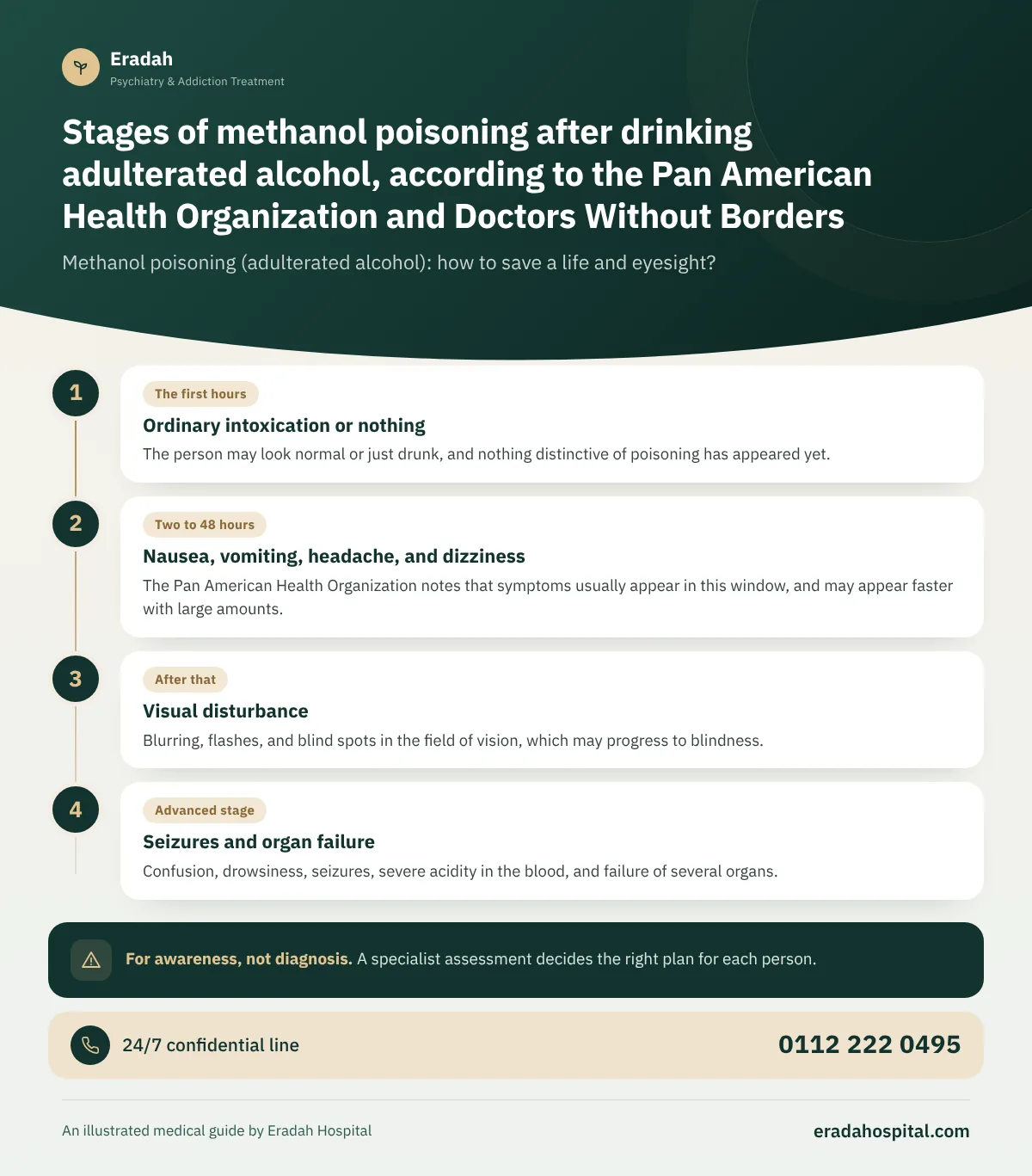
- The first hoursOrdinary intoxication or nothing
The person may look normal or just drunk, and nothing distinctive of poisoning has appeared yet.
- Two to 48 hoursNausea, vomiting, headache, and dizziness
The Pan American Health Organization notes that symptoms usually appear in this window, and may appear faster with large amounts.
- After thatVisual disturbance
Blurring, flashes, and blind spots in the field of vision, which may progress to blindness.
- Advanced stageSeizures and organ failure
Confusion, drowsiness, seizures, severe acidity in the blood, and failure of several organs.
Doctors Without Borders adds rapid breathing, shortness of breath, abdominal pain, and chest pain to the symptoms, and warns that methanol poisoning is a “great mimic” that can be mistaken for sepsis, a heart attack, a stroke, or even a severe “hangover,” which delays diagnosis.
What should you do if you suspect methanol poisoning?
- Call an ambulance (123) immediately, and do not wait for a vision problem to appear.
- Tell the paramedics that you suspect adulterated alcohol, when he drank, roughly how much, and who drank with him.
- Keep the bottle or the leftover drink to help the doctors.
- If he is unconscious but breathing, place him on his side and stay with him.
- Contact everyone who drank from the same source; all of them need assessment at the hospital, even without symptoms.
How does the hospital treat methanol poisoning?
According to a Pan American Health Organization alert issued in October 2025, treatment begins by stabilizing the patient and testing blood gases, electrolytes, and kidney function, then:
- An antidote that stops methanol from turning into the poison: fomepizole is the first choice where available, or medical-grade ethanol under close monitoring. Fomepizole was added to the World Health Organization’s list of essential medicines in 2013, according to Doctors Without Borders.
- Bicarbonate to treat blood acidity.
- Folinic or folic acid to help clear formic acid.
- Dialysis when needed to remove methanol and toxins from the blood.
In a mass outbreak in the Czech Republic between 2012 and 2014, researchers compared the treatment of 100 confirmed patients and found no difference in survival between fomepizole and ethanol. The presence of ethanol in the blood on arrival and the degree of blood acidity were what mattered most for survival. The practical conclusion: early arrival at a well-equipped hospital is what matters most.
What remains after survival?
Doctors Without Borders notes that a typical outbreak kills 20% to 40% of its victims even though an effective treatment exists, and that a similar share of those affected suffer permanent damage to eyesight or the brain. In a six-year follow-up of survivors of the Czech outbreak, signs of severe disability appeared in 17 of the 40 patients who completed all three examinations, and quality of life was lower in those whose optic nerve was affected or who had brain hemorrhages. In other words, methanol can take eyesight even if it does not take life.
Recent outbreaks show the scale of the danger
The Pan American Health Organization notes that the Dominican Republic recorded about 322 confirmed cases and 199 deaths from adulterated drinks in 2020, that Mexico recorded 81 confirmed cases and 27 deaths in the state of Jalisco in the same year, and that Peru recorded about 372 reports and 156 deaths in 2022. The organization points out that unrecorded alcohol, meaning alcohol made or distributed outside the official market, is the main source of danger.
How do you protect yourself and your family?
- Avoid any alcoholic drink of unknown origin, homemade, or sold loose or at an unusually cheap price.
- Never drink alcohol intended for medical or industrial use, or products that contain alcohol and are not meant for drinking.
- If anyone who drank with you feels symptoms, all of you should go to the hospital.
- Save the ambulance number (123) and act quickly at any blurring of vision after drinking.
The only guaranteed protection is not drinking. And if your relative depends on alcohol to the point of turning to cheap or unknown sources, that is a sign of addiction that needs treatment. The page on dealing with someone addicted to alcohol explains how to start, and the page on alcohol addiction treatment explains the stages of treatment. At Eradah, the first consultation is free and confidential.
Signs of methanol poisoning: call an ambulance (123) immediately
- Blurring, clouding, or flashes in vision, or partial loss of sight after drinking.
- Headache, dizziness, nausea, vomiting, and abdominal pain hours after drinking alcohol of unknown origin.
- Rapid, deep breathing or shortness of breath.
- Confusion, severe drowsiness, seizures, or loss of consciousness.
- Another person who drank from the same source is affected.
Call the ambulance on 123 immediately and tell them the person drank alcohol suspected of being adulterated, when he drank, and who drank with him. If he is unconscious but breathing, place him on his side and stay with him, do not give him more alcohol or any home “treatment,” and keep the bottle to help the doctors. Everyone who drank from the same source needs assessment at the hospital even if no symptoms have appeared.
Call the ambulance 123