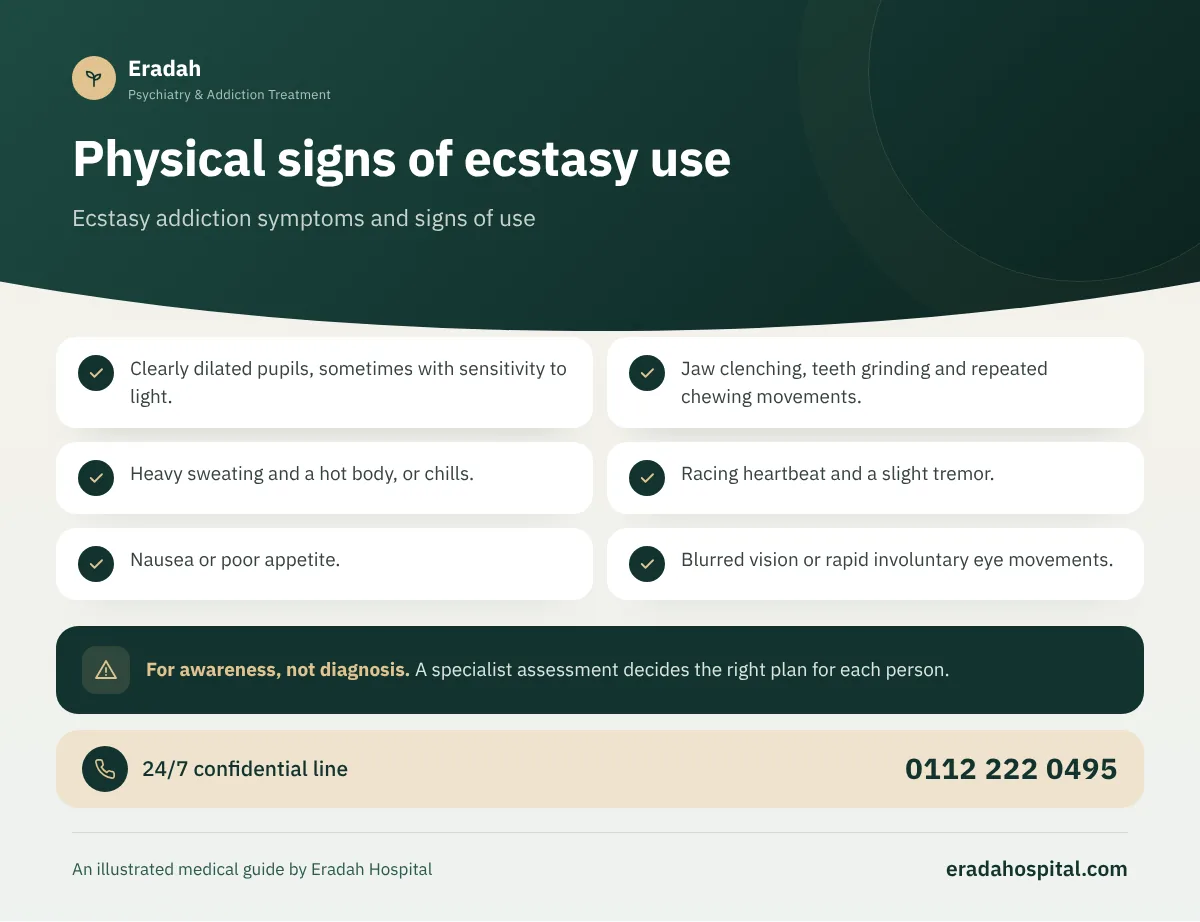
Physical signs during ecstasy use
- Clearly dilated pupils, sometimes with sensitivity to light.
- Jaw clenching, teeth grinding and repeated chewing movements.
- Heavy sweating and a hot body, or chills.
- Racing heartbeat and a slight tremor.
- Nausea or poor appetite.
- Blurred vision or rapid involuntary eye movements.
Behavioral and psychological signs
Ecstasy changes behavior in a way that may seem "nice" at first, which is why families sometimes do not notice it:
Unusually emotional talk, touching and hugging others, and sudden openness in confiding.
Dancing or moving for hours without feeling tired or thirsty.
Heightened sensitivity to music, light and touch, and sometimes mild confusion.
In some people, panic or suspicion appears instead of euphoria.
What do you notice in the days after use?
One of the clearest signs is a repeating pattern: a holiday or a party, then two or three days of obvious change in mood and energy. The family may notice:
- Sadness, listlessness or unexplained crying in the middle of the week.
- Irritability and a short temper, and difficulty concentrating and studying.
- Long sleep or insomnia, and poor appetite.
- Jaw pain or small sores inside the mouth from grinding.
These signs alone do not prove use, but their repeating after parties and nights out is worth a calm conversation. What happens when the drug is stopped completely is described on the page about ecstasy withdrawal symptoms.
Indirect signs at home
- Colored pills with logos on them, or small bags containing powder or crystals.
- Excessive attachment to nightclubs and festivals, and coming home late, worn out.
- Repeated requests for money with no clear reason.
- New friends he avoids talking about.
- Constant use of gum or lollipops, or devices to protect the teeth, with no medical reason.
Signs that the situation is dangerous right now
Some of what you may notice during use is a warning of a complication that needs immediate emergency care, as well as being a sign of use:
- Very hot skin with confusion, or sweating that has stopped.
- Severe headache and repeated vomiting after drinking a lot of water.
- Muscle stiffness, severe tremor or seizures.
- Chest pain or a very fast heartbeat.
- Severe agitation, frightening hallucinations or loss of consciousness.
In any of these cases call an ambulance (123) immediately, and do not wait for them to "come around" on their own.
When does use become addiction? Diagnostic criteria
Doctors rely on the DSM-5 diagnostic criteria for substance use disorder. In brief they include the following, and the disorder is usually diagnosed when two or more are present within a year:
- Using more, or for longer, than the person intended.
- A wish to stop, or failed attempts to cut down.
- Spending a lot of time obtaining the substance, using it or recovering from its effects.
- A strong, urgent craving to use.
- Failing to meet obligations at school, work or home.
- Continuing despite relationship problems caused by use.
- Giving up important activities in favor of use.
- Using in physically dangerous situations.
- Continuing despite knowing that it causes or worsens a physical or psychological problem such as depression.
- Tolerance: needing more to get the same effect.
- Psychological and physical symptoms on stopping.
How do you tell ecstasy from other substances?
| The sign | Ecstasy | Crystal meth (shabu) | Hashish |
|---|---|---|---|
| Pupils | Dilated | Dilated | Usually normal with red eyes |
| Behavior | Friendliness, hugging and emotional openness | Excess activity, irritability and paranoia | Lethargy and unexplained laughter |
| Jaw and teeth | Obvious clenching and grinding | Grinding too, with repeated use | Usually absent |
| After the effect wears off | Sadness and exhaustion for days | Very long sleep, then depression | Lethargy and hunger |
Because pills are often adulterated with methamphetamine or other substances, signs may be mixed; only the doctor can identify the substance through assessment and testing.
Symptoms of ecstasy use in teenagers
It is sometimes hard to tell teenage mood swings from drug use, but these signals deserve attention: a sudden drop in school performance, staying out late at parties the family knows nothing about, a change of friends, extreme secrecy about the phone, and sharp mood swings that repeat on particular days of the week.
After you notice the signs: what is the next step?
- Calmly note what you see: the changes, their timing, and how they relate to going out and parties.
- Talk with your partner or another trusted family member so you agree on one approach.
- If you are hesitant, ask for a specialist family consultation before confronting.
- Choose a calm time for the conversation, away from the day of the party and the day after.
- Offer help and a specialist assessment rather than punishment alone.
Do not busy yourself with proving the use; aim for a specialist assessment that establishes the size of the problem and the way to treat it.
How do you talk to someone you suspect is using ecstasy?
| Instead of saying | Try saying |
|---|---|
| "You're an addict and you're destroying yourself" | "I've noticed you're tired and sad after every night out, and I'm worried about you" |
| "You're not allowed to leave the house, ever" | "Let's agree on rules for going out that we're all comfortable with" |
| "All your friends are bad influences" | "What do you like about these parties? I want to understand" |
What the first conversation needs to do is open a door that stays open, not end in a confession; if the young person feels safe, he will come back to you when he needs help.
Emergency signs with ecstasy: call an ambulance (123) immediately
- Very high body temperature with extremely hot skin, or sweating that stops despite the heat
- Confusion, severe agitation, frightening hallucinations or loss of awareness of where they are
- Seizures, loss of consciousness or sudden collapse
- Severe headache with repeated vomiting and confusion, especially after drinking large amounts of water
- Very rapid heartbeat, chest pain or stiff muscles
Call an ambulance at 123 immediately, move the person to a cool, well-ventilated place, loosen their clothing and cool their body with a damp cloth, and do not force them to drink large amounts of water. If they lose consciousness but are breathing, place them on their side in the recovery position, stay with them, and tell the paramedics everything they took.
Call the ambulance 123