Does ecstasy really have withdrawal symptoms?
Yes. NIDA research indicates that some people who use ecstasy regularly have symptoms when they stop, such as fatigue, loss of appetite, depression and difficulty concentrating, along with cravings for the drug. These symptoms are linked mainly to lowered serotonin and the brain's attempt to regain its balance.
The important difference is that ecstasy withdrawal does not usually cause serious physical symptoms, unlike alcohol and sedative withdrawal, which can cause seizures, or opioid withdrawal with its severe physical pain. But being "psychological" does not mean it is minor.
The difference between the comedown after a single use and withdrawal
| Point of comparison | Comedown after use | Withdrawal after regular use |
|---|---|---|
| When it happens | After nearly every use | After stopping a repeated pattern of use |
| Duration | One day to several days | Weeks, and some symptoms may last longer |
| Main features | Sadness, exhaustion and irritability | Depression, cravings, difficulty concentrating and anxiety |
| The risk | May push toward new use to escape it | Risk of relapse, and severe depression in some people |
What are the symptoms of ecstasy withdrawal?
Sadness and depression, loss of enjoyment in ordinary things, mood swings and irritability.
Severe exhaustion, disturbed or excessive sleep, and daytime lethargy.
Difficulty concentrating and remembering, and slowness in getting tasks done.
Tension and anxiety attacks, and sometimes paranoia or panic attacks.
Repeated thoughts about the drug, especially as parties approach or when meeting friends who use.
Poor appetite, headache and mild aches, mostly without severe physical symptoms.
Ecstasy withdrawal timeline
The length varies from person to person, and this is a common approximate sequence:
- Days 1-3The start
Exhaustion, sadness, irritability and poor appetite, resembling the comedown but heavier.
- The first weekThe peak
More obvious depression, anxiety, cravings, difficulty concentrating and disturbed sleep.
- Weeks 2-4Gradual improvement
Sleep, appetite and energy improve, with mood swings coming in waves.
- After the first monthThe prolonged phase
In some people, low mood, poor concentration or anxiety continue for longer and need follow-up.
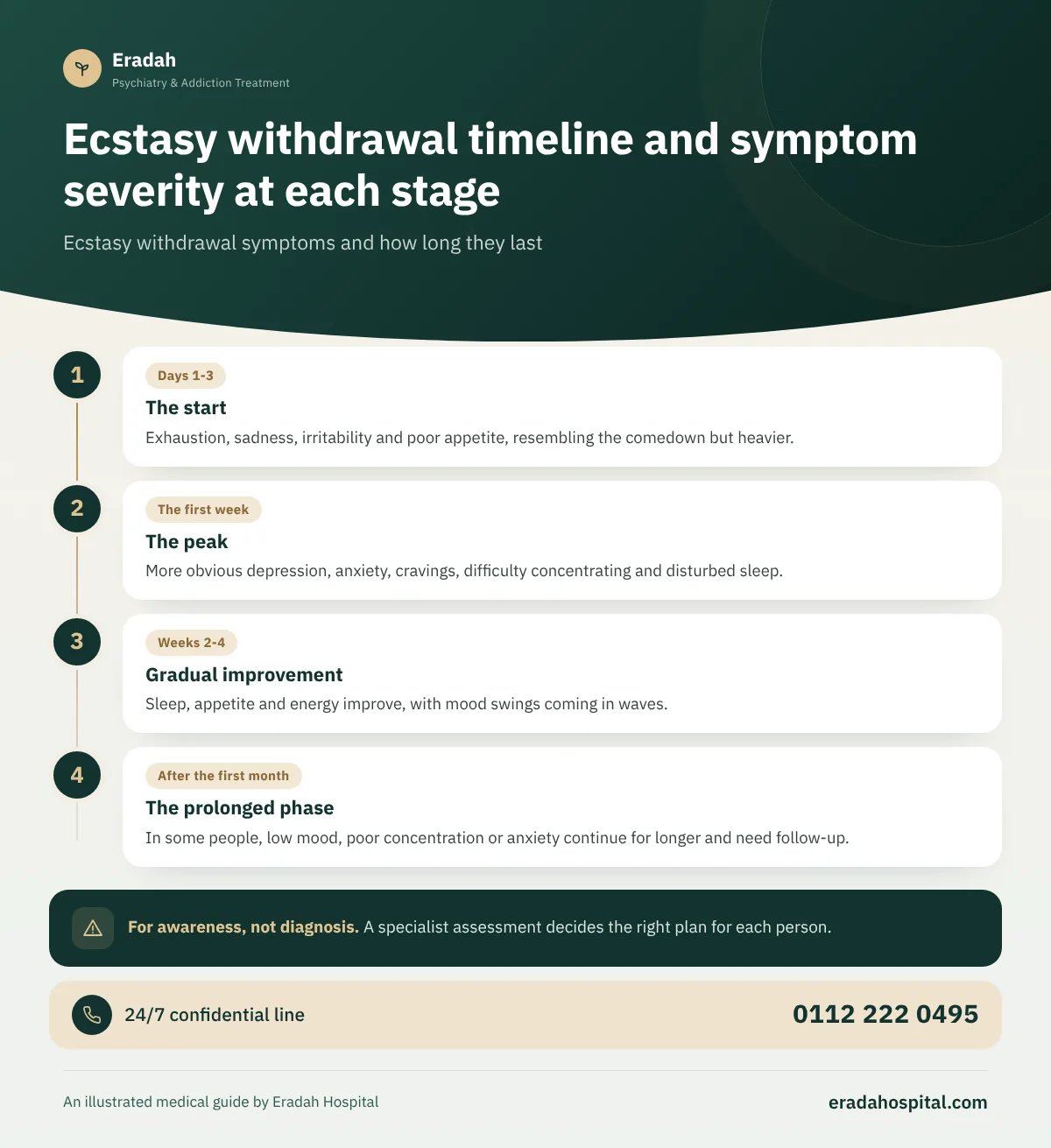
Durations are approximate and are affected by how long and how often the drug was used, the presence of other substances, or a prior psychiatric disorder.
What determines the severity and length of withdrawal?
- Length and frequency of use: frequent use over a long period means longer withdrawal.
- Mixing with other substances: very common with ecstasy; if the person also uses alcohol or sedatives, their withdrawal may be physically dangerous and needs medical supervision.
- Counterfeit pills: the person may in fact be dependent on methamphetamine or cathinones without knowing it.
- Earlier depression or anxiety: makes withdrawal more severe, and may reveal a disorder that was there before the use.
- Support around the person: a supportive family and a healthy routine ease symptoms a great deal.
Prolonged symptoms: what comes after the first weeks?
After the acute symptoms improve, some people in recovery may notice lingering low mood, reduced enjoyment, difficulty concentrating, or the social anxiety that the drug used to mask. These symptoms do not mean failure; they are either an expected stage in which the brain regains its balance, or a sign of a psychiatric disorder that was present before the use and needs separate treatment.
This stage is one of the highest-risk periods for relapse, especially around occasions and parties. Regular psychological follow-up, physical activity, regulated sleep, and building new relationships and sources of pleasure that are not tied to use all help.
Myths about ecstasy withdrawal
| The myth | The truth |
|---|---|
| "There's no withdrawal at all" | Psychological withdrawal is real, and includes depression, exhaustion and cravings. |
| "Supplements restore serotonin quickly" | There is no evidence of that, and some may interact with psychiatric medication; consult the doctor before anything. |
| "The depression afterward always goes away on its own" | It usually improves, but severe or persistent depression needs treatment and should not be left to time. |
Is ecstasy withdrawal dangerous?
Physically, ecstasy withdrawal on its own is mostly not life-threatening. But its danger lies in two areas: depression, which can become severe in some people, and relapse, which can come after a period of abstinence with impulsive use or use mixed with other substances.
Why is stopping under specialist follow-up preferred?
Although withdrawal is mostly psychological, specialist follow-up helps in assessing and treating depression and anxiety, identifying any other substances that need medical withdrawal, and setting a relapse prevention plan from day one. There is no medication approved specifically for ecstasy withdrawal, but the doctor may treat the accompanying symptoms according to each case. The full plan is on the page about ecstasy addiction treatment.
What helps ease the symptoms?
There is no magic recipe, but these simple habits support the brain in regaining its balance, and are used alongside specialist follow-up, not instead of it: sleep at fixed times, regular balanced meals, sunlight and daily physical activity, contact with supportive people, and avoiding alcohol and other substances that make depression worse. Keeping a short mood diary also helps the person and the doctor see gradual improvement.
How can the family support someone going through ecstasy withdrawal?
- Treat sadness and irritability as part of the symptoms, not as a personal insult.
- Encourage a simple daily routine: regular sleep, meals, and walking or light exercise.
- Help him stay away from parties and friends who use during the first weeks.
- Pay attention to any talk of hopelessness or self-harm, and always take it seriously.
- Don't leave cash around that makes going back to use easy during this period.
- Encourage follow-up with a psychiatrist, and share the appointments if possible.