Short-term harms of ecstasy
These harms appear within the hours of use itself, and can happen from the very first time:
- Jaw clenching, teeth grinding and muscle stiffness.
- Nausea, heavy sweating, tremor and blurred vision.
- A racing heartbeat and raised blood pressure.
- A rise in body temperature, especially when dancing in a crowded, hot place.
- Anxiety, panic or confusion in some people instead of the expected euphoria.
- Impaired judgment, which raises the risk of accidents and unsafe sexual encounters.
Why does ecstasy raise body temperature to a dangerous level?
Ecstasy increases the activity of the sympathetic nervous system, so the body produces more heat and is less able to get rid of it, and the sense of tiredness and thirst is dulled. When this combines with continuous dancing in a hot, crowded place, temperature can rise to levels resembling heatstroke.
A severe rise in temperature is far more dangerous than feeling hot; it can lead to muscle breakdown and release of muscle contents into the blood, then kidney failure, blood clotting disorders, seizures and multi-organ failure. It is one of the best-known causes of ecstasy-related deaths.
Low sodium: when water becomes dangerous
Ecstasy raises the antidiuretic hormone, so the body holds on to water and urinates less. If a person drinks large amounts of water out of fear of dehydration, the sodium concentration in the blood falls sharply, and water moves into brain cells and makes them swell.
Medical references indicate that women are more prone to this complication. The bottom line is that both dehydration and drinking too much water are dangerous, and there is no "safe" way to use a drug that disturbs the body's balance of water and salts.
Serotonin syndrome and the danger of mixing with medications
When serotonin rises more than it should, serotonin syndrome occurs: agitation and confusion, a rise in temperature, tremor and muscle spasms, sweating, and disturbed pulse and blood pressure. The risk rises greatly when ecstasy is combined with medications that raise serotonin:
| The mix | The main risk |
|---|---|
| Ecstasy + antidepressants | Serotonin syndrome that can be fatal, especially with the monoamine oxidase inhibitor class, and also with serotonin reuptake inhibitors. |
| Ecstasy + alcohol | Worse dehydration, poorer judgment, and an extra burden on the liver. |
| Ecstasy + other stimulants | Doubled strain on the heart and a greater rise in temperature and blood pressure. |
| A counterfeit pill with an unknown substance | Sudden poisoning from a substance the person never meant to take at all. |
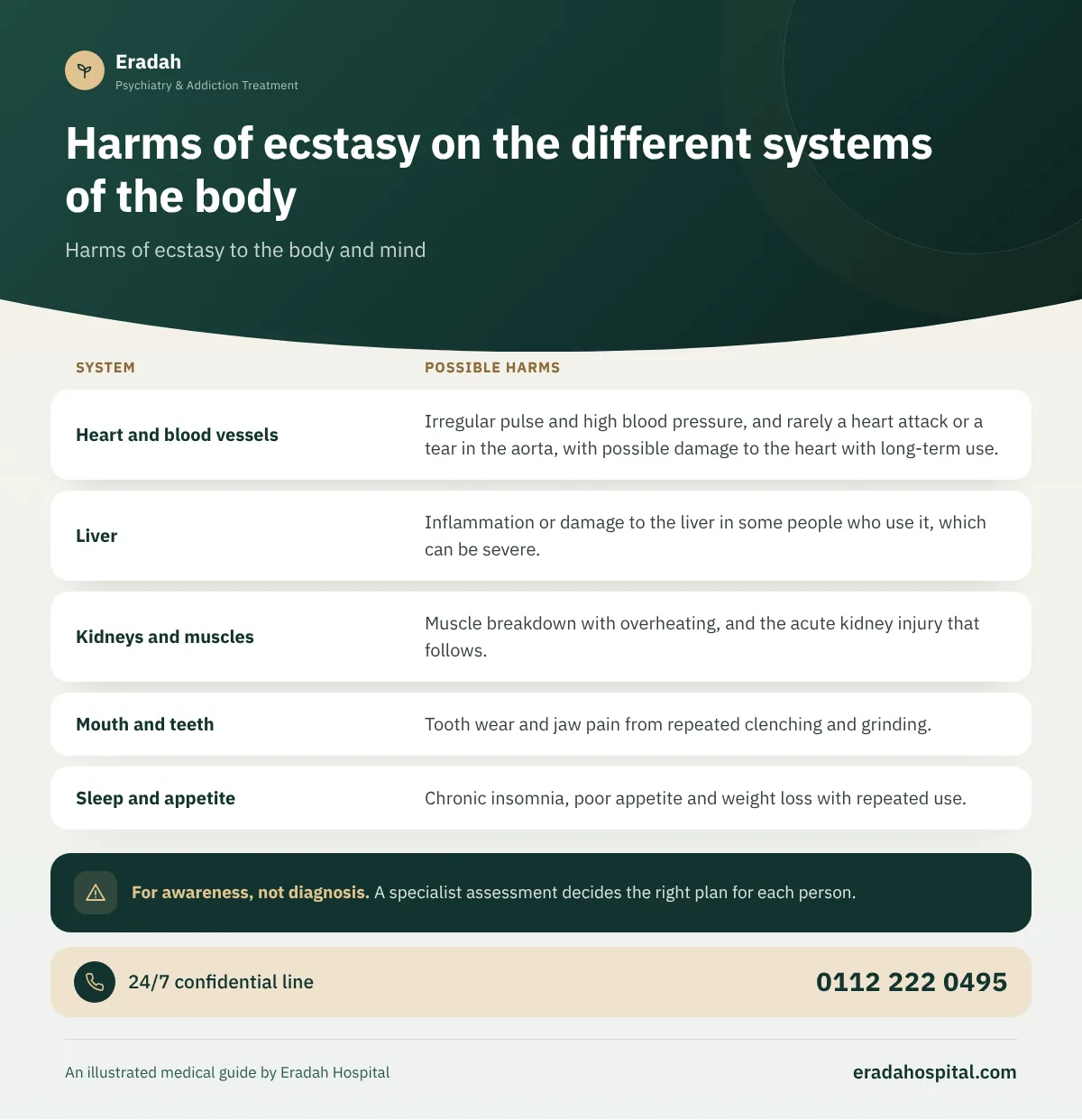
Long-term harms of ecstasy to the body
| System | Possible harms |
|---|---|
| Heart and blood vessels | Irregular pulse and high blood pressure, and rarely a heart attack or a tear in the aorta, with possible damage to the heart with long-term use. |
| Liver | Inflammation or damage to the liver in some people who use it, which can be severe. |
| Kidneys and muscles | Muscle breakdown with overheating, and the acute kidney injury that follows. |
| Mouth and teeth | Tooth wear and jaw pain from repeated clenching and grinding. |
| Sleep and appetite | Chronic insomnia, poor appetite and weight loss with repeated use. |
Harms of ecstasy on the brain and memory
Animal studies have shown that MDMA may damage the ends of nerve cells that release serotonin, and how far this applies to humans has not yet been settled. But studies of repeated users link ecstasy to clear problems:
Weakness in verbal memory and concentration, which may last for a while after stopping.
Depression, anxiety and mood swings, and marked sadness in the days after each use.
Disturbed sleep, with trouble falling asleep and waking up tired.
Psychological harms of ecstasy
After the effect ends, serotonin stores drop, so many users go through days of sadness, anxiety and irritability, known as the comedown. With repeated use this can turn into persistent depression, panic attacks, or suspicion and paranoia. Ecstasy can also trigger psychotic episodes in people predisposed to them. If thoughts of self-harm appear at any stage, seek medical help immediately.
Who is most vulnerable to the harms of ecstasy?
- Teenagers and young adults: because the brain is still developing, and because they are the most frequent party-goers.
- People with heart disease or high blood pressure: because the drug sharply raises pulse and blood pressure.
- People taking antidepressants or psychiatric medication: because of the risk of serotonin syndrome.
- People with a personal or family history of psychiatric disorders: because of the risk of depression and psychosis.
- Pregnant women: because the drug's effect on the fetus is not safe, and any use during pregnancy needs urgent medical follow-up.
The danger of counterfeit pills
There is no oversight of what is sold as ecstasy, so a pill may contain stronger stimulants, synthetic cathinones, ketamine, or highly toxic substances such as PMMA, whose effect is delayed, so the person thinks the pill is "weak" and takes another, and the toxicity builds up. Fentanyl has also been detected in some samples, which adds the danger of stopped breathing to the known risks of ecstasy.
Do the harms of ecstasy go away after stopping?
For most people, sleep, mood and appetite improve gradually after stopping, and some studies indicate partial improvement in memory function with long abstinence. Acute complications, however, such as kidney or liver damage or brain injury from overheating or swelling, may leave lasting effects. That is why stopping early, and psychological treatment of accompanying depression and anxiety, make a big difference.
Emergency signs with ecstasy: call an ambulance (123) immediately
- Very high body temperature with extremely hot skin, or sweating that stops despite the heat
- Confusion, severe agitation, frightening hallucinations or loss of awareness of where they are
- Seizures, loss of consciousness or sudden collapse
- Severe headache with repeated vomiting and confusion, especially after drinking large amounts of water
- Very rapid heartbeat, chest pain or stiff muscles
Call an ambulance at 123 immediately, move the person to a cool, well-ventilated place, loosen their clothing and cool their body with a damp cloth, and do not force them to drink large amounts of water. If they lose consciousness but are breathing, place them on their side in the recovery position, stay with them, and tell the paramedics everything they took.
Call the ambulance 123
20Social harms