Physical signs of flakka use
These signs appear during the hours of the drug's effect, which begins about ten minutes after use and lasts two to three hours, according to a scientific review published in 2020. Because the effect is short, many people repeat use, so the signs stretch over longer hours.
- Clearly dilated pupils.
- Rapid heartbeat and palpitations.
- Heavy sweating and hot skin.
- Tremor or muscle twitching.
- Staying awake for hours or days and eating little.
- Dry mouth and thirst.
Signs of flakka use that families notice
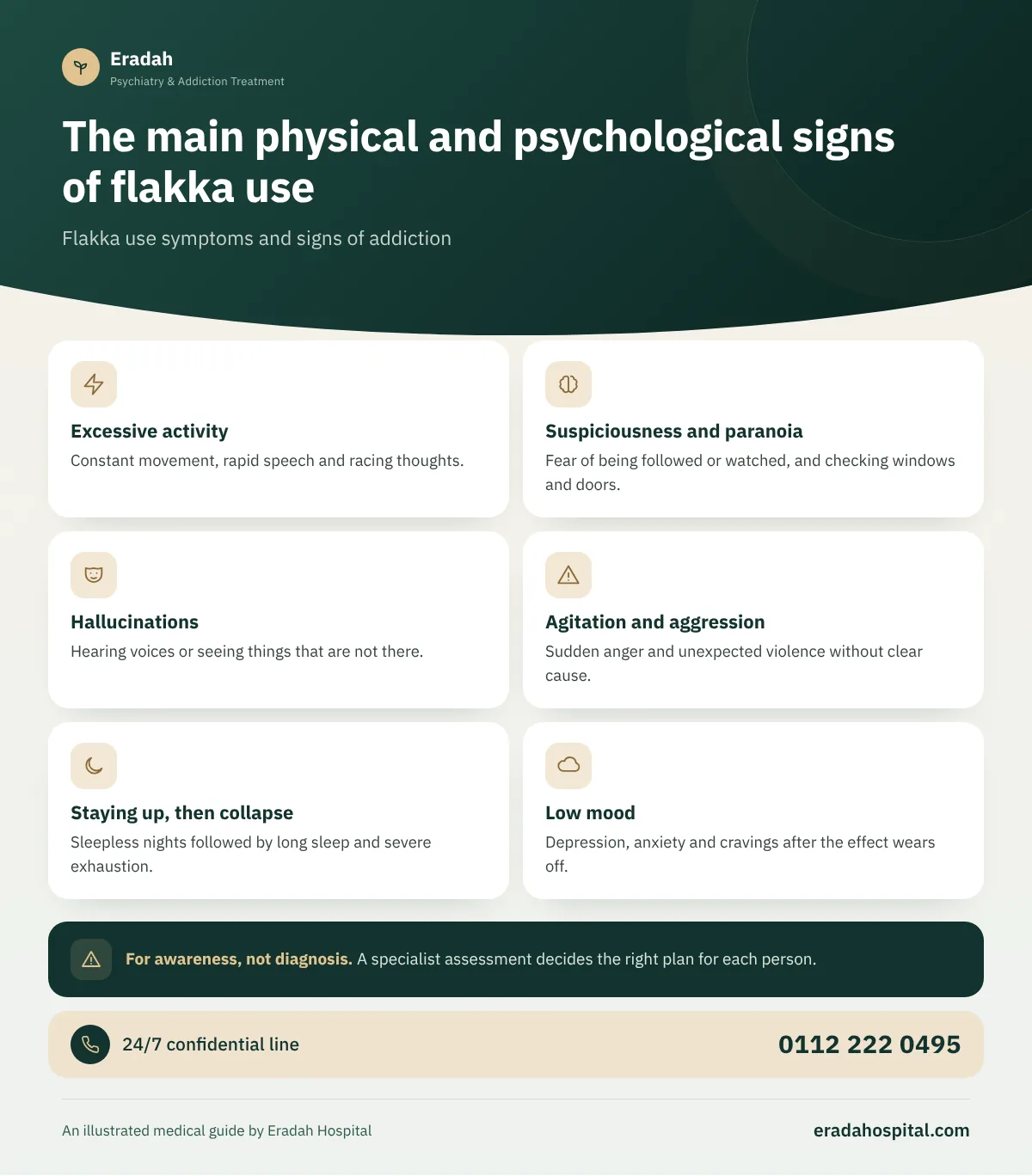
Constant movement, rapid speech and racing thoughts.
Fear of being followed or watched, and checking windows and doors.
Hearing voices or seeing things that are not there.
Sudden anger and unexpected violence without clear cause.
Sleepless nights followed by long sleep and severe exhaustion.
Depression, anxiety and cravings after the effect wears off.
Behavioral signs
- Being away for hours or days and coming back drained.
- Asking for money often or selling personal belongings.
- New friends and extra secrecy around the phone and the room.
- Small bags with crystals or powder, smoking equipment, or vape devices of unknown contents.
- A sudden decline in school or work.
The pattern of use and crashing
Because the effect of flakka is short and strong, people who use it tend to repeat use in a single session over hours, then comes the “crash”: severe exhaustion, long sleep, depression, anxiety and a strong craving for the substance. This resembles what the US National Institute on Drug Abuse describes for stimulant withdrawal: depression, anxiety, irritability, sleep disturbance, cravings and difficulty concentrating. The repetition of this cycle is among the clearest signs that use has become addiction.
Psychological signs: when to worry
A pooled analysis published in 2024 found that about 38% of people exposed to synthetic cathinones developed psychotic symptoms. So the following signs deserve urgent psychiatric assessment even if the person has calmed down:
- Fixed suspicions that someone is following or wants to harm them.
- Hearing voices or seeing things others do not see.
- Disorganized speech or strange behavior that continues after the effect wears off.
- Talk of self-harm or suicide; in this case call the mental health support line (16328) or the ambulance (123).
When does flakka use become addiction?
The US National Institute on Drug Abuse explains that a person who regularly uses synthetic cathinones may develop stimulant use disorder, diagnosed by criteria over a year, including:
- Using larger amounts or for longer than intended.
- A wish to cut down or unsuccessful attempts to do so.
- Strong, persistent cravings to use.
- Neglecting school, work or home because of it.
- Continuing despite clear psychological or physical problems.
- Tolerance, and withdrawal symptoms when stopping.
| Number of criteria | Level |
|---|---|
| 2 to 3 | Mild |
| 4 to 5 | Moderate |
| 6 or more | Severe |
Signs of flakka use in teenagers
The 2020 review reports that about 0.8% of twelfth-grade students in US high schools used flakka in the previous year, according to 2016 and 2017 estimates. More dangerous in teenagers, they may be exposed to it without knowing, in pills or powders sold under another name; a study of hair samples from young party-goers found these substances in many who denied using them. So if your son comes home from a party unusually agitated or paranoid, do not assume he knows what he took.
How do you tell flakka use from other substances?
| Substance | What usually distinguishes it |
|---|---|
| Flakka | Severe agitation, heat and sweating, a short effect that is repeated, and usually not detected on a rapid test. |
| Crystal meth (shabu) | Staying awake for days and weight loss; shows up in amphetamine tests. |
| Cocaine | Shorter effect, and shows up in most basic tests. |
| Synthetic cannabis | Seizures, catatonia or sudden loss of consciousness, with a smell of herbs. |
Precise differentiation is the doctor's job and often needs a specialized confirmatory test, as we explain in how long flakka stays in the body.
What should you do if you notice these symptoms?
- First make sure he is safe and so are you; call the ambulance at any sign of danger.
- Do not discuss it while he is agitated or paranoid; wait until he is completely calm.
- Note what you observe calmly, without aggressive searching.
- Ask for a psychiatric assessment if suspicions or hallucinations appear, even after the effect wears off.
- Offer help with a clear step, such as a confidential consultation; you can find the stages of treatment in flakka addiction treatment.
Danger signs after flakka use: call an ambulance (123) immediately
- Severe agitation with a high temperature and heavy sweating, or hot skin
- Seizures or loss of consciousness
- Chest pain, or a very fast or irregular pulse
- Delirium and detachment from reality, with violence or no sensation of pain
- Talk of suicide or an attempt to harm themselves
Call an ambulance at 123 immediately, keep sharp objects and other people away from the person, speak calmly, and do not try to restrain them by force or press on their chest or back. Reduce noise and lighting and try to cool the room. If they lose consciousness but are breathing, place them on their side, stay close, and tell the paramedics everything you know about what they took.
Call the ambulance 123