Short-term harms of heroin
These harms appear within minutes to hours of use, and a person can experience them even the first few times:
- Slowed breathing and a slow heartbeat, which can go as far as breathing stopping.
- Severe drowsiness, confused thinking and slowed movement for hours.
- Nausea and vomiting, with a risk of choking on vomit while unconscious.
- Intense itching of the skin, dry mouth and a heavy feeling in the limbs.
- Impaired decision-making, which raises the risk of accidents.
Long-term harms of heroin on the body
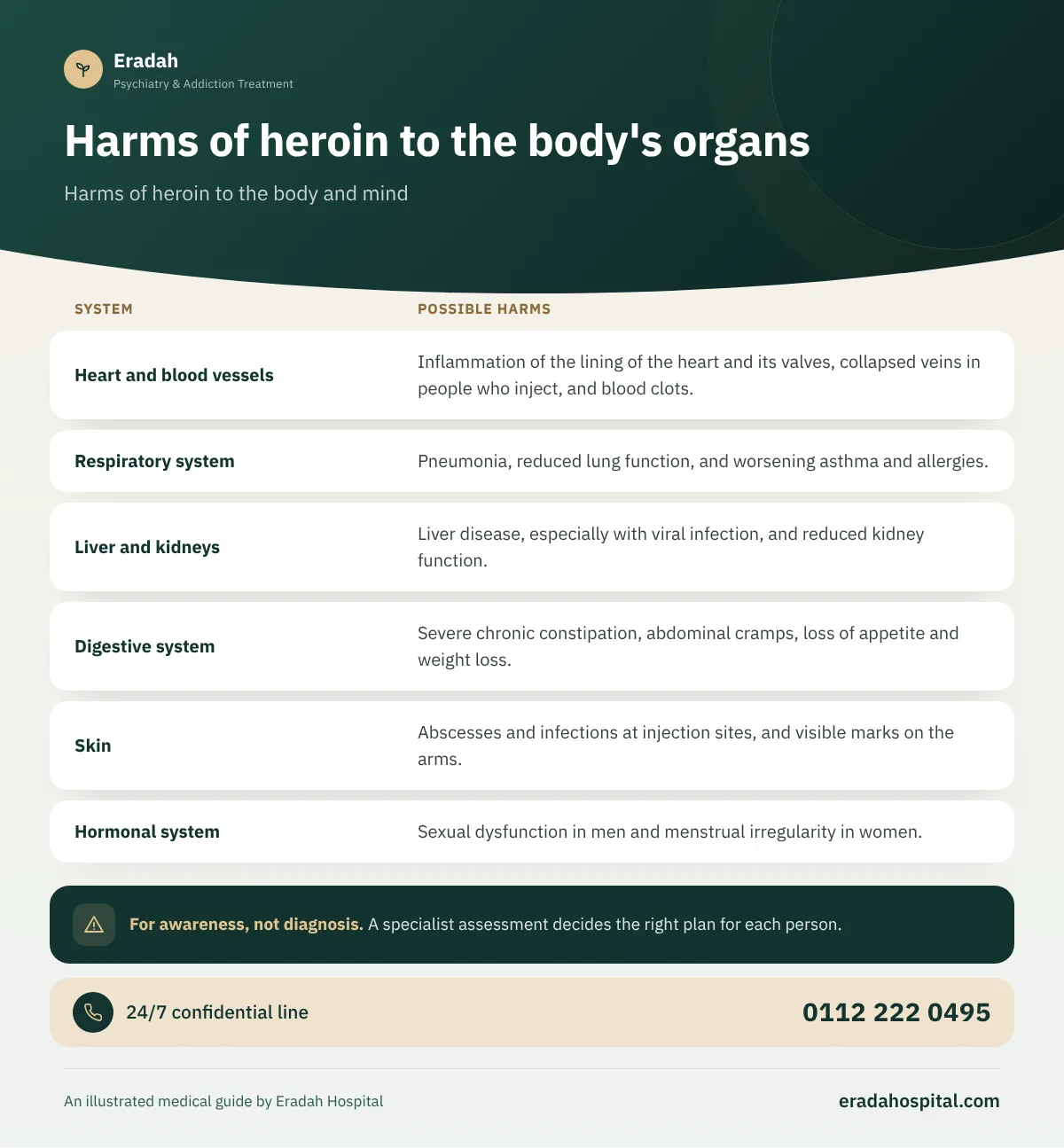
With repeated use over weeks and months, the harm builds up across the body's systems:
| System | Possible harms |
|---|---|
| Heart and blood vessels | Inflammation of the lining of the heart and its valves, collapsed veins in people who inject, and blood clots. |
| Respiratory system | Pneumonia, reduced lung function, and worsening asthma and allergies. |
| Liver and kidneys | Liver disease, especially with viral infection, and reduced kidney function. |
| Digestive system | Severe chronic constipation, abdominal cramps, loss of appetite and weight loss. |
| Skin | Abscesses and infections at injection sites, and visible marks on the arms. |
| Hormonal system | Sexual dysfunction in men and menstrual irregularity in women. |
Harms of heroin to the brain and mental health
Over time, heroin changes the structure and function of the brain, and research indicates that the white matter is affected in areas responsible for decision-making, regulating behavior and responding to stress. This shows up as:
Poor concentration and memory, slowed thinking, and difficulty planning and controlling impulses.
Depression, anxiety and sharp mood swings, and loss of enjoyment in ordinary things.
Insomnia and severe disruption of the sleep cycle, especially between doses.
These harms get worse if the person already has a mental health condition, which is known as dual diagnosis and needs treatment that addresses both conditions together.
How does a lack of oxygen harm the brain and body?
When heroin suppresses the breathing centers in the brain, less oxygen reaches the brain and the other organs, a condition called hypoxia. This can happen without ending in death, but it may leave lasting effects:
- The brain: Lack of oxygen can cause a coma or permanent damage to brain cells, affecting memory, concentration and movement.
- The lungs: Fluid can collect in the lungs, or pneumonia can develop from inhaling vomit while unconscious.
- Muscles and kidneys: Lying unconscious in one position for hours can damage muscle tissue, which strains the kidneys and can lead to sudden kidney failure.
Harms of mixing heroin with other substances
Many people who use heroin mix it with other substances, knowingly or not, and this is among the most dangerous things that can happen:
| The mix | The main risk |
|---|---|
| Heroin + sedatives | The suppression of breathing is multiplied, and this is one of the best-known causes of death from overdose. |
| Heroin + alcohol | Doubled suppression of breathing and consciousness, with a risk of choking on vomit. |
| Heroin + stimulants | Severe strain on the heart, and the stimulant masks the signs of suppressed breathing until its effect wears off. |
| Heroin laced with fentanyl | A sudden overdose from an amount the person believes is their usual dose. |
Harms of injecting and sharing equipment
Repeated injecting also causes collapsed veins and infections of the skin and tissues, and bacteria can reach the blood and heart, causing life-threatening infections.
Do the harms differ depending on how the drug enters the body?
Heroin reaches the brain in every case, so the risk of addiction and overdose is shared, but each route adds its own harms:
| Method | Additional harms |
|---|---|
| Injections | Viral infections, collapsed veins, abscesses, and infections of the heart and blood. |
| Snorting through the nose | Damage to the lining of the nose, repeated nosebleeds and sinus infections. |
| Inhaling vapors | Lung irritation, chronic cough and worsening asthma, and rarely, serious damage to the brain's white matter. |
The bottom line is that there is no "less harmful" route; the difference is in the type of harm, not in whether it exists.
Harms of heroin during pregnancy and to the baby
Use during pregnancy raises the risk of miscarriage, premature birth and low birth weight. The baby may be born with neonatal withdrawal syndrome, because its body became used to the drug in the womb. Stopping suddenly during pregnancy without medical supervision is not recommended, because withdrawal itself can harm the baby; the best course is to see a specialist doctor right away, who will set up a safe plan for mother and baby.
Harms of heroin in men and women
Heroin affects the sex and reproductive hormones, so different harms appear in each sex:
Lower testosterone, reduced desire and erections, and disrupted sperm production.
Irregular or absent periods, reduced fertility, and pregnancy complications.
These disturbances often improve gradually after stopping and starting treatment, with medical follow-up when needed.
Harms of heroin in teenagers
The brain continues to develop until roughly the mid-twenties, especially the regions responsible for planning and impulse control. This is why use in adolescence raises the risk of addiction and speeds up its onset, affects school performance and psychological and social development, and increases the likelihood of mental health conditions later. Early intervention at this stage makes a big difference to the chances of recovery.
How do the harms show up in daily life?
The harms of heroin do not appear all at once; they creep in gradually. It starts with waking up late and a slight drop in performance, then repeated absences, then debts and lying, then almost complete isolation in which the whole day revolves around getting the drug and avoiding withdrawal. Families often notice these changes before the person using admits them.
Do the harms of heroin go away after stopping?
Many of the harms improve gradually after stopping and starting treatment: sleep, appetite and digestive function return, and mood and concentration improve over months. Some harms, however, such as chronic viral infections or damaged heart valves, need separate treatment and follow-up. The earlier treatment begins, the greater the chance of full recovery.
Signs of a heroin overdose: call ambulance (123) immediately
- Pupils that are extremely small, like pinpoints
- Very slow, irregular or stopped breathing
- Blue lips and fingernails
- Loss of consciousness, with no response to calling or touch
- Gurgling or unusual snoring sounds
Call ambulance (123), place the person on their side so they do not choke, and stay with them until help arrives. The drug naloxone reverses the effect of an overdose if given in time, and it is available in emergency departments.
Call the ambulance 123
25Social and financial harms