What does heroin do to sexual life?
"From the first year, my desire shut off for everything, and my wife thinks I'm cheating on her." Many patients with heroin addiction say something like this, because the sexual effect often comes before the family knows about the drug use, so it gets explained by everything except the real cause.
Heroin, or "powder" as it is called on the street, is a powerful opioid explained in the heroin guide. Unlike the stimulants that people who use them wrongly believe are "enhancing," heroin has no sexual reputation; it sedates and numbs everything, desire included. But the question about heroin and sex comes up often for two reasons: a wife looking for an explanation for her husband's coldness, and a person in recovery asking whether life will go back to normal.
The section on the harms of heroin briefly covers its effect on men and women; here we explain the mechanism, the numbers, and what happens during and after treatment.
How does heroin lower testosterone?
Opioids suppress the release of gonadotropin-releasing hormone in the brain, so the testicles are stimulated less and produce less testosterone. This is called opioid-induced androgen deficiency. According to a review published in 2025 in the journal Andrology, the rate of this condition among men who use opioids long term ranges from 20% to 80%, depending on the type of opioid, the length of exposure, age and how deficiency is defined.
The official opioid labels from the US Food and Drug Administration, such as the tramadol label, describe this deficiency as one that may appear as reduced desire, impotence, erectile dysfunction, absent periods and infertility, while noting that the causal role of opioids has not been fully settled because many factors affect hormones.
What do the numbers say about heroin and sex?
A review published in the Indian Journal of Psychiatry in 2014 pooled the studies on sexual dysfunction among people with alcohol and opioid addiction, and found that among people with heroin addiction it ranged from 34% to 85% across different studies. The most common problems in men were erectile dysfunction, then premature or delayed ejaculation and low desire, and in women, pain during intercourse and dryness.
In an older but foundational study published in the New England Journal of Medicine in 1975, researchers measured reproductive function in people addicted to heroin, methadone patients and people who did not use drugs. Sperm motility in the heroin group was clearly weaker than in the control group, and the methadone group's measurements fell between the two groups.
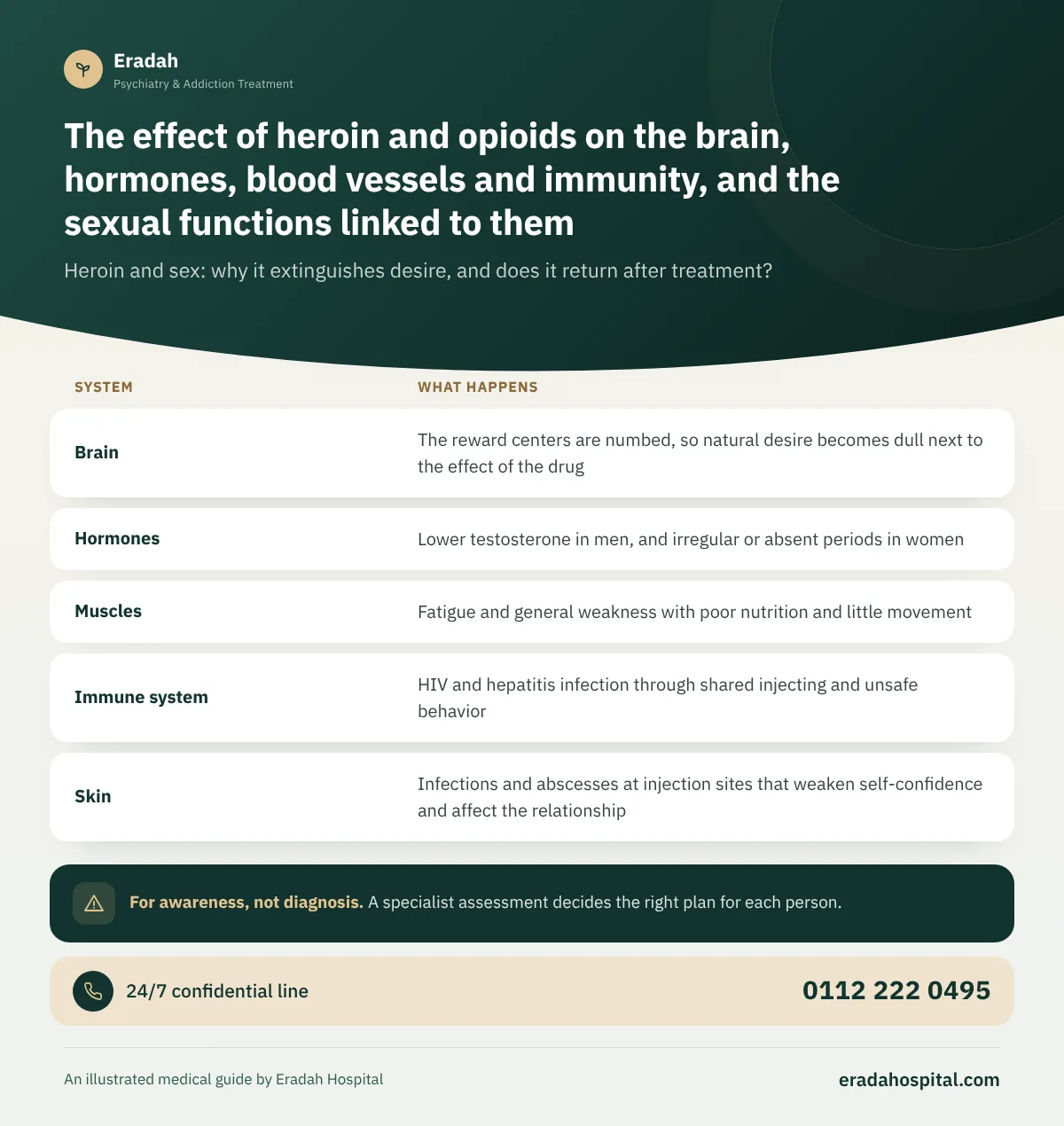
The effect of heroin on the body systems linked to sex
| System | What happens |
|---|---|
| Brain | The reward centers are numbed, so natural desire becomes dull next to the effect of the drug |
| Hormones | Lower testosterone in men, and irregular or absent periods in women |
| Muscles | Fatigue and general weakness with poor nutrition and little movement |
| Immune system | HIV and hepatitis infection through shared injecting and unsafe behavior |
| Skin | Infections and abscesses at injection sites that weaken self-confidence and affect the relationship |
Heroin and sex in women
Women are affected by the same hormonal mechanism, so periods become irregular or stop. Some people assume that absent periods mean pregnancy is impossible, and this is a dangerous mistake; pregnancy is possible, and heroin during pregnancy carries risks for both mother and baby. Any woman who uses heroin and is thinking about pregnancy or suspects she is pregnant needs medical follow-up immediately, and should not suddenly stop using on her own during pregnancy without supervision. The page on addiction treatment for women explains the options available.
The risk of infection
The US National Institute on Drug Abuse (NIDA) explains that heroin raises the risk of HIV and hepatitis B and C in two ways: sharing needles and injection equipment, and unsafe sexual behavior, which increases when judgment is impaired. This means a partner may be exposed to infection without knowing, so both the person using and their partner are advised to have the necessary tests, and early treatment protects both.
What about opioid treatment medications?
Methadone and buprenorphine are used to treat opioid addiction in many countries, and they are regulated opioids that can also cause sexual effects. In a pooled analysis published in 2014 that included 1,570 participants from 16 studies, the rate of sexual dysfunction among methadone patients was about 52%, and it was higher with methadone than with buprenorphine in the few studies that compared them.
Does sexual life come back after quitting heroin?
In many cases yes, but gradually. The first weeks after stopping can bring disturbed sleep, mood and energy, as the page on heroin withdrawal symptoms explains, and then hormones and desire begin to improve over time. If weakness persists, the doctor may order hormone tests, and the Andrology review notes that hormone therapy may be considered for people with a clear deficiency after careful evaluation.
Many couples need family therapy sessions, because years of drug use leave a wound in trust that the return of hormones alone does not heal. The page on heroin addiction treatment sets out the stages of treatment, and at Eradah the first consultation is free and confidential.
Danger signs after heroin use: call the ambulance (123) immediately
- No response to calling their name or shaking.
- Breathing very slow, irregular, or unusual snoring.
- Blue lips or fingernails.
- Pupils extremely small, like pinpoints.
Call ambulance (123) immediately. If the person is unconscious but breathing, place them on their side so they do not choke on vomit. Stay with them and do not leave them alone. Do not give them food or drink, and tell the paramedics everything they took or used, and the amount and time if you know them.
Call the ambulance 123