Short-term harms of lorazepam
The harms of lorazepam usually begin with its intended effect: the drug that calms anxiety also calms attention, memory, and reflexes.
The UK's National Health Service says its most common effect is drowsiness during the day, and MedlinePlus adds dizziness, weakness, and unsteadiness. For this reason, driving or operating machinery is not advised if the person feels sleepy, has blurred vision, or has poor concentration.
- Daytime drowsiness and slowed reflexes.
- Dizziness and unsteadiness.
- Forgetting what happens after taking it.
- Poor concentration and thinking.
Long-term harms of lorazepam
With daily use over weeks or months, the brain adapts to the drug, so its effect weakens and the person needs more, and physical dependence develops that makes stopping hard. Professor Ashton's manual states that psychological and physical dependence on benzodiazepines can develop within weeks or months of regular use, and that tolerance to the sleep-inducing effect develops faster than tolerance to the anti-anxiety effect. Impaired concentration and memory may continue throughout long-term use.
Why is mixing lorazepam with opioids or alcohol dangerous?
The first item in the boxed warning of the Ativan label states that combining benzodiazepines with opioids may cause profound sedation, respiratory depression, coma, and death. Lorazepam, opioids such as tramadol, and alcohol all suppress the respiratory centers, and combining them multiplies the effect. The label notes that overdose deaths are more often linked to multiple substances.
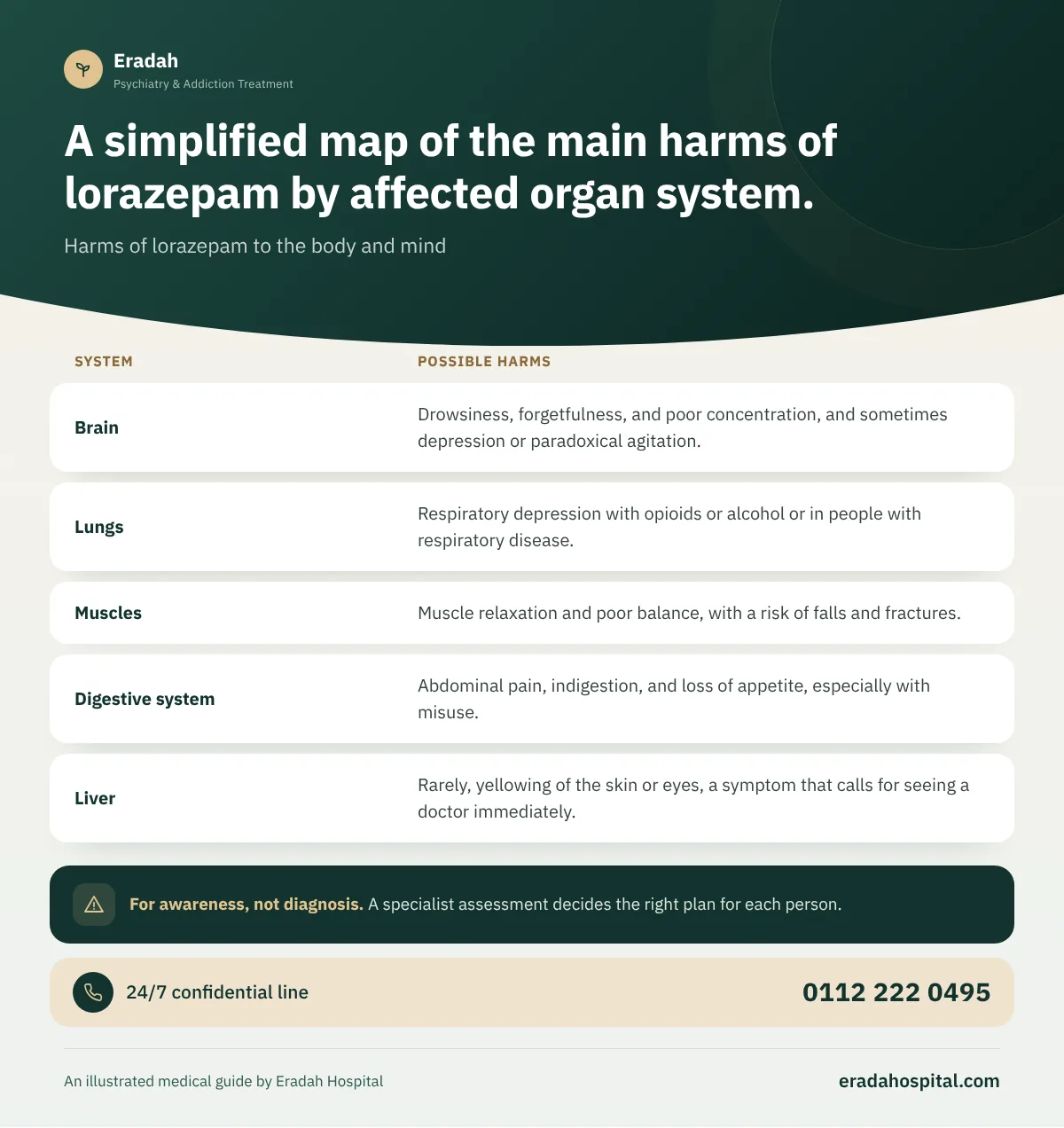
Lorazepam harms to the body's organ systems
| System | Possible harms |
|---|---|
| Brain | Drowsiness, forgetfulness, and poor concentration, and sometimes depression or paradoxical agitation. |
| Lungs | Respiratory depression with opioids or alcohol or in people with respiratory disease. |
| Muscles | Muscle relaxation and poor balance, with a risk of falls and fractures. |
| Digestive system | Abdominal pain, indigestion, and loss of appetite, especially with misuse. |
| Liver | Rarely, yellowing of the skin or eyes, a symptom that calls for seeing a doctor immediately. |
Psychological and behavioral harms
The drug label lists effects seen with misuse of benzodiazepines, including memory loss, anxiety, aggression, confusion, depression, reduced inhibitions, and slurred speech, and in severe cases delirium and pathological suspicion. It may worsen depression in some patients, which is why people with depression need close monitoring. Rarely, the drug causes the opposite of what is expected: irritability and agitation instead of calm.
Why is lorazepam more dangerous for older adults?
The drug label states that drowsiness and unsteadiness increase with age, and although age does not change much how the body clears it, some older adults are more sensitive to sedation, which is why the doctor starts with a lower dose. The most serious result is falling at night and the fractures that may follow, along with confusion that can be mistaken for dementia.
Lorazepam in pregnancy and breastfeeding
According to its label, recent studies have not shown a clear link between benzodiazepines and major malformations, but use late in pregnancy may cause sedation in the newborn, withdrawal symptoms in the baby, or weak breathing. Lorazepam also passes into breast milk, and cases of drowsiness and poor feeding have been recorded in infants exposed to benzodiazepines. For this reason any decision in pregnancy or breastfeeding is made with the doctor, with no sudden stopping.
Do lorazepam harms go away after stopping?
Many improve gradually after safe discontinuation: concentration and memory return, and drowsiness eases. But some people go through prolonged withdrawal symptoms that may last for months, which the page on lorazepam withdrawal symptoms explains. The safe plan for stopping is on the page on lorazepam addiction treatment.
Danger signs after taking lorazepam: call an ambulance (123) immediately
- Extreme drowsiness from which the person cannot be roused, or a coma.
- Slow or weak breathing, or blue lips.
- Severe confusion, unintelligible speech, or unsteadiness so bad that they cannot stand.
- Taking it with an opioid painkiller, alcohol, or another sedative.
- A seizure or hallucinations after suddenly stopping it.
Call ambulance (123) immediately and do not wait for them to “sleep it off.” If the person is unconscious but breathing, place them on their side in the recovery position, stay with them and watch their breathing until the paramedics arrive, and do not give them any sedative, stimulant or food. Tell the paramedics what they took, the approximate amount and the time, bring the medicine box if you find it, and tell them if the person also drank alcohol or took an opioid painkiller.
Call the ambulance 123