Physical signs of lorazepam use
The symptoms of lorazepam addiction often hide behind a “prescription,” so the family sees it as part of treatment until the signs pile up.
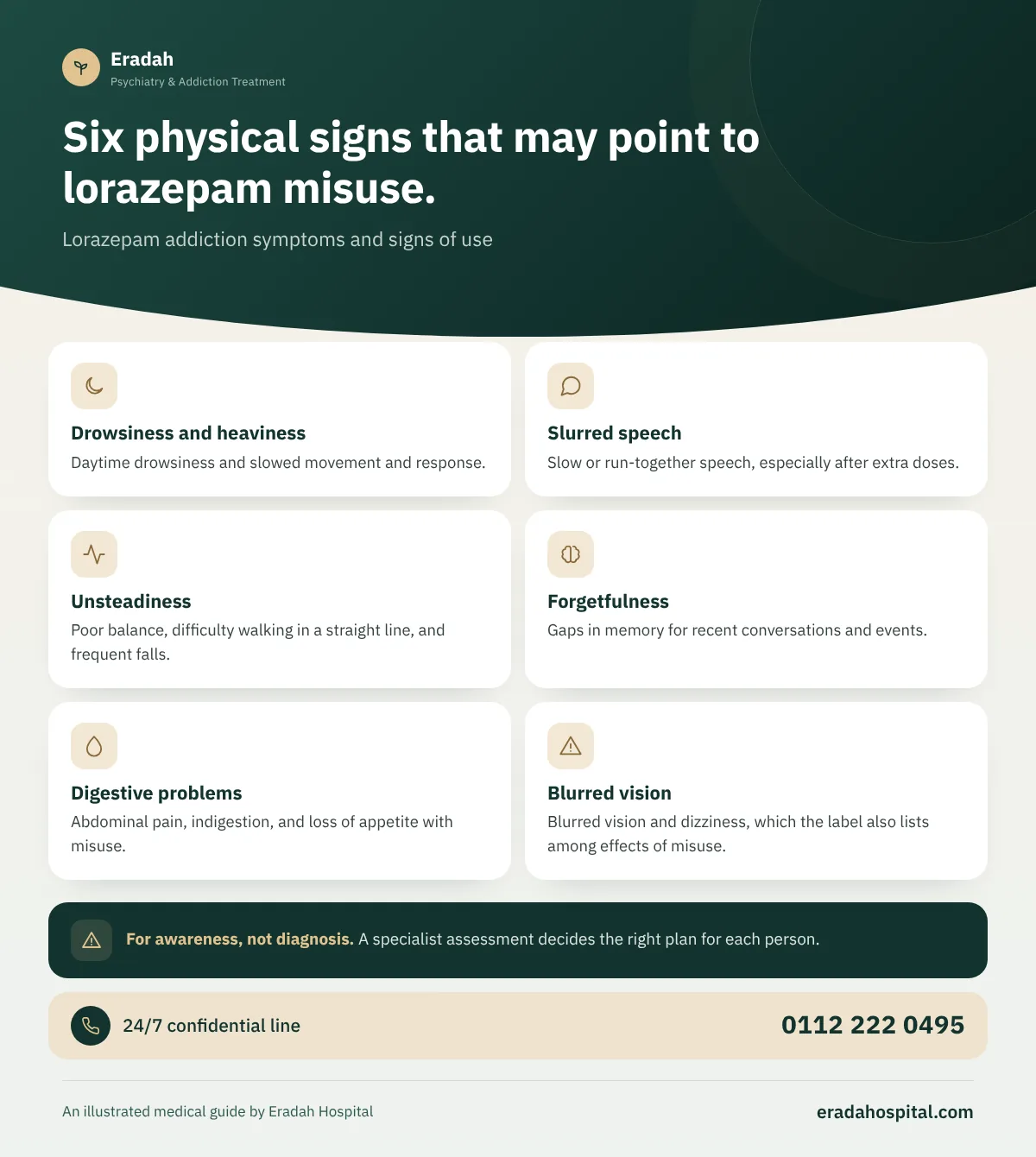
Daytime drowsiness and slowed movement and response.
Slow or run-together speech, especially after extra doses.
Poor balance, difficulty walking in a straight line, and frequent falls.
Gaps in memory for recent conversations and events.
Abdominal pain, indigestion, and loss of appetite with misuse.
Blurred vision and dizziness, which the label also lists among effects of misuse.
Behavioral signs
- Running out of tablets before the next prescription is due.
- Moving between doctors or pharmacies to get extra prescriptions.
- Taking it with alcohol or painkillers.
- Taking it “just in case” before any situation causing mild tension.
- Neglecting work, family, or obligations.
- Anger at any talk of reducing it.
Psychological signs
- Anxiety stronger than the original, appearing between doses and settling after them.
- Irritability, mood swings, and sometimes aggression.
- Depression or social withdrawal.
- Constant preoccupation with getting hold of the medication.
Professor Ashton's manual explains that users of short- and intermediate-acting benzodiazepines may go through something like a “mini-withdrawal” and a craving for the drug between doses, which explains why some seem anxious even while using it.
How is lorazepam addiction diagnosed?
The Ativan label describes addiction as a group of phenomena that may include a strong desire for the drug, difficulty controlling its use, continued use despite harm, and giving it priority over activities and obligations, with possible tolerance and physical dependence. The psychiatrist assesses this through:
- An interview about the actual dose, length of use, and source of the drug.
- Questions about alcohol, opioids, and other substances.
- Assessment of the anxiety, panic, or insomnia the drug was started for.
- Asking the family, with the patient's consent.
Dependence on a prescribed drug or addiction?
Someone who takes lorazepam regularly for months may develop physical dependence even while following the prescription fully, and withdrawal symptoms appear if they stop. This is treated with gradual reduction. Addiction shows in behavior: doses higher than prescribed, multiple sources, and use for non-medical purposes. The drug label stresses that use as prescribed may also expose some patients to the risk of misuse, so the doctor must assess this risk before prescribing and throughout treatment.
How do lorazepam signs differ from other substances?
| Substance | The clearest signs |
|---|---|
| Lorazepam and benzodiazepines | Calming, slurred speech, forgetfulness, and daytime use for anxiety. |
| Zolpidem | A shorter effect, and night-time behavior the person does not remember. |
| Tramadol | Pinpoint pupils and constipation, and sometimes activity instead of drowsiness. |
| Alcohol | A noticeable smell and redness with similar unsteadiness. |
Signs that are easy to confuse in older adults
In older adults the signs of lorazepam can look like symptoms of aging or dementia: forgetfulness, confusion, and falls. So any sudden decline in memory or balance in an older person taking a sedative deserves a medication review with the doctor before any other diagnosis is assumed.
How do you talk to someone you suspect is addicted to lorazepam?
- Choose a calm time when they are fully alert.
- Acknowledge that the anxiety they suffer from is real.
- Describe what you noticed with specific facts and no judgments.
- Suggest seeing a psychiatrist to set a safe plan instead of stopping suddenly.
- Use the guide on persuading a person with addiction to get treatment if you meet refusal.
When the picture becomes clear, the next step is a plan, which you will find on the page for lorazepam addiction treatment.
Danger signs after taking lorazepam: call an ambulance (123) immediately
- Extreme drowsiness from which the person cannot be roused, or a coma.
- Slow or weak breathing, or blue lips.
- Severe confusion, unintelligible speech, or unsteadiness so bad that they cannot stand.
- Taking it with an opioid painkiller, alcohol, or another sedative.
- A seizure or hallucinations after suddenly stopping it.
Call ambulance (123) immediately and do not wait for them to “sleep it off.” If the person is unconscious but breathing, place them on their side in the recovery position, stay with them and watch their breathing until the paramedics arrive, and do not give them any sedative, stimulant or food. Tell the paramedics what they took, the approximate amount and the time, bring the medicine box if you find it, and tell them if the person also drank alcohol or took an opioid painkiller.
Call the ambulance 123