Why is ADHD not a minor problem?
Some people treat the disorder as “mischief” that will pass with time, but research shows that untreated symptoms have a cumulative effect on many areas of life.
The US National Institute of Mental Health notes that children with ADHD are more likely to have injuries and social and academic difficulties, and that teenagers and adults are more likely to use substances, take risks, and have problems at work and with money.
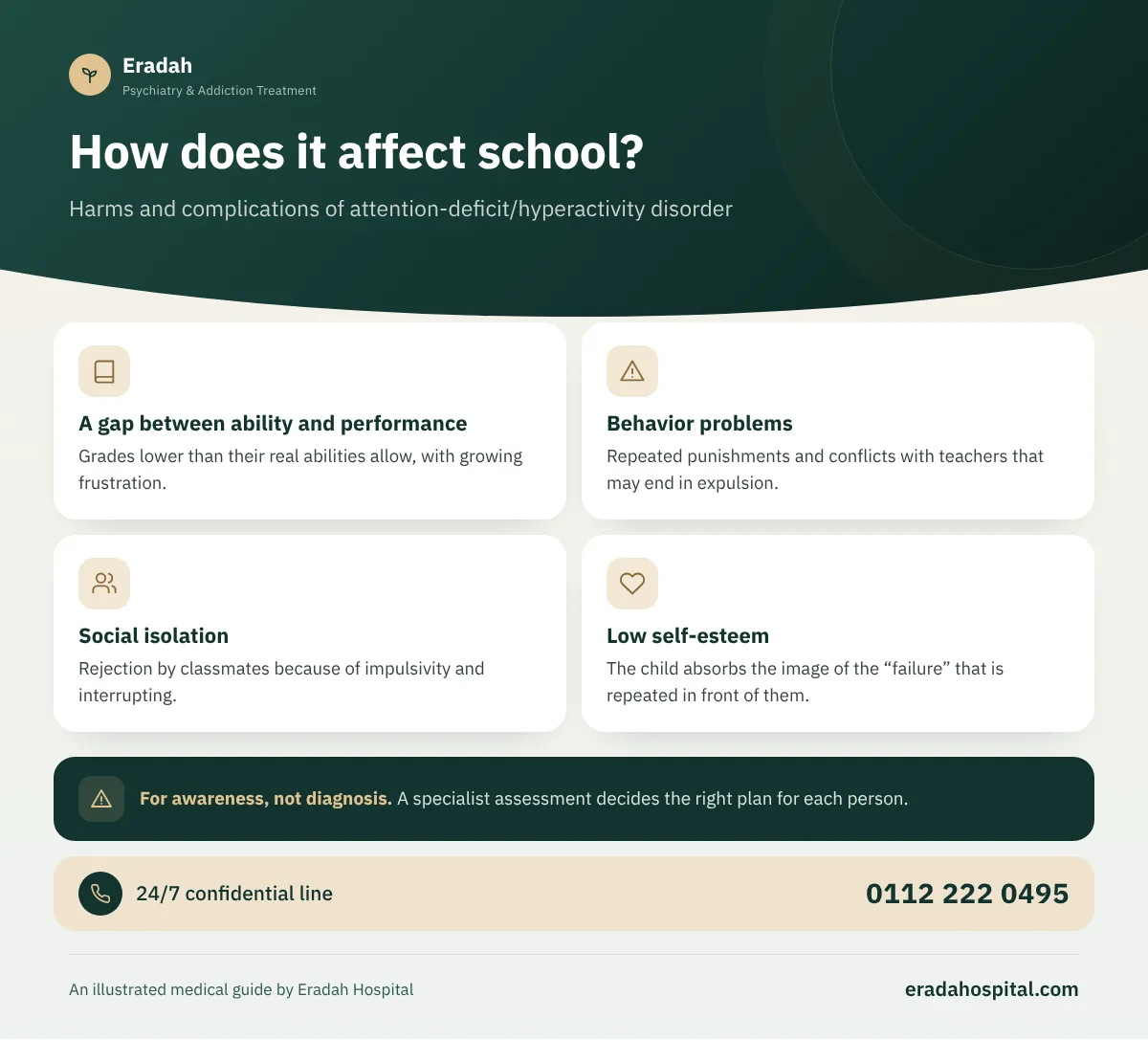
How does it affect school?
An untreated child struggles to follow lessons, finish homework and organize study time, so grades fall despite their intelligence, and punishments and complaints keep recurring. Over time the child may come to hate school, be labeled a troublemaker, fail and repeat a year, and even leave education early.
Grades lower than their real abilities allow, with growing frustration.
Repeated punishments and conflicts with teachers that may end in expulsion.
Rejection by classmates because of impulsivity and interrupting.
The child absorbs the image of the “failure” that is repeated in front of them.
Does ADHD increase accidents and injuries?
Yes. Impulsivity and distraction raise the risk of injuries in childhood, such as falls, burns and fractures. In adolescence and young adulthood the risk of road accidents appears, because of speeding, distraction while driving and phone use. The risk rises considerably when the disorder is combined with alcohol or drugs.
How is self-esteem affected?
A child with ADHD hears criticism and correction many times more often than their peers, and comes to believe they are “bad” or “stupid” despite their intelligence. This feeling can last into adulthood, so the person avoids challenges for fear of failing, over-pleases others, or gives up early. This is one of the deepest and longest-lasting complications, but also one of the most responsive to understanding and support.
Is the disorder linked to reckless behavior?
Untreated impulsivity can appear in adolescence and young adulthood in many forms: reckless driving, financial risks, hasty relationships, fights and sometimes legal trouble. This does not make the person bad; it simply means the ability to stop before acting needs support, training and treatment. These behaviors also increase with lack of sleep and substance use.
How does it affect work and money in adulthood?
An untreated adult may move between many jobs because of lateness, mistakes, boredom and forgotten tasks, or may work in jobs below their abilities. With money, it shows up as impulsive spending, forgotten bills and accumulating debt, which multiplies tension in the family.
How does it affect relationships and marriage?
A partner sometimes feels unimportant because the person with ADHD forgets occasions, interrupts conversations or does not follow through on promises, while the person with ADHD feels constantly criticized. A cycle of blame and frustration forms that can end in separation if both sides do not understand that behind the behavior is a treatable disorder.
How does it affect the family and siblings?
Raising a child with ADHD without support is very exhausting. Parents' stress and disagreements about how to respond may rise, and siblings sometimes feel neglected or jealous. That is why the family itself needs support and guidance, not just the child.
Does the disorder cause anxiety and depression?
Anxiety and depression are among the most common conditions that accompany the disorder, especially in adolescence and adulthood, often as a result of years of frustration, criticism and a sense of not achieving. Oppositional defiant disorder in children, learning difficulties and sleep problems also frequently accompany it. Learn about depression and chronic insomnia.
| The situation | Why they matter |
|---|---|
| Anxiety | Increases distraction and is sometimes wrongly taken to be the only cause |
| Depression | Linked to accumulated frustrations, and needs its own treatment |
| Learning difficulties | Needs specialized educational support alongside treatment of ADHD |
| Sleep disorders | Makes symptoms worse and needs separate treatment |
| Substance misuse | Higher among people with untreated ADHD, and needs integrated treatment |
Does ADHD increase the risk of addiction?
Yes. Untreated ADHD is linked to starting smoking early and to a higher risk of alcohol and drug use, because of impulsivity, sensation seeking, and attempts to calm restlessness or improve focus. By contrast, ADHD medication taken under a doctor's supervision does not raise this risk. You can find details on the ADHD and addiction page.
Does the disorder affect physical health?
Indirectly, yes. Irregular sleep schedules, impulsive eating or forgotten meals, early smoking, and forgotten medical appointments or other medications all affect health over time. Injuries and accidents also add to emergency room visits. Following up on these areas with the doctor is part of comprehensive care, not an extra luxury.
Is the disorder linked to a risk of self-harm?
Studies indicate that the risk of suicidal thoughts and suicide attempts is higher among teenagers and adults with ADHD, especially with depression, substance use, severe impulsivity or sudden crises such as failing a class or a breakup. This risk can be reduced through treatment, follow-up and supportive people.
If your child or relative talks about death or seems hopeless, take it seriously, stay with them, and call for help right away through 123 or the mental health support line 16328.
Can complications be avoided?
Yes, and this is the most important point. Early diagnosis, treatment suited to the person's age, school support, family education and follow-up of co-occurring conditions all reduce accidents, academic setbacks, psychological problems and addiction risk. Learn about the options on the ADHD treatment page.
Suicidal thoughts or danger to self? Get help now
- Talk of wanting to die or of the family being better off without them
- Severe hopelessness after failing, being dismissed, a breakup or harsh punishment
- Sudden dangerous impulsiveness: reckless driving, heavy substance use or self-harm
- Sudden withdrawal from friends and family and saying goodbye to them
- Severe agitation or sleeplessness for days, or strange symptoms after taking stimulants without a prescription
Do not leave the person alone. Listen calmly without blame or lectures, and keep dangerous objects out of their reach in general. Call an ambulance (123) or go to the nearest emergency room, or call the mental health support line 16328 around the clock, and inform their treating doctor.
Ambulance 123 Mental health support line 16328